
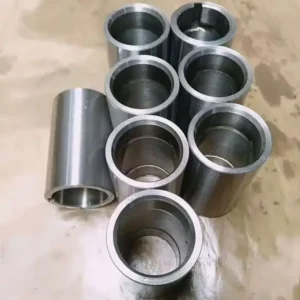
Product Overview
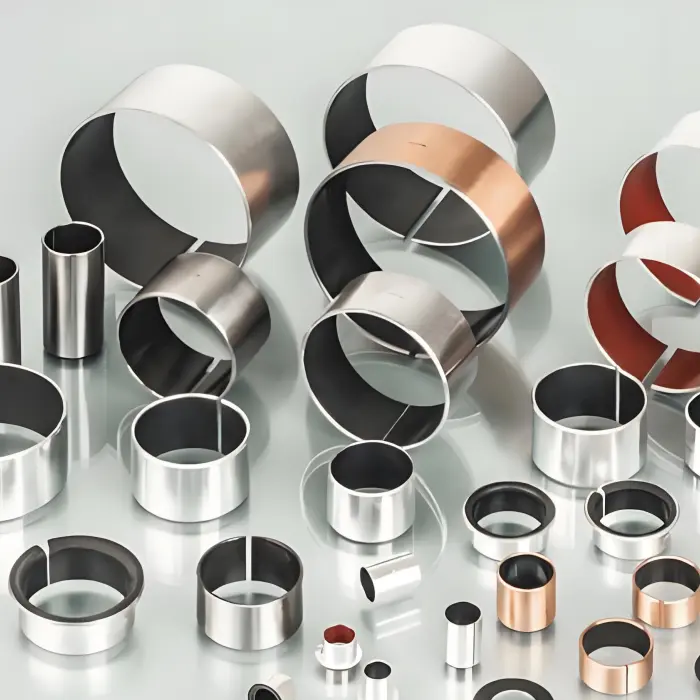
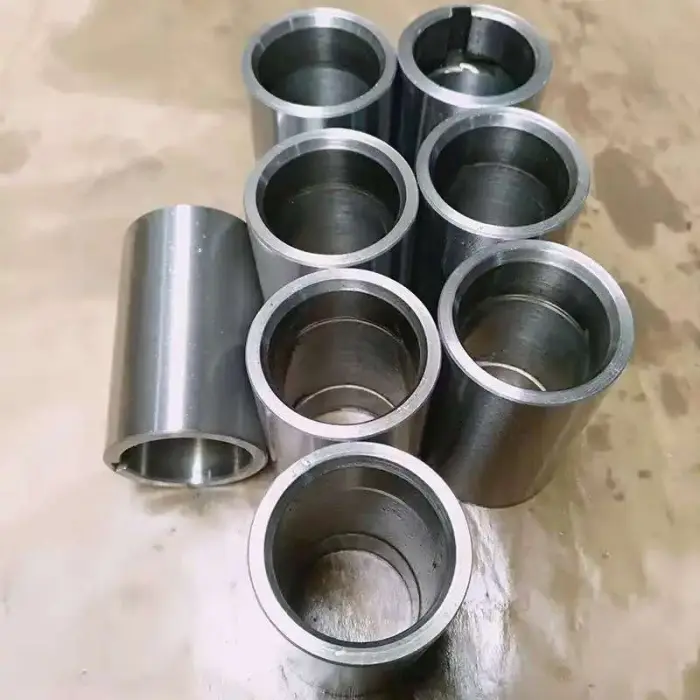
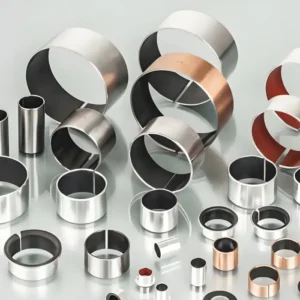
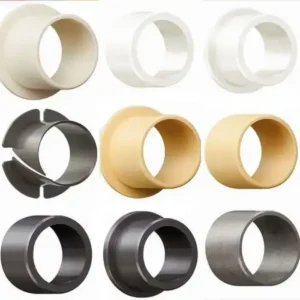
A shaft sleeve bushing is a thin cylindrical sleeve fitted over an existing shaft to provide a new, stable running surface for bearings, seals or housings. Sleeve bushings are a cost-effective alternative to shaft regrinding or replacement and are offered in various materials and constructions — solid, split, flanged, and PTFE-lined — to suit different loads, speeds and environments.
Common aliases: shaft sleeve, repair sleeve, journal sleeve, shaft liner, sleeve bearing.
Key Applications
-
Repairing worn shafts without disassembly or re-machining.
-
Bearing journals in pumps, gearboxes, electric motors and compressors.
-
Seal shafts and rotary shafts in hydraulic cylinders and actuators.
-
Agricultural and construction machinery, conveyors, marine drive shafts.
-
OEM production where a controlled bearing surface is required.
Technical Specifications
Note: final dimensions and performance depend on material and operating conditions. Contact sales for tested performance data and custom tolerances.
| Parameter | Value / Range |
|---|---|
| Materials | Sintered bronze (oil-impregnated), PTFE-lined composite, phosphor bronze, stainless steel (AISI 304/316), carbon/graphite composite |
| Standard bore tolerance | H7 (shaft fit depends on application) |
| Recommended shaft tolerance | h6 ~ h7 depending on sleeve type |
| Surface finish (shaft) | Ra 0.4–1.6 μm (typical for PTFE & bronze sleeves) |
| Operating temperature | Bronze: -40°C to +200°C; PTFE-lined: -200°C to +250°C (material dependent) |
| Max. linear speed | Dependent on material — consult datasheet (typical sintered bronze: up to 2–4 m/s with lubrication) |
| Lubrication | Self-lubricating (sintered bronze), grease or oil for bronze; PTFE composite often dry-running |
| Hardness (shaft interface) | As required to avoid embedment; usually >HRC 20 on shaft for heavy duty applications |
| Typical wall thickness | 0.5 mm – 5.0 mm (depending on OD and split/solid design) |
| Lead time | Standard sizes: 1–2 weeks; custom: 3–6 weeks (subject to order qty) |
Common Sizes
Below are commonly stocked sleeve bushing sizes (metric). Custom sizes and imperial (inch) sizes available on request.
Standard stocked sizes (ID × Length) — metric
-
6 × 10 mm, 8 × 12 mm, 10 × 12 mm, 12 × 15 mm, 14 × 16 mm
-
16 × 18 mm, 18 × 20 mm, 20 × 22 mm, 25 × 28 mm, 30 × 30 mm
-
35 × 35 mm, 40 × 40 mm, 50 × 50 mm, 60 × 60 mm, 80 × 80 mm
(Length shown is typical journal length; custom lengths available up to 500 mm+)
Split sleeve options: same ID range, available in 2-piece split (axial) and 3-piece split designs for assemblies that cannot be removed from the shaft.
Product Variants & Use Cases
Sintered Bronze (Oil-Impregnated) Sleeves
-
Use: rotating shafts with continuous lubrication or oil film.
-
Benefit: excellent load capacity, good wear resistance, simple installation as solid or split sleeves.
PTFE-Lined Composite Sleeves
-
Use: low-speed, dry or contaminated environments, chemical exposure.
-
Benefit: low friction, corrosion resistance, no external lubrication required.
Stainless Steel Sleeves
-
Use: corrosive or marine environments and food processing equipment.
-
Benefit: corrosion resistance, mechanical strength; typically used as a backing for PTFE lining.
Split / Repair Sleeves
-
Use: retrofit repairs where shaft removal is impractical.
-
Benefit: rapid onsite replacement, minimal downtime.
Advantages
-
Immediate shaft repair — avoids expensive shaft machining or shaft replacement.
-
Reduced downtime — split and flanged sleeves enable field repairs with minimal disassembly.
-
Cost effective at scale — low per-unit cost for production and aftermarket replacement.
-
Material choice for environment — options for high-load (bronze), dry running (PTFE) or corrosive environments (stainless).
-
OEM quality control — manufactured to ISO-style tolerances with 100% dimensional inspection (orders subject to factory QC).
-
Customizable — ID/OD/length, wall thickness, flanges, slots, grease grooves, split lines and surface finish per order.
Comparison: Sleeve Bushing Materials
| Feature / Material | Sintered Bronze | PTFE-Lined Composite | Stainless Steel |
|---|---|---|---|
| Dry running | No (needs lubrication) | Yes | No (needs lubrication or lining) |
| Load capacity | High | Moderate | High (depends on backing & lining) |
| Corrosion resistance | Moderate | High | Very high |
| Friction coefficient | Moderate (with lube) | Very low | Moderate |
| Repair suitability | Excellent | Good | Good (often as backing for PTFE) |
| Typical applications | Heavy machinery, motors, pumps | Food, chemical, low-speed shafts | Marine, corrosive environments |
Installation & Inspection Notes
-
Always check shaft concentricity and surface finish before sleeve installation.
-
For split sleeves, verify gap and axial position, then torque retaining hardware per specification.
-
After installation, run-in under light load and inspect for vibration or abnormal temperature rise.
-
Follow recommended shaft tolerance (typically h6/h7) and surface finish Ra 0.4–1.6 μm for best performance.
Product Catalog & Datasheet Downloads
FAQ
Q1: Can a sleeve bushing fix a bent shaft?
A1: No. Sleeve bushings restore worn diameters and bearing surfaces but do not correct shaft straightness. Bent shafts require re-straightening or replacement.
Q2: What is the difference between a split sleeve and a solid sleeve?
A2: Solid sleeves require shaft removal; split sleeves permit installation without shaft removal and are ideal for field repairs.
Q3: How do I choose between bronze and PTFE-lined sleeves?
A3: Choose sintered bronze when high load capacity and oil lubrication are present. Choose PTFE-lined composite when dry running, low friction or chemical resistance is required.
Q4: Do you offer custom tolerances and small runs?
A4: Yes. We support custom tolerances, special finishes, grease grooves and small pilot production runs. Contact sales with your drawing.
Q5: What inspection and certification do you provide?
A5: Standard orders include dimensional inspection reports; material certificates, hardness tests and third-party inspections available on request for critical orders.