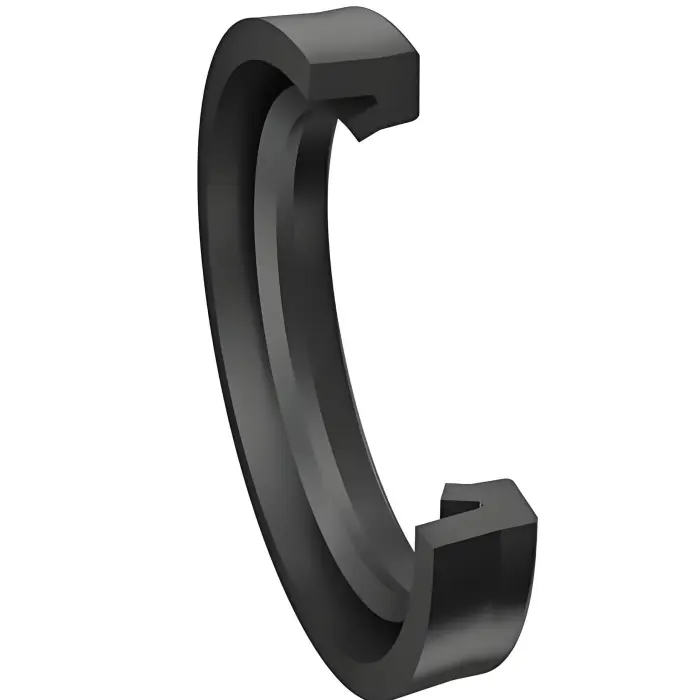
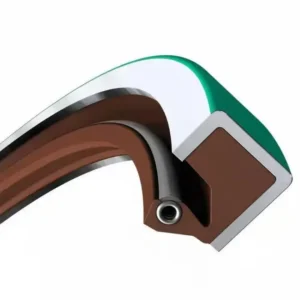
What is a radial shaft seals?
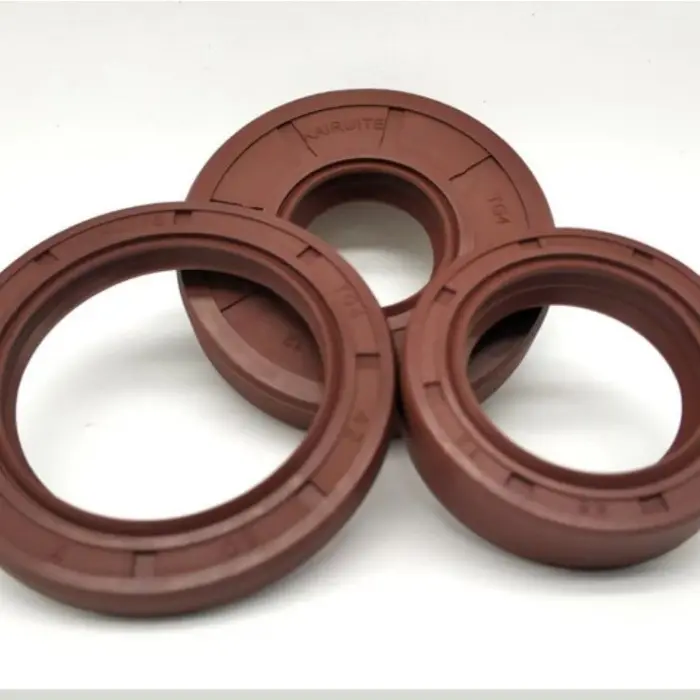
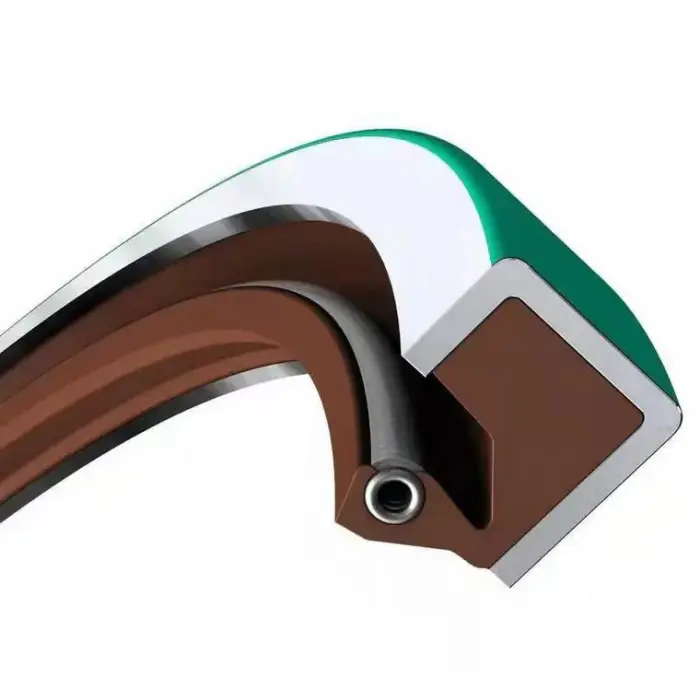
A radial shaft seals is a rotary sealing component whose sealing lip runs radially against a rotating shaft to prevent lubricant leakage and ingress of dust or water. Typical radial seals include a flexible elastomer lip, metal reinforcement (or elastomer-only designs), and optionally a garter spring to maintain lip contact.
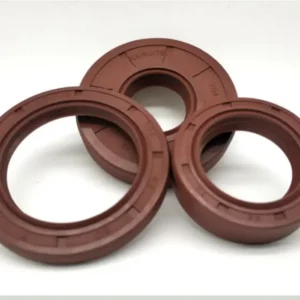
Premium radial shaft seals (also sold as radial lip seals, rotary shaft oil seals, or simply shaft seals) engineered for rotating shafts and housings to retain lubricant and exclude contaminants. Available in NBR, FKM, PTFE, and silicone formulations for wide temperature and chemical ranges; standard DIN profiles (A/AS/B etc.) stocked for immediate delivery and custom sizes for industrial OEMs.
Common industry names / aliases
Radial shaft seals, radial lip seal, rotary shaft seals, oil seal, shaft oil seal, rotary lip seal.
Materials we offer
-
NBR (Nitrile / Buna-N) — economical, good resistance to mineral oils and greases; typical continuous temperature range ≈ −40°C to +120°C (application dependent).
-
FKM (Fluoroelastomer, e.g., Viton®-type) — excellent high-temperature and fuel/chemical resistance; use to ≈ −20°C to +200°C (dependent on compound).
-
PTFE (Teflon®) — for aggressive media, high temperature and dry-running; usable up to ~260–300°C depending on fill and design.
-
Silicone / VMQ — very low temperature flexibility and electrical insulation; limited wear resistance vs. NBR/FKM.
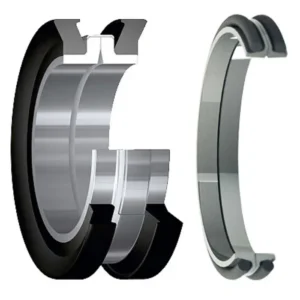
Design variants: single-lip, double-lip (sealing + dust exclusion), spring-loaded lip, PTFE multiple-lip, split seals, cassette-type and heavy-duty designs for contaminated environments. Standard DIN profiles (A, AS, B, BS etc.) are stocked.
Typical Performance Parameters
-
Shaft diameter (stock / standard series): Common standard DIN sizes start as small as 6 mm and go through typical stocked ranges (e.g., 6–200 mm for off-the-shelf items). For very large shafts/manufacturing, industrial manufacturers produce radial shaft seals up to 4,600 mm diameter for heavy equipment.
-
Surface speed (circumferential): NBR lips commonly suitable to ~10–12 m/s; FKM lips up to ~35–38 m/s depending on design and lubrication. For speeds beyond, consider PTFE or special low-friction designs.
-
Max pressure: Typical spring-lip seals are for low-pressure differentials (near atmospheric); for higher pressures use special energized seals or mechanical face seals. Consult engineering for >0.2–0.5 bar static differential applications.
-
Shaft finish & hardness: Recommended shaft finish Ra 0.2–0.8 µm (8–32 µin) and hardness typically ≥ 50 HRC? (or hardened to 58–62 HRC for specific designs); follow datasheet per seal type—measure precisely before ordering. (See our ordering checklist below.)
(Where precise limits vary by compound and lip geometry, AoHong provides spec sheets for each part number.)
Standard Dimensions & Common Sizes
| Size (mm) | Description |
|---|---|
| 6 × 16 × 5 | Small motors, small gearbox shafts (DIN design A). |
| 10 × 24 × 7 | Electric motors, pumps (popular stock size). |
| 20 × 47 × 10 | Gearboxes, agricultural equipment (DIN standard example). |
| 30 × 62 × 10 | Medium drive shafts, industrial pumps. |
| 40 × 72 × 10 | Larger pump and gearbox shafts. |
| 50 × 85 × 10 | Heavy-duty rotating equipment. |
Stock coverage: We stock DIN standard sizes from 6 mm upward across common widths; for non-standard or very large diameters (up to several meters) we supply custom seals. For heavy industrial/large shaft projects, consult our engineering team.
Ordering & Technical Checklist
When requesting a quote, please provide:
-
Shaft diameter (mm) — measured to nearest 0.05 mm.
-
Housing bore / outer diameter required (mm).
-
Width (axial thickness) mm (or the DIN code).
-
Material required (NBR/FKM/PTFE/silicone) and expected operating temperatures & fluids.
-
Shaft surface finish (Ra) and hardness, rotational speed (rpm) or circumferential speed (m/s).
-
Operating pressure / differential and contamination level (water, dust, solids).
-
Quantity (single prototype to mass OEM runs).
Advantages
-
Wide material portfolio: NBR, FKM, PTFE and silicone for optimized chemical and temperature resistance.
-
Stocked DIN sizes for fast fulfillment plus bespoke OEM capability for custom diameters and split/sealed designs.
-
Low friction, long-life lip formulations and optional low-torque PTFE variants for high-speed applications.
-
Factory quality control: batch traceability, hardness & shaft-finish checks, balanced designs for long service life.
Material Comparison
| Property / Material | NBR (Nitrile) | FKM (Fluoroelastomer) | PTFE | Silicone (VMQ) |
|---|---|---|---|---|
| Typical temp range | −40°C to +120°C | −20°C to +200°C | −200°C to +260/300°C | −60°C to +200°C |
| Best for | Mineral oils, petrol, general purpose | High temp, fuels, aggressive chemicals | High temp, aggressive media, dry running | Low temp flexibility, electrical insulation |
| Wear resistance | Good | Very good | Excellent (low friction) | Moderate |
| Max recommended surface speed | 10–12 m/s | ~35–38 m/s | Higher (application dependent) | Low–moderate |
| Typical cost | Low | Medium–High | High | Medium |
(Temperature and speed bands are design-dependent; consult datasheets for compound-specific limits.)
Applications & Typical Use Cases
-
Industrial gearboxes & reducers — lubricant retention and contamination exclusion.
-
Centrifugal & positive displacement pumps — radial lip seals to retain oils and lubricants.
-
Electric motors & alternators — small DIN shaft seals.
-
Automotive ancillaries — accessory drives, water pumps (select FKM for fuel exposure).
-
Construction & agricultural machinery — heavy-duty, contamination-resistant designs.
-
Specialty machinery — food-industry versions available in FDA-grade elastomers.
Comparison vs. Alternative Seal Types
When to choose a radial shaft seals vs other seal classes:
-
Radial lip (oil) seal: best for rotating shafts with small pressure differentials and need for simple, low-cost sealing.
-
Mechanical face seals (e.g., cartridge mechanical seals): choose when sealing pressurized fluids or for shaft-to-shaft sealing in pumps (higher pressure capability).
-
Cassette or cartridge seals: better for heavy contamination / long service change intervals.
Specification Sheets & Downloads
FAQ
Q1: How do I specify a radial shaft seals for quote?
A: Provide shaft dia × OD × width (mm), material, operating temperature, shaft speed (rpm or m/s), fluid type, and quantity. See our ordering checklist above.
Q2: Do you supply DIN 3760 standard sizes?
A: Yes — we stock common DIN/ISO sizes (examples include 6×16×5, 10×24×7, 20×47×10) and supply custom sizes on request.
Q3: Which material is best for hot, chemically aggressive oils?
A: FKM (fluoroelastomer) is typically chosen for high temperatures and aggressive fuels/chemicals; PTFE is used when extreme temperature or aggressive media demand polymeric resistance.
Q4: What shaft finish is required?
A: Typical recommended shaft finish is Ra in the range 0.2–0.8 µm (8–32 µin). Provide exact finish when ordering for best life. (See installation datasheet.)
Q5: Can you provide samples / small MOQ?
A: Yes — small sample quantities available for evaluation. For production quoting, please state annual or batch quantities.
-
AoHong has manufactured and supplied rotary seals for industrial OEMs for more than a decade; our production includes DIN series stock and large-diameter custom seals for heavy industry.
-
In-house material selection engineers and test lab — we perform compound verification, dynamic run tests and chemical compatibility checks for each application.
-
Our designs follow DIN/ISO industry standards for dimensional interchangeability (e.g., DIN 3760 / ISO series) and we reference industry performance charts for speed and temperature.
-
Batch traceability, material certificates available on request, and factory inspection reports.
-
Direct technical contact for rapid quotation and engineering support — see contact below.
Installation & Maintenance Notes
-
Ensure shaft surface finish and runout meet datasheet limits.
-
Install with proper tools — avoid lip damage; use installation sleeves where possible.
-
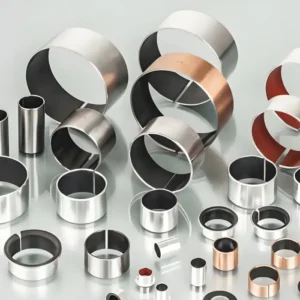
For reconditioning shafts, consider a Speedi-Sleeve or wear sleeve when shaft damage is present. (We supply wear sleeves for damaged bores/shafts.)