Product overview
What is Reinforced Graphite Packing?
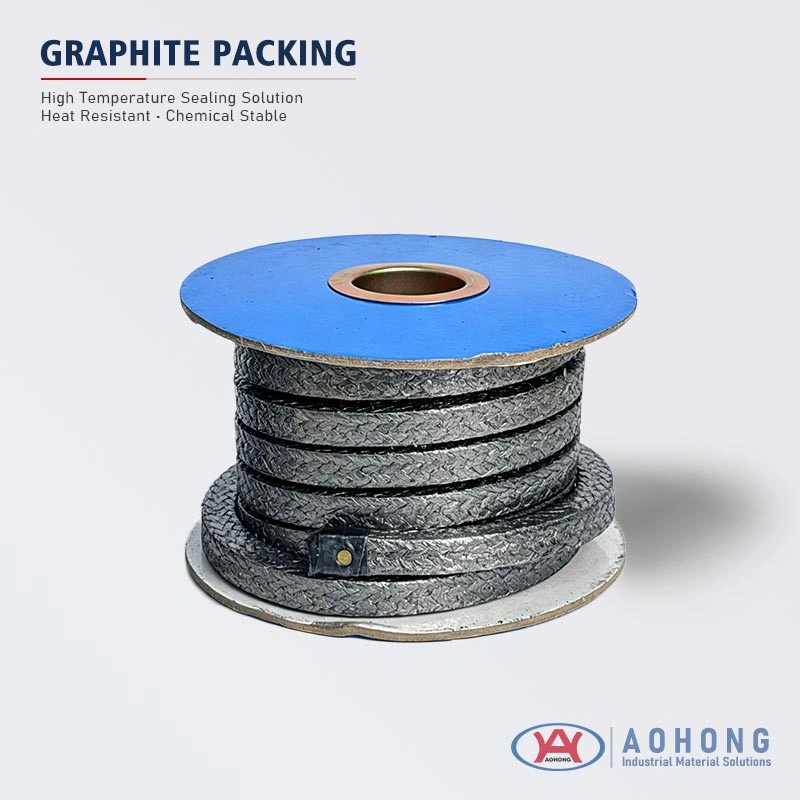
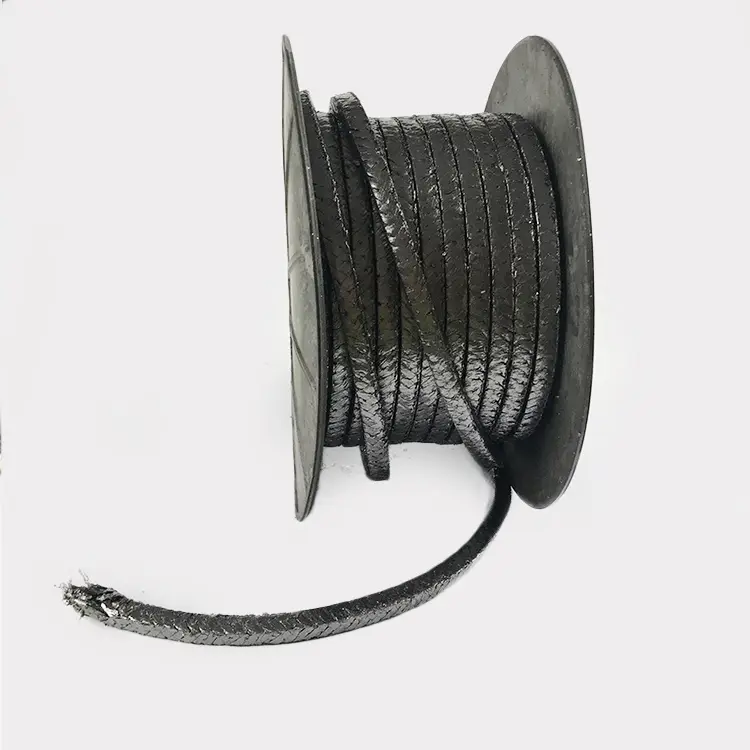
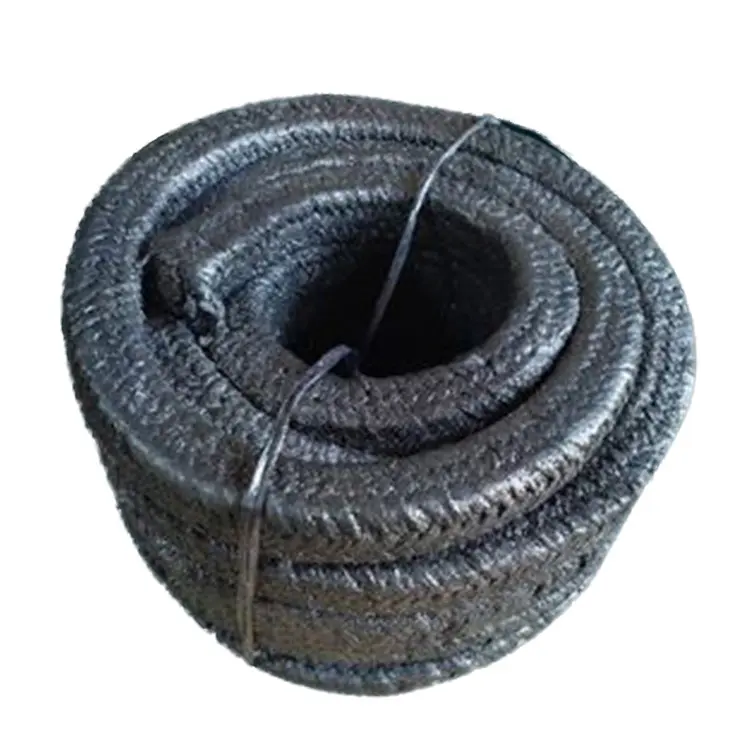
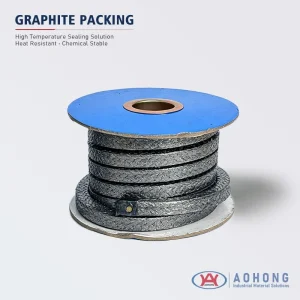
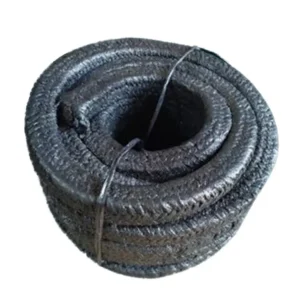
Reinforced graphite packing is a braided or square-plaited compression packing assembled from high-purity flexible graphite yarns where each strand or the braid is reinforced with an element such as Inconel/SS wire, carbon fiber yarn, nickel alloy mesh or a stainless foil core. The reinforcement increases tensile strength, reduces extrusion under high gland loads, and improves shaft/shaft-speed capability while keeping graphite’s wide chemical and temperature performance.
Reinforced graphite packing (aka graphite braided packing with wire insert, reinforced graphite gland packing, or carbon-reinforced graphite rope) is braided compression packing made from flexible/expanded graphite yarns that include a reinforcing element (metal wire, carbon yarn or mesh). It offers excellent thermal and chemical resistance plus improved mechanical strength and reduced extrusion for demanding valve and pump sealing applications.
Common aliases / alternate names
-
Reinforced graphite packing
-
Graphite braided packing with wire insert
-
Carbon-reinforced graphite packing
-
Graphite gland packing (reinforced)
-
Graphite rope packing (reinforced)
Construction & materials (technical)
Typical constructions
-
Wire-inserted braided packing: graphite yarn braided around a stainless/Inconel wire helix or mesh for high-pressure valve service.
-
Carbon-reinforced braid: continuous carbon/PAN yarn integrated into graphite tape yarn for higher mechanical strength and lower extrusion.
-
Foil or core reinforced variants: thin metallic foil or tanged cores can be incorporated for special retention or low-friction needs.
Materials & treatments
-
Graphite yarn: flexible/expanded graphite (high-purity, exfoliated graphite).
-
Reinforcement: SS304/316, Inconel/NI alloys, nickel alloy, or carbon fiber yarn depending on corrosion and temperature requirements.
-
Impregnation: many reinforced packings are impregnated with lubricants, corrosion inhibitors or anti-oxidants to reduce stem friction and particle shedding.
Performance & service limits
-
Temperature (typical): −200°C (or lower) up to ≈450°C continuous in air; graphite with wire/mesh can withstand up to ~650°C in steam or higher in non-oxidizing atmospheres depending on impregnation.
-
Pressure / valve rating: reinforced graphite packings are used successfully in valve applications rated to hundreds to thousands of psi (manufacturer product ratings vary — some styles list static valve pressures up to several thousand psi).
-
Shaft speed: many reinforced constructions support low-to-moderate shaft speeds (example: pump shaft speeds up to several m/s; consult supplier RPM/velocity charts).
-
Chemical range: broad pH compatibility (pH 0–14) for most graphite packings except strong oxidizers; choose reinforcement alloy for corrosive media.
 Typical sizes & stock options
 Typical sizes & stock options
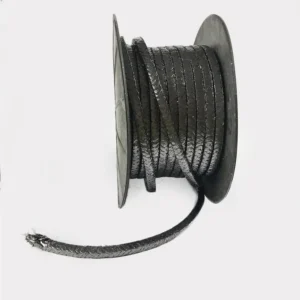
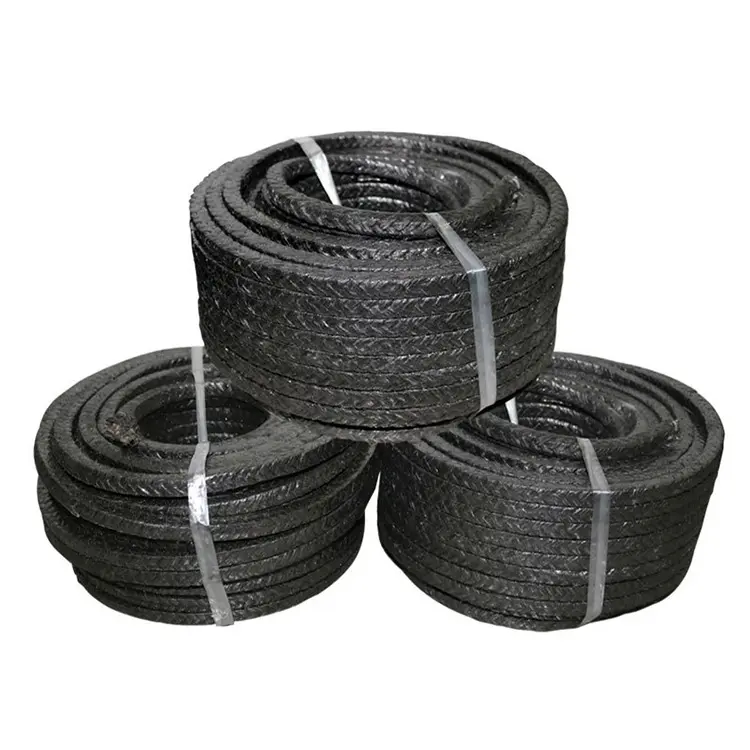
Reinforced graphite packing is normally supplied as braided rope/cord in standard cross-section sizes and spool/boxed lengths for cutting to gland sets.
Common cross-sectional sizes (inch & mm):
-
1/8″ (3.2 mm) — thin sets for small valves/rotary shafts.
-
3/16″ (4.8 mm)
-
1/4″ (6.4 mm) — one of the most common sizes.
-
5/16″ (8.0 mm)
-
3/8″ (9.5 mm) — very common for pump & valve glands.
-
1/2″ (12.7 mm) — heavy gland applications.
Manufacturers commonly stock these sizes and supply in spool lengths (e.g., 8 ft, 25 ft, 50 ft spools) or boxed coils.
Typical packing set guidelines: pack in 3–4 rings for seals (a common arrangement is four rings of 3/8″ for a given gland depth — adjust per gland depth and manufacturer instructions).
Applications (where reinforced graphite packing excels)
-
Gate/Globe/Check/Control valves in steam, petrochemical and refinery services.
-
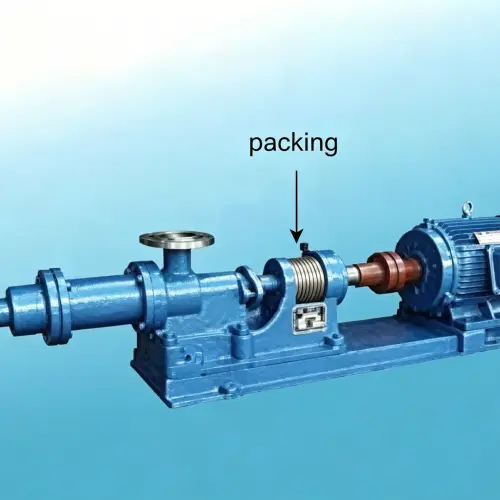
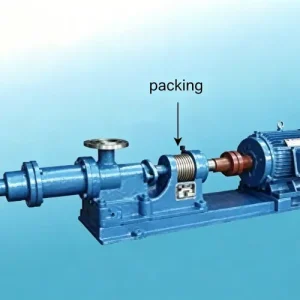
Rotating equipment: pumps, agitators and mixers where shaft speeds and pressures demand reinforcement.
-
High-temperature steam lines and exchangers — reinforced graphite tolerates steam up to higher temps than unreinforced yarns.
-
Fugitive emissions control installations when combined with low-emission formulations.
Advantages & buyer benefits
-
High temperature capability with preserved chemical resistance of graphite.
-
Improved mechanical strength & extrusion resistance vs pure graphite braids due to wire or carbon reinforcement.
-
Lower friction / extended gland life from impregnations and optimized braid patterns.
-
Wide pH and media compatibility (choose reinforcement alloy for corrosive services).
-
Flexible stocking & custom lengths — cut to set length for quick maintenance turnaround.
Comparison table — reinforced graphite vs common alternatives
| Feature | Reinforced Graphite Packing | Pure Graphite Packing | PTFE Packing | Aramid (non-asbestos) Packing |
|---|---|---|---|---|
| Max temp (typical) | High (≈450°C; higher in steam) | High, but less extrusion resistance | Low–moderate (≤260°C) | Moderate (≤371°C) |
| Extrusion resistance | High (with wire/carbon) | Lower | High (solid PTFE) | Moderate |
| Chemical resistance | Excellent (0–14 pH except strong oxidizers) | Excellent | Excellent for many chemicals | Excellent for oils/fuels |
| Shaft speed tolerance | Moderate (reinforced better) | Lower | Good (low friction) | Moderate |
| Best for | High-T / high-pressure valves & pumps | High-T low-mechanical demand | Aggressive chem / low-T | Asbestos replacement general service |
Installation & best practices
-
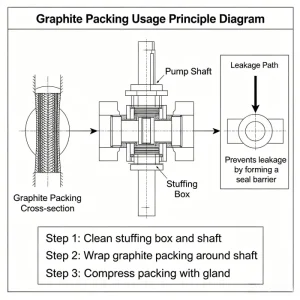
Gland depth & ring count: follow supplier’s gland packing chart — typical stuffing box depth = number_of_rings × cross-section thickness. Example: 3 rings of 3/8″ = 1.125″ gland fill.
-
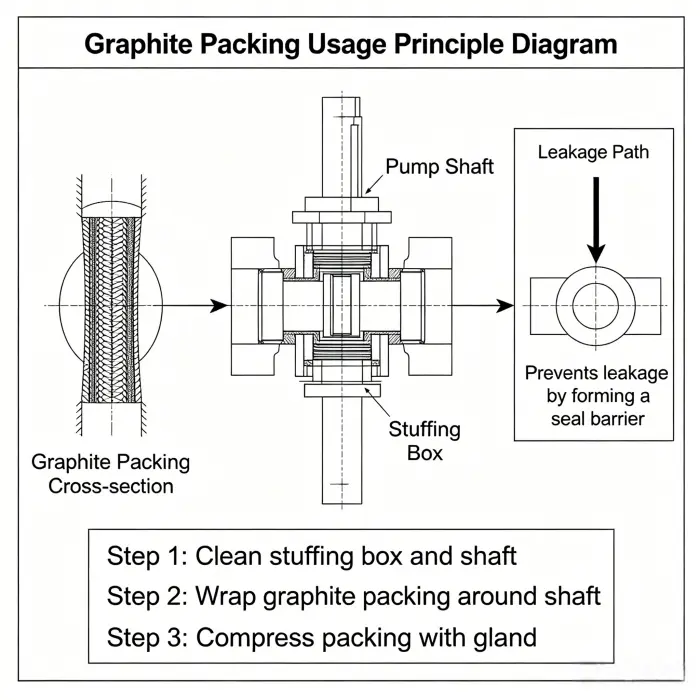
Staggered joints: offset joints 90° per ring to avoid leakage paths.
-
Set-up torque / gland compression: tighten to specified gland compression (manufacturer provides torque or compression %). Do not overcompress — graphite is conformable; excessive compression causes accelerated wear.
-
Lubrication & break-in: many reinforced packings are impregnated; follow break-in running procedures to seat the packing and minimize initial leakage.
-
Monitoring: for dynamic seals check temperature and leakage after the first hours and periodically thereafter; re-adjust gland follower as needed.
Common failure modes & mitigation
-
Extrusion under high pressure: use a wire-inserted or carbon-reinforced grade to resist extrusion.
-
Excessive shaft wear: ensure correct clearance and consider PTFE-lined or carbon-wrapped options for abrasive shafts.
-
Oxidation at very high temps in air: use anti-oxidant-impregnated yarns or inerting strategies for extreme oxidizing environments.
FAQ
Q1 — What are the usual names for this product?
A: Reinforced graphite packing, graphite braided packing with wire insert, carbon-reinforced graphite packing, graphite gland packing (reinforced).
Q2 — What size should I order for a valve gland?
A: Measure gland depth and shaft/stem diameter. Use supplier gland charts — typically 3–4 rings are installed; common ring sizes are 1/4″ and 3/8″. Provide gland depth and shaft size for precise set recommendation.
Q3 — Can reinforced graphite packing be used for steam service?
A: Yes — many reinforced grades are designed for steam and list higher steam temperature capabilities than unreinforced yarns. Choose a steam-rated grade and confirm PDS.
Q4 — How do I reduce initial leakage after installation?
A: Follow proper break-in (run at low speed/load), re-tighten gland lightly after initial run-in, and ensure packing rings are correctly seated and staggered. Many product datasheets give a recommended break-in procedure.
Q5 — What information do you need for a quotation?
A: Shaft/stem diameter, gland depth, application (valve/pump/shaft), operating temperature & pressure, media description (chemistry), required certification (low-emission, MTR), and preferred spool length or pre-cut rings.