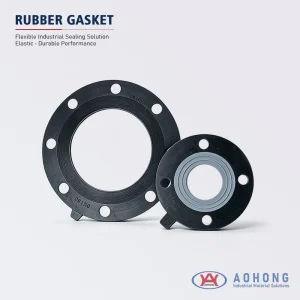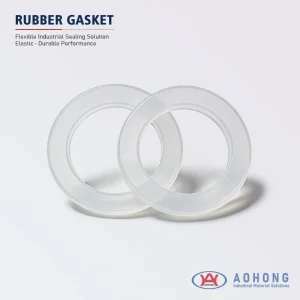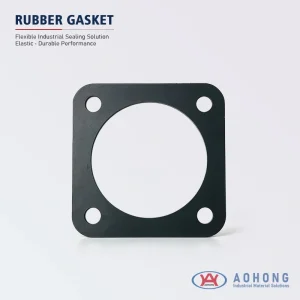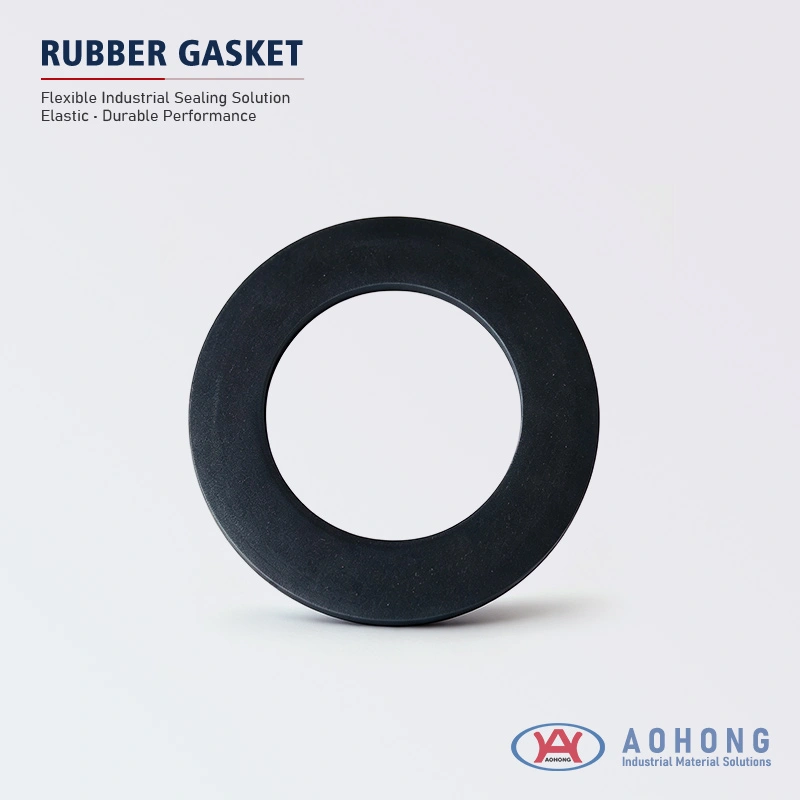


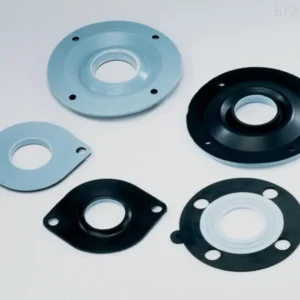
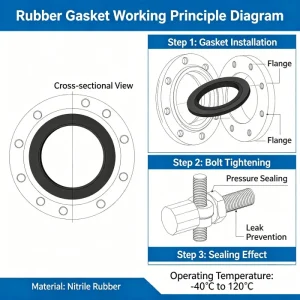
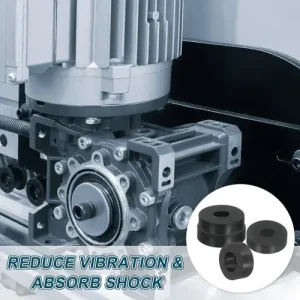
What are Neoprene Rubber Gaskets?
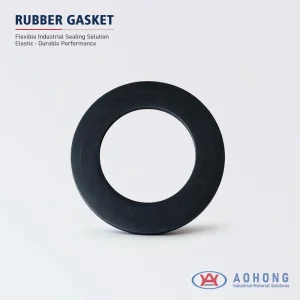
Neoprene rubber gaskets are sealing products manufactured from polychloroprene (CR). Common aliases: neoprene gaskets, chloroprene gaskets, CR gaskets, neoprene sheet gaskets. They combine moderate chemical/oil resistance, excellent resistance to ozone, sunlight and weathering, and stable mechanical properties—making them a preferred choice for outdoor, marine and HVAC sealing applications.
Neoprene rubber gaskets (also called chloroprene gaskets, CR gaskets or polychloroprene gaskets) are durable, weather- and ozone-resistant elastomer seals ideal for HVAC, marine, industrial and general-purpose flange, cover and hatch sealing where moderate oil and chemical resistance plus good resilience are required.
Key features & benefits
-
Weathering & ozone resistance — ideal for outdoor and marine environments.
-
Good oil & fuel resistance (moderate) — better than natural rubber but lower than nitrile (NBR) in heavy petroleum exposure.
-
Wide hardness options — commonly supplied in Shore A 40–90, typical industrial grade 60 ±5 for general gaskets.
-
Excellent resilience & compression set behavior — maintains seal under cyclic loads.
-
Good flame-retardant grades available — CR can be formulated for low flammability for HVAC and elevator applications.
-
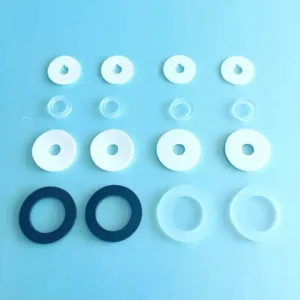
Easy to cut, die-cut and mold — quick custom turnaround for cut-to-drawing gaskets and washers.
Typical material properties
-
Material: Polychloroprene (Neoprene, CR)
-
Typical continuous service temperature: -40°C to +120°C (short-term up to +130°C)
-
Density: ~1.23 g/cm³ (varies by compound)
-
Hardness (Shore A): 40–90 (common: 60)
-
Compression set (24–70 hrs, %): depends on grade — request datasheet for exact values
-
Chemical resistance notes: good to moderate acids/alkalis, saltwater and many oils; avoid strong ketones and certain solvents—consult tech sheet for your media.
Tip for spec sheets: always request an MSDS and technical data sheet for the exact CR compound used (oil-resistant, flame-retardant, FDA-grade, etc.).
Standard formats & common sizes
Neoprene gaskets are supplied in these common formats:
Sheet stock (for die-cutting & machining)
-
Standard sheet dimensions (typical industry stock): 1220 × 2440 mm (48″ × 96″) and 1000 × 2000 mm.
-
Standard thicknesses (mm / inch): 1.5 mm (1/16″), 3.0 mm (1/8″), 4.8 mm (3/16″), 6.4 mm (1/4″), 9.5 mm (3/8″), 12.7 mm (1/2″).
Cut rings / flange gaskets
-
Common nominal pipe/flange sizes served: DN15 (½”) → DN300 (12″) and larger (cut-to-drawing). We cut ID/OD to match ASME/DIN flange standards per customer drawing.
-
Typical ring thicknesses used for flange gaskets: 1.5 mm–6.0 mm depending on flange class.
O-rings & molded parts
-
Common cross-sections: 1.78 mm (AS568-002) to 7.62 mm — we supply molded CR O-rings and custom molded gaskets per drawing.
 Common industry applications
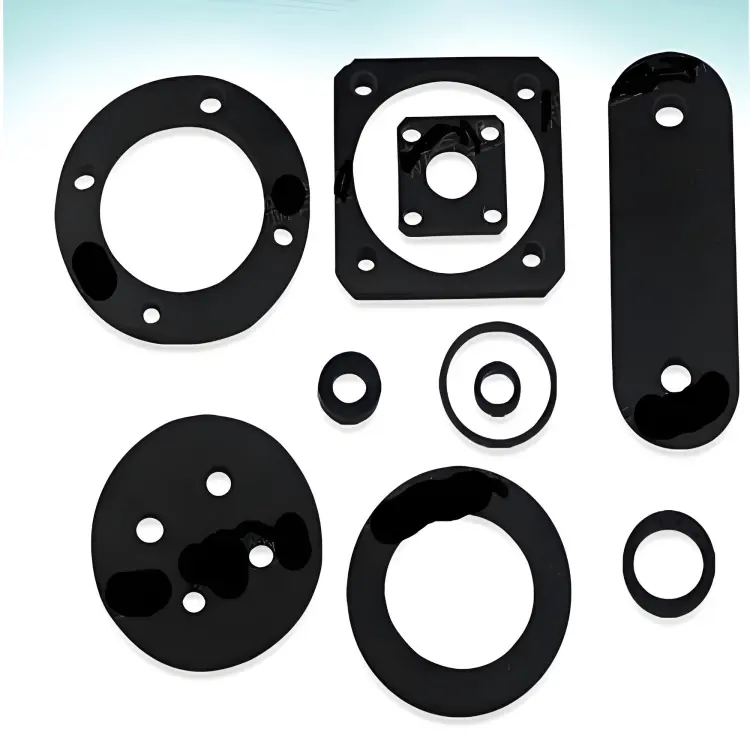 Common industry applications
-
HVAC seals, ductwork gaskets, access panels and damper seals.
-
Marine hatches, deck plates and seawater systems (good resistance to saltwater).
-
Electrical enclosures and outdoor housings (ozone & UV resistance).
-
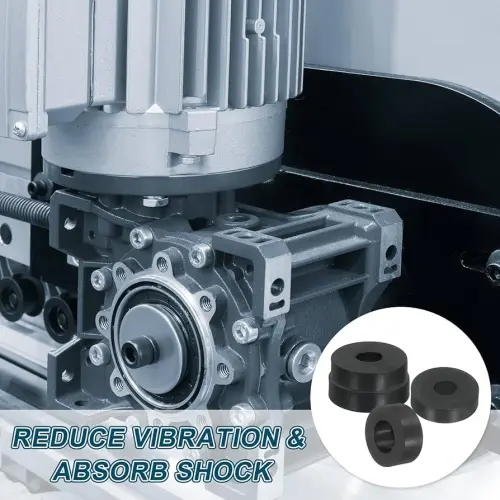
General machinery, covers, pumps and low-to-moderate oil contact applications.
-
Fire & safety equipment where flame-retardant CR grades are required.
How to choose the right neoprene gasket
-
Identify operating media: for heavy petroleum/oil exposure prefer NBR or Viton; neoprene suits moderate oil and weathering.
-
Select hardness (durometer): softer grades (40–50A) for irregular flanges/higher conformability; 60–70A for general flange seals; 70–90A for high-compression, structural sealing.
-
Choose thickness to avoid extrusion: higher pressures require thicker gaskets or backup rings.
-
Sanitary/food contact: neoprene is rarely used for direct food contact unless certified—use FDA-grade compounds and request declaration.
Advantages vs other common gasket materials
Advantages of Neoprene Gaskets
-
Superior outdoor performance vs EPDM and NBR for ozone and UV exposure.
-
Balanced oil resistance and weathering — a good compromise when neither extreme oil resistance (Viton) nor extreme chemical resistance (PTFE) is required.
-
Economical and readily available in many standard thicknesses and sheet sizes.
-
Easy to cut, bond and vulcanize — fast custom production.
Comparison Table — Neoprene vs Alternatives
| Feature / Application | Neoprene (CR) | Nitrile (NBR) | EPDM | Silicone | Viton (FKM) |
|---|---|---|---|---|---|
| Weather & ozone resistance | Excellent | Moderate | Excellent | Excellent | Good |
| Mineral oil resistance | Moderate | Excellent | Poor | Poor | Excellent |
| Heat resistance (°C) | −40 to +120 | −40 to +100 | −50 to +120 | −60 to +200 | −20 to +200 |
| Good for outdoor/marine use | Yes | Limited | Yes | Yes | Limited |
| Cost (typical) | Moderate | Low-Moderate | Low-Moderate | Higher | High |
| Sanitary/food contact options | Limited (special compounds) | Some grades | Some grades | Excellent (if certified) | Some grades |
Typical product SKUs & example spec table
| SKU | Description | Thickness (mm) | Hardness (Shore A) | Format |
|---|---|---|---|---|
| NEO-CR-1.5-60 | Neoprene sheet | 1.5 | 60 | 1220×2440 mm sheet |
| NEO-CR-3.0-60 | Neoprene sheet | 3.0 | 60 | 1220×2440 mm sheet |
| NEO-RG-1-60 | Die-cut flange ring for DN50 | 3.0 | 60 | Ring (ID/OD per drawing) |
| NEO-TRI-06-70 | molded O-ring AS568-214 | 2.62 cross | 70 | Molded ring |
(Provide actual CAD/drawing for precise OD/ID drilling and tolerance-controlled parts.)
Installation & storage recommendations
-
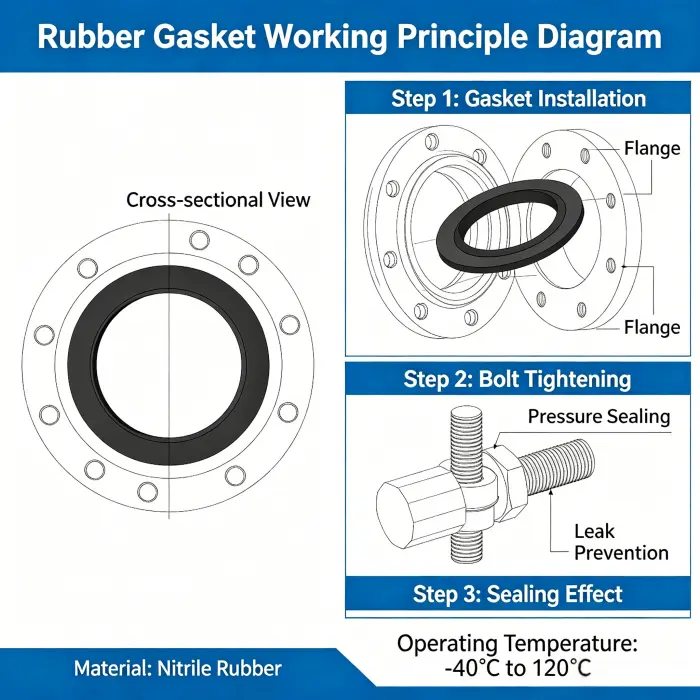
Installation: Clean flange faces; avoid twisting; tighten bolts in cross/star pattern to recommended torque. Select backup rings when pressure/clearance can cause extrusion.
-
Storage: Store flat in a cool, dry place away from direct sunlight and ozone sources. Shelf life typically 2–5 years depending on compound and storage conditions—check manufacturer’s guidance.
Why choose our neoprene gaskets
-
Custom compound blending: We can supply oil-toughened, flame-retardant, or food-grade CR compounds on request.
-
Fast die-cut & CNC routing service for small-to-large volumes with quick sample turnaround.
-
Value engineering: we help customers choose lower-cost alternatives where performance allows (example: EPDM instead of CR for pure water systems).
FAQ
Q1 — What are the common names/aliases for this product?
A: Common aliases include neoprene gaskets, chloroprene gaskets, CR gaskets, polychloroprene gaskets, and neoprene sheet gaskets.
Q2 — What is your minimum order quantity (MOQ)?
A: Typical MOQ for standard cut parts is 50–100 pieces. For sheet orders MOQ is usually 1 sheet (1220×2440 mm). Custom molded parts MOQ depends on tooling; we can quote low-volume prototypes.
Q3 — What are typical lead times?
A: Standard die-cut parts: 5–10 business days for stock materials. Custom compounds or molded tooling: 2–6 weeks depending on complexity. Expedited options can be arranged.
Q4 — What shipping methods do you offer?
A: We ship globally via express (DHL/UPS/FedEx) for small/urgent orders, air freight for medium orders, and sea freight for large bulk shipments. Packaging tailored for marine/industrial shipments is available.
Q5 — Can you make gaskets to our drawing / material spec?
A: Yes — we accept DWG/PDF/SKETCH and will provide a drawing confirmation and sample before mass production. Custom compounds (oil-resistant, flame-retardant, FDA-grade) can be formulated on request.
Q6 — Do you supply material / compliance certificates?
A: Yes — material certificates, MSDS and test reports are available for qualifying orders. Food-contact or special regulatory declarations require prior confirmation and may affect lead time.
Q7 — Is neoprene recommended for oil or fuel systems?
A: Neoprene offers moderate resistance to oils and fuels. For continuous heavy petroleum exposure use NBR (nitrile) or FKM (Viton) which provide superior long-term oil resistance.
Q8 — How should I select hardness (durometer) for my gasket?
A: For irregular or corroded flange faces choose softer grades (40–50A) for better conformability. For standard flanges choose 60A. For high compression or mechanical sealing choose 70–90A.
Q9 — What is the expected service life?
A: Service life depends on operating conditions. In outdoor, ozone-exposed environments neoprene often outlasts natural rubber, with many installations lasting years; provide operating temp/chemical details for specific estimates.
Q10 — Are there sanitary/FDA neoprene options?
A: Standard neoprene is not widely used for direct food contact. Special formulations with regulatory declarations can be offered but alternatives (silicone, FDA PTFE, or EPDM grades) are often preferred for food/pharma.