
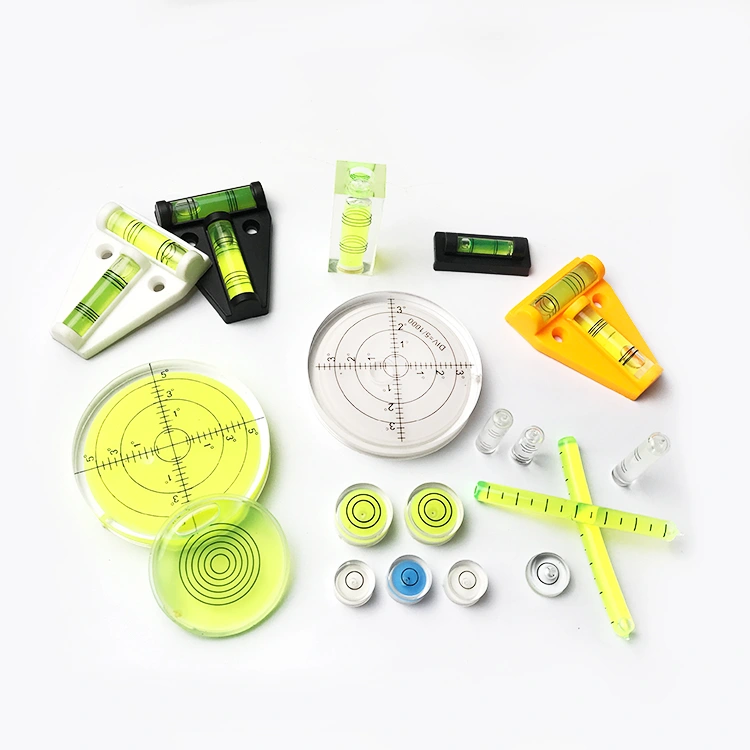
 1. What causes a bubble level vial to give inaccurate readings?
An uneven mounting surface is the most common culprit. If the base under the vial isn’t flat and clean, the bubble starts off-center from the beginning. Loose fixings allow the body to shift under vibration, and a hard impact can knock the glass tube out of alignment inside the housing. When readings drift, reseat the vial on a properly prepared surface and tighten or reinforce the mounting. Then check it against a known reference to confirm the problem is solved.
2. Why does the bubble move slowly or seem to stick?
Sluggish movement usually comes from two sources: temperature outside the normal working range, or deterioration of the damping liquid inside the tube. In extreme cold the liquid thickens; in high heat it can expand and dampen poorly, or slowly evaporate through micro-leaks. Keep the vial away from temperature extremes during use. If the bubble is still lazy at room temperature, the liquid has likely degraded or escaped. There is no practical repair—replace the vial.
3. Is it normal for the vial to detach or loosen over time?
It happens, and the fix depends on how the vial is mounted. For adhesive-backed types, both surfaces must be completely clean and dry before reattachment; old adhesive residue will prevent a lasting bond. Press the vial down firmly and leave it undisturbed while the adhesive sets. Screw-fixed vials need the fasteners tightened in a diagonal sequence with even torque—one-sided tightening warps the base and throws off the reading. For embedded or press-fit vials, check the slot dimensions. If there is any wobble, use thin shims or a retaining clip to take up the play. A vial that rocks in its pocket will never read consistently.
4. How can I tell if a bubble level vial still reads true?
The simplest field check uses a flat reference surface known to be level—a surface plate, a machine table that’s been surveyed, or a calibrated master level. Place the vial on the surface, let the bubble settle, and note its position. Then lift the vial, rotate it 180 degrees, and place it back in the same spot. If the bubble centers in the same way both times, the vial is accurate. If the bubble drifts to a different position or won’t repeat, the zero point has shifted. Don’t try to compensate for it—replace the vial.
5. How should I store bubble vials to keep them in good condition?
Store them flat, not standing on edge, in a dry and light-proof drawer or case. Keep them away from direct sunlight and heat sources like radiators or machinery that runs hot—prolonged heat evaporates the tube liquid. Avoid stacking heavy items on top, and give them enough space that they won’t knock against each other when the drawer opens. Check them every now and then for clouded glass, a split or missing bubble, or damaged markings. A quick visual inspection once in a while catches small problems before you carry a dead level to the job.
