
1. Which standards apply to borosilicate, soda-lime, and quartz circular sight glasses?
Borosilicate glass falls under DIN 7080. Soda-lime glass is covered by DIN 8902. Quartz glass does not sit under a specific DIN standard; it typically follows ASTM or ISO specifications and can be adapted to meet international requirements as needed. When ordering, ask the supplier to clearly state the standard each piece complies with.
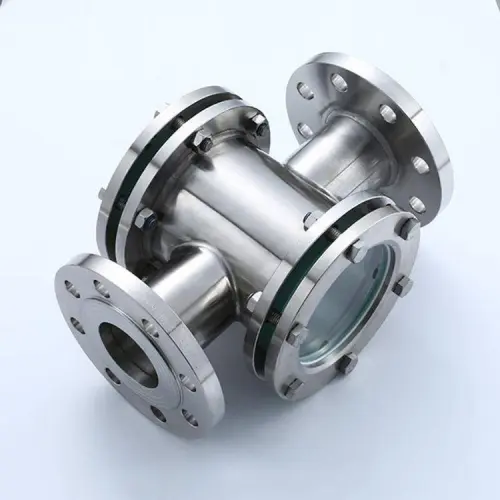 2. What are the maximum operating temperatures for the three materials?
Borosilicate holds up to about 280°C. Soda-lime glass is limited to roughly 150°C, so it stays in low-heat or ambient applications. Quartz handles up to 1000°C, which makes it the choice for furnaces and high-temperature reactors. Keep in mind that as temperature rises, pressure capacity often drops, so check both figures together.
3. Sight glasses crack during use. How can this be prevented?
Most cracks come down to three things: wrong material choice, thermal shock, or installation stress. Match the glass to the actual operating temperature first. Avoid sudden temperature swings—never spray cold liquid onto a hot sight glass. During installation, tighten the bolts in a diagonal pattern, slowly and evenly, in several passes. Don’t force the glass into a misaligned flange or strike it with tools. Before fitting, run a finger along the edges; even a tiny chip can grow into a crack later. Toss any piece that shows damage.
4. What type of sight glass should be used with corrosive media?
For strong acids, alkalis, or harsh chemical exposure, quartz is the safest bet. It resists most corrosive agents except a few like hydrofluoric acid and hot concentrated phosphoric acid. For mildly corrosive fluids, borosilicate usually works well and costs less. Soda-lime glass does not hold up in corrosive environments—limit it to water, oils, and neutral liquids.
5. How can I confirm a product meets industry standards before buying?
Request the test reports tied to the relevant standard—DIN 7080, DIN 8902, or ASTM/ISO for quartz. Look closely at three sets of numbers: the material grade, the temperature and pressure ratings, and the critical dimensions. A supplier with a proper quality system will also provide batch traceability with the shipment.
If your conditions don’t fit neatly into these ranges, send over the specifics—media, temperature, pressure, and flange size—and we can pinpoint the right glass. Every sight glass we ship is produced and checked against the appropriate international standard, so it drops straight into standard industrial setups.
