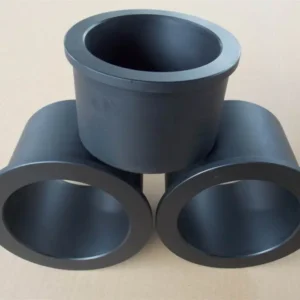
Product overview
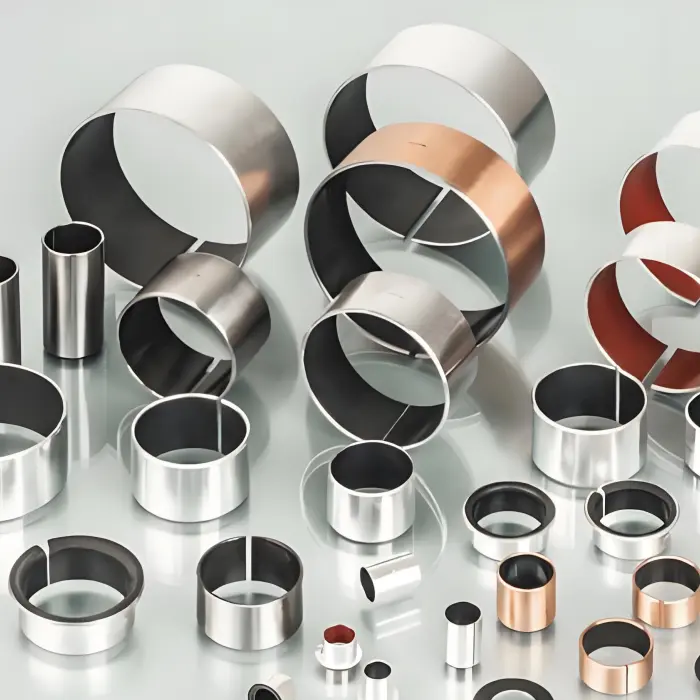
Shaft repair sleeves are engineered to be slipped over worn or grooved shaft surfaces to recreate the correct diameter, surface finish and sealing counterface without disassembling or re-machining the shaft. Typical sleeves are ultra-thin stainless steel or corrosion-resistant alloys, precision ground and finished to provide a new running surface for radial shaft seals and bearings.
Key features
-
Ultra-thin wall: standard wall thickness around 0.28 mm (0.011″) for many precision stocked sleeves, minimizing build-up while restoring diameter.
-
Precision surface finish: ground and lapped to typical finishes 10–20 µin (0.25–0.5 µm) for reliable sealing performance.
-
Stainless steel construction: AISI 304 / 316 stainless variants common for corrosion resistance and wear life.
-
Quick install: push-on or assembly-tool mounting; many kits include an installation sleeve/flange for safe, controlled fitting.
-
Stock & custom sizes: wide stock ranges for metric and imperial shafts; custom lengths, flanges and keyed options available.
Materials & selection guidance
Common sleeve materials
-
Stainless steel (AISI 304 / 316): corrosion resistance, dimensional stability and common for pump and rotary seal applications.
-
Nickel alloys / plated steel: used for specialized corrosion or wear environments where stainless steel is insufficient.
-
Bronze / brass sleeves (bush type): available where combined bearing and repair function is required—less common for thin repair sleeves.
When to choose a repair sleeve
-
Shaft has local wear grooves or seal grooves caused by seal lip wear and replacement of the seal alone will not stop leakage.
-
Replacement or re-machining of the shaft is cost-prohibitive or would require major disassembly.
-
You need a fast field repair or planned maintenance alternative that restores a seal-ready finish and correct running diameter.
Typical operating & dimensional parameters
| Parameter | Value / guidance |
|---|---|
| Standard wall thickness | 0.28 mm (0.011″) common for precision stainless repair sleeves. |
| Surface finish after installation | 10–20 µin (0.25–0.5 µm) recommended for seal counterfaces. |
| Common ID / shaft sizes stocked | Metric and imperial ranges — many suppliers stock ID ≈ 3–200 mm (0.125″–7.9″); extended/custom sizes available. |
| Typical sleeve length (h) | Common widths 6–50 mm for standard sleeves; pump-type sleeves and flanged versions up to several hundred mm for longer run surfaces. |
| Recommended shaft prep | Clean, remove burrs; for best fit use undamaged reference diameter measurement and press-fit using the supplied installation sleeve/mandrel. |
Common sizes & stock examples
-
Metric sample stock IDs: 12.00 mm, 13.89 mm, 15.00 mm, 16.00 mm, 20.00 mm, 25.40 mm, 31.75 mm, 40.00 mm, 50.80 mm, 63.50 mm.
-
Imperial sample stock: 0.622″ up to 7.005″ stock ranges for common pump and OEM replacement sleeves.
-
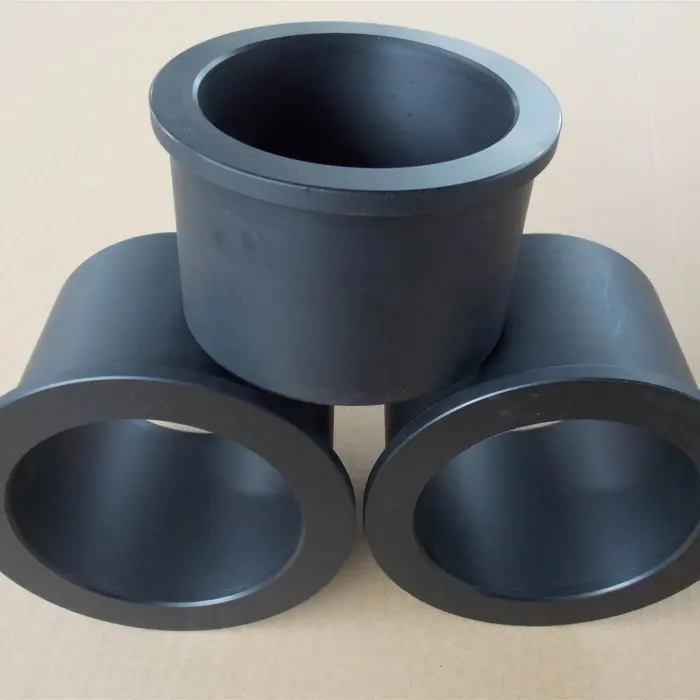
Form factors: full thin-wall jackets (slip-fit), flanged sleeves (with assembly flange), split sleeves and keyed OD/ID options for positive drive.
Advantages
-
Cost savings: usually far less expensive and faster than replacing or re-machining the shaft.
-
Minimal downtime: installation often performed in situ with simple pressing tools — ideal for pumps, gearboxes and rotating equipment.
-
Restores seal life: delivers a new, seal-ready counterface to stop leakage and prevent re-grooving of replacement seals.
-
Corrosion resistance: stainless options resist corrosion in wet or aggressive environments, extending service life.
Shaft repair sleeve vs other repair methods
| Characteristic | Shaft repair sleeve | Hard chrome plating | Shaft replacement / re-machining |
|---|---|---|---|
| Speed of repair | Very fast — minutes to hours, field install. | Moderate — requires specialist plating shop, longer lead time. | Slow — full disassembly, machining or supply lead times. |
| Cost | Low — economical for single items or fleets. | Medium–high — plating and post-machining costs. | High — new shaft or major shop work. |
| Required equipment | Press or installation mandrel (often supplied). | Plating bath, finishing tools. | Full machine shop capability. |
| Resulting surface | Precision ground, seal-ready finish. | Can achieve excellent surface but needs post-finishing. | OEM surface integrity restored. |
Shaft repair sleeve vs Hydraulic guide ring
-
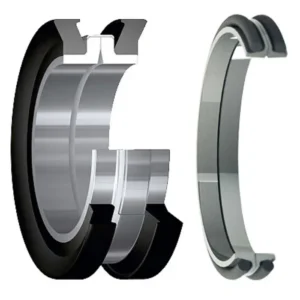
Function: Shaft repair sleeves restore a worn shaft counterface for seals/bearings; guide rings (including hydraulic guide rings) center pistons/rods and control radial loads inside cylinders. These two components serve different roles and are not interchangeable.
-
Service environment: Repair sleeves are typically used on rotating shafts and pump shafts; hydraulic guide rings operate inside cylinders where compressive load capacity and wear properties differ. Choose the correct component by function—repair sleeve for sealing counterface restoration, guide ring for piston guidance.
-
Material & geometry: Guide rings are often polymeric (PTFE, POM, phenolic) sized and grooved for axial guidance; repair sleeves are thin metal jackets machined for tight ID/OD control and surface finish. (Do not substitute.)
Installation & maintenance notes
-
Measure first: determine undamaged reference diameter in an undamaged shaft area to select correct sleeve nominal ID.
-
Shaft prep: clean shaft, remove loose corrosion and burrs; avoid heavy grinding that changes reference diameter.
-
Use installation tool: press the sleeve using the supplied assembly sleeve/mandrel or controlled hydraulic press to avoid distortion; remove assembly flange per instructions.
-
Final inspection: verify sleeve runout, seal seating surface finish and axial position; replace radial seals as required.
-
Service life checks: monitor for unusual wear or fretting—replace sleeve if surface is damaged or leaking recurs.
Downloads (buyer resources)
FAQ
Q — What sleeve thickness should I choose?
A — For precision repair sleeves the common standard wall is ≈0.28 mm (0.011″); thicker jackets or flanged sleeves exist for special applications. Provide the undamaged reference diameter and desired final running surface when requesting a quote.
Q — How do I measure the shaft to select a sleeve?
A — Measure the diameter at an undamaged section of the shaft with a calibrated micrometer. Use that nominal shaft dimension to pick the sleeve part whose nominal shaft Ø range contains that measured value (installation instruction included in each kit).
Q — Can sleeves be installed without removing the pump or machine?
A — Many sleeves are designed for in-place installation using the supplied assembly flange/mandrel; however, access and machine type determine feasibility. Provide photos or model information for a field-fit assessment.
Q — Do you provide custom or production quantities?
A — Yes — we supply single repair sleeves for maintenance as well as larger OEM production batches with part numbering, optional flanges and keyed features.