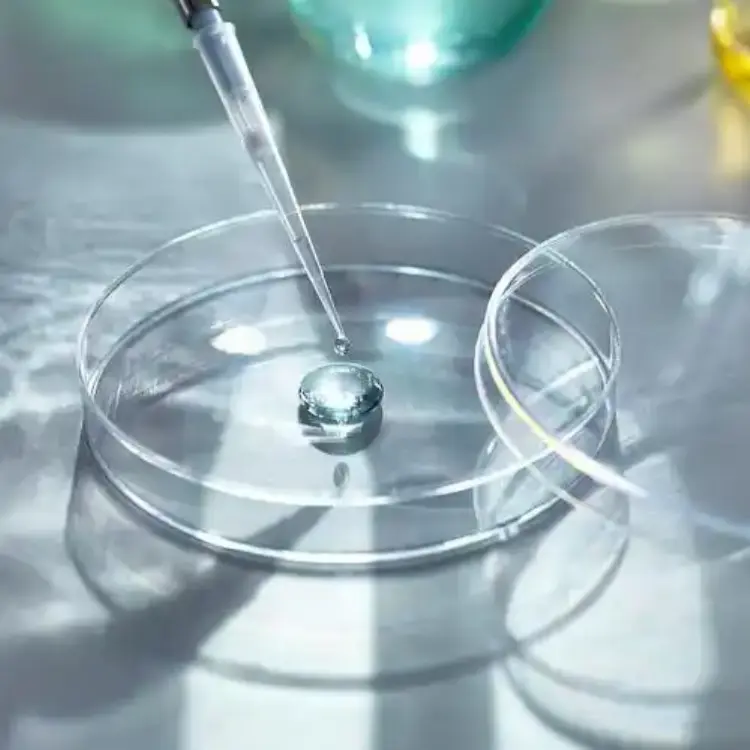
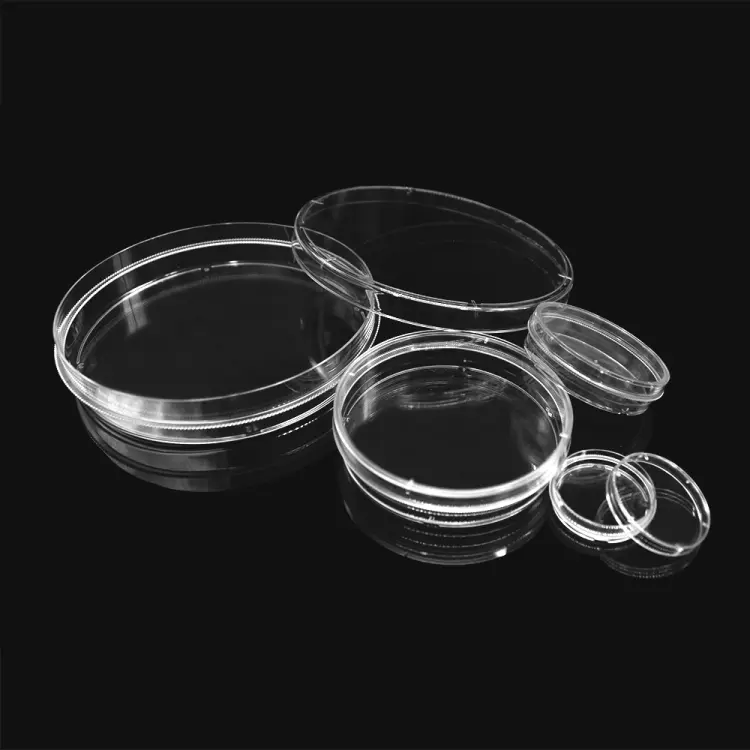
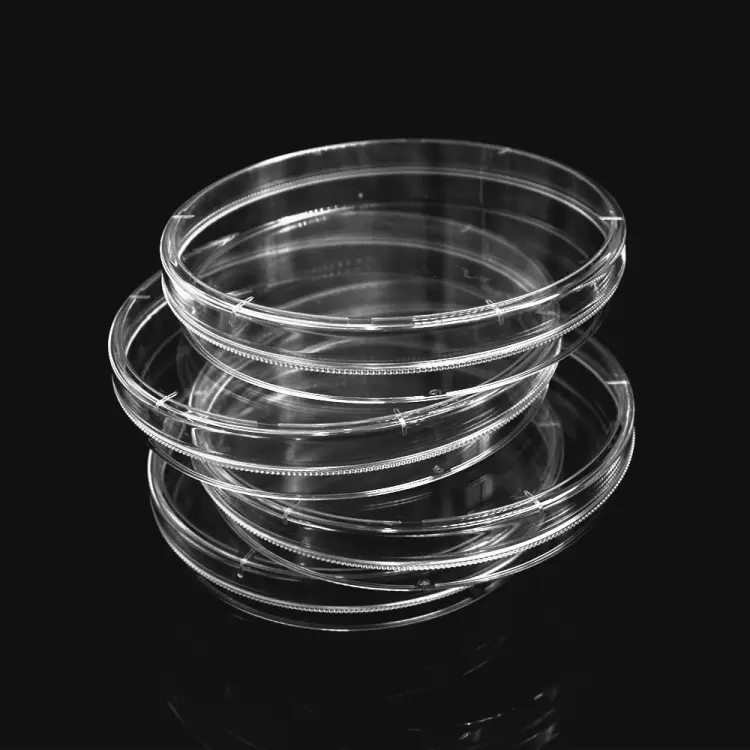

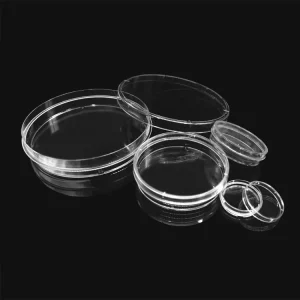
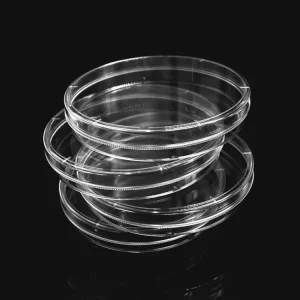
Our quartz Petri dishes are precision-crafted from high-purity fused silica, delivering exceptional thermal stability and optical clarity for demanding laboratory applications. These premium quartz glass Petri dishes are engineered to withstand extreme temperatures up to 1200°C while maintaining complete chemical inertness against most acids and corrosive reagents.
Applications & Usage Scenarios
Quartz Petri dishes (also known as fused silica Petri dishes) serve as indispensable tools across diverse laboratory and industrial settings:
-
Microbiology & Cell Culture – Premium-grade containers for culturing and observing biological cells under controlled conditions. Compatible with high-temperature sterilization protocols and direct flaming up to 1100°C.
-
Spectroscopy & Optical Analysis – With 80% transmission from 300nm to 800nm wavelength range, quartz Petri dishes enable precise UV-Vis spectroscopic measurements.
-
High-Temperature Material Analysis – Ideal for thermal gravimetric analysis (TGA), sample drying, and material testing applications requiring sustained heat exposure.
-
Corrosive Chemical Processing – Inert to virtually all chemicals except hydrofluoric acid, suitable for handling aggressive reagents including hydrochloric, sulfuric, and nitric acids.
-
Semiconductor & Cleanroom Applications – Ultra-high purity ensures minimal contamination in sensitive manufacturing and research environments.
Material & Specifications
Material Properties
| Property | Specification |
|---|---|
| Material | Fused Silica / Quartz Glass |
| SiO₂ Purity | ≥99.99% |
| Softening Point | 1730°C |
| Maximum Continuous Use Temperature | 1200°C |
| Short-Term Exposure Temperature | up to 1450°C |
| Thermal Expansion Coefficient | 0.48 × 10⁻⁶/K (-100°C to 35°C) |
| Optical Transmission Range | 300-800nm (UV-Visible) |
| Chemical Resistance | Inert to all acids except hydrofluoric acid |
Data sourced from industry technical specifications.
Available Dimensions
| Model Reference | Diameter × Height | Lid Included |
|---|---|---|
| QPD06015 | Ø60 × 15 mm | Yes |
| QPD09017 | Ø90 × 17 mm | Yes |
| QPD10012 | Ø100 × 12 mm | Yes |
| QPD12025 | Ø120 × 25 mm | Yes |
| QPD15030 | Ø150 × 30 mm | Yes |
Standard sizes are available from stock. The default bottom dish height is 21mm, and the default lid height is 19mm for most models. Custom dimensions and non-standard diameters can be manufactured upon request.
Key Advantages
Exceptional Thermal Shock Resistance
The extremely low thermal expansion coefficient allows quartz Petri dishes to withstand rapid temperature cycling without cracking. Dishes can be heated to 1100°C and plunged into room temperature water without thermal fracture.
Superior Chemical Stability
With SiO₂ purity exceeding 99.99%, these dishes exhibit 30× greater chemical resistance than ceramics and 150× greater than stainless steel. Sustained exposure to 37% hydrochloric acid and 98% sulfuric acid shows negligible surface erosion.
Repeated Sterilization Capability
Unlike plastic alternatives, quartz Petri dishes maintain dimensional stability through multiple autoclave cycles at 121°C/15 psi. They show minimal warping after repeated sterilization, ensuring consistent experimental reproducibility.
Optical Precision
The high-purity quartz material provides exceptional transparency across UV, visible, and IR spectra, enabling real-time microscopic observation and spectroscopic analysis without distortion.
Technical Specifications Table
| Parameter | Value |
|---|---|
| Material | Fused Quartz / Fused Silica |
| Purity (SiO₂) | 99.99% |
| Maximum Working Temperature (Continuous) | 1200°C |
| Maximum Temperature (Short-Term) | 1450°C |
| Thermal Expansion Coefficient | 0.48 × 10⁻⁶/K |
| Wavelength Transmission Range | 300–800 nm (80% transmission) |
| Chemical Resistance | Inert to all acids except HF |
| Autoclave Compatibility | 121°C, 15 psi, 15–20 minutes |
| Certifications | DIN 12339 compliant |
| Edge Finish | Ground glass edge |
Quality Assurance & Compliance
These quartz glass Petri dishes are manufactured in compliance with DIN 12339 standards, ensuring dimensional accuracy and material quality for laboratory glassware. RoHS (EU) 2015/863 compliance is available for applicable models.