
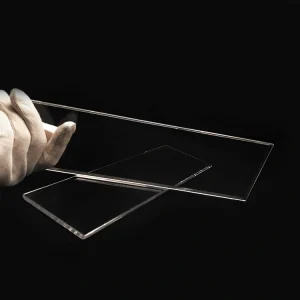
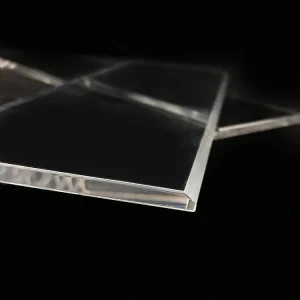
Product Overview & Applications
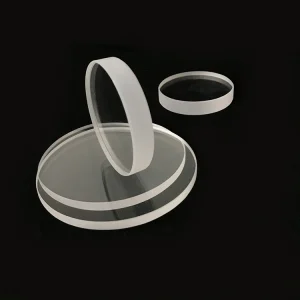
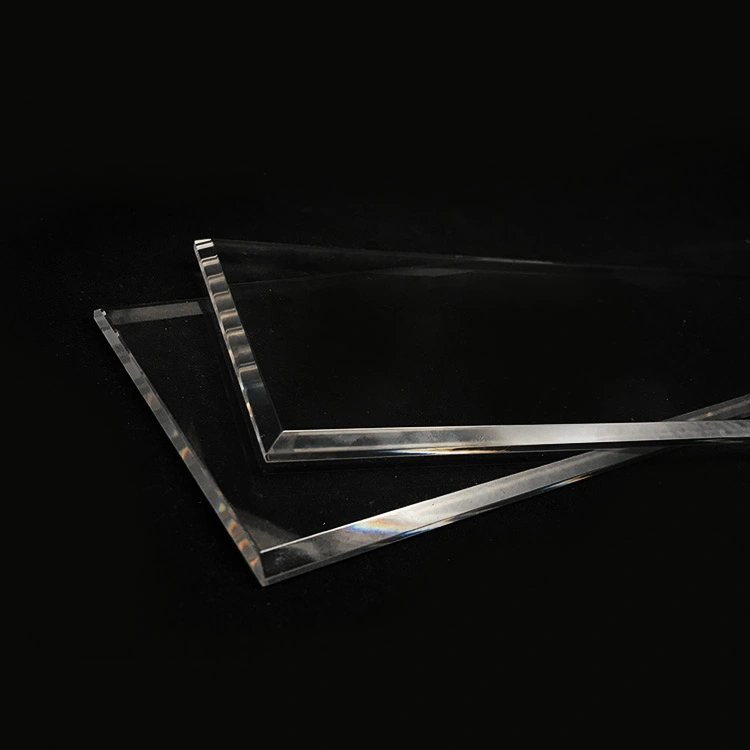
Fused quartz sheet (also known as fused silica plate, transparent quartz glass sheet, or quartz wafer) is a high-purity amorphous silica (SiO₂) material produced by melting high-purity quartz sand or synthetic silica precursors at extremely high temperatures, resulting in an optically isotropic, non-crystalline structure with minimal metallic impurities. It offers a continuous use temperature up to 1100–1400 °C, excellent thermal stability, wide spectral transmission across ultraviolet, visible, and infrared ranges, superior resistance to thermal shock and chemical corrosion, as well as outstanding electrical insulation properties. These characteristics make fused quartz sheet ideal for semiconductor processing, precision optics, high-power laser systems, and demanding high-temperature industrial environments.
Key Application Scenarios
-
Semiconductor & Electronics – Wafer carriers, diffusion furnace components, plasma etching windows, and substrate holders for lithography equipment. The material‘s high purity (≥99.99% SiO₂) minimizes contamination risk in cleanroom processes.
-
Optics & Photonics – Optical windows, lenses, beam splitters, mirrors, and protective barriers for UV to IR imaging systems. High transmission and low auto-fluorescence make it suitable for fluorescence microscopy and spectroscopy setups.
-
Laser Systems – Windows, protective covers, and optical filters for high-power laser applications; excellent resistance to laser-induced damage and thermal lensing.
-
High-Temperature & Industrial Equipment – Observation windows for high-temperature furnaces, thermal insulation barriers, and viewports for vacuum chambers. Low thermal expansion and high thermal shock resistance ensure structural integrity under rapid heating and cooling cycles.
-
Laboratory & Research – Spectrophotometer cells, microfluidic substrates, reaction vessels, and quartz slides for analytical instrumentation.
Material & Technical Specifications
Material Composition
Fused quartz sheets are composed primarily of silicon dioxide (SiO₂) with purity levels typically ranging from 99.9% to 99.999%, depending on the grade. Available grades include:
-
UV Grade (JGS1 / Synthetic Fused Silica) – Ultra-high purity synthetic material, excellent UV transmission down to ~180 nm, low OH content, ideal for deep-UV optics, laser substrates, and semiconductor applications.
-
Optical Grade (JGS2 / Fused Quartz) – Natural quartz feedstock, good visible to IR transmission, economical option for general optical windows and high-temperature industrial use.
-
IR Grade (JGS3 / Low-OH Fused Quartz) – Extremely low hydroxyl (OH) content (~5 ppm), optimized for infrared transmission up to 3500 nm, suitable for FTIR spectroscopy and thermal imaging.
Typical transmission range: approximately 180 nm to 3500 nm (varies by grade).
Dimensional Capabilities
-
Thickness Range: 0.2 mm to 100 mm
-
Length / Width: Customizable; common sizes from 25×25 mm up to 300×300 mm and larger
-
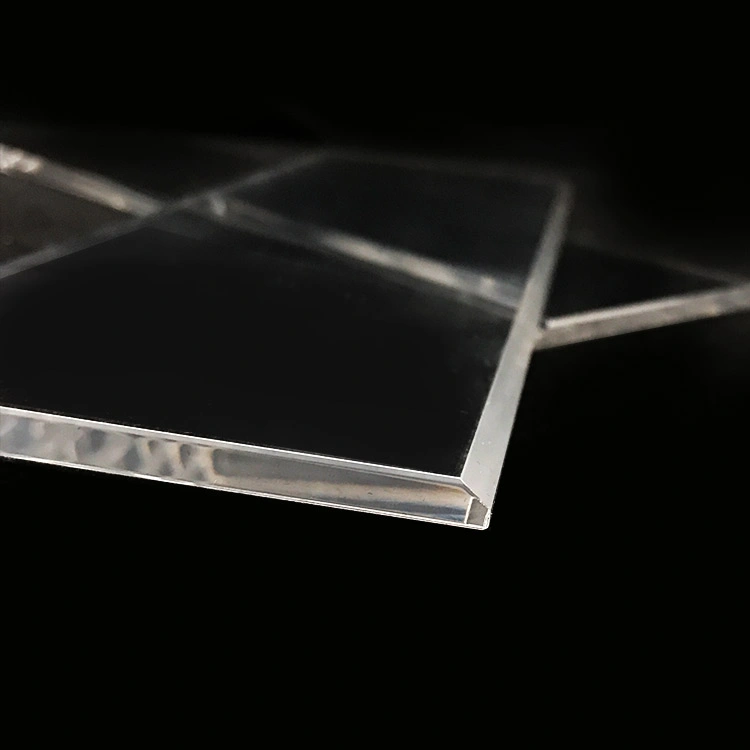
Shape Availability: Rectangular, square, circular, or custom irregular geometries (drilled holes, slots, chamfered edges available)
-
Surface Finish Options: Polished (single or double side), ground, lapped, or as-cut
Technical Parameter Table
| Parameter | Value | Unit | Notes |
|---|---|---|---|
| Chemical Formula | SiO₂ | — | Purity ≥ 99.99% for optical grades |
| Density | 2.20 – 2.21 | g/cm³ | @ 20 °C |
| Melting Point | 1660 – 1715 | °C | Softening point ~1730 °C |
| Continuous Use Temperature | 1100 – 1400 | °C | Short-term up to 1450 °C |
| Coefficient of Thermal Expansion | 0.52 – 0.57 × 10⁻⁶ | /°C | 20–1000 °C range |
| Thermal Conductivity | 1.4 – 1.46 | W/(m·K) | @ 20 °C |
| Specific Heat | 670 – 740 | J/(kg·K) | @ 25 °C |
| Refractive Index (nₔ) | 1.458 – 1.46 | — | @ 500–589 nm |
| Useful Transmission Range | 180 – 3500 | nm | Varies by grade |
| Dielectric Constant | 3.8 | — | @ 1 MHz |
| Dielectric Strength | 25 – 40 | kV/mm | — |
| Volume Resistivity | 10¹⁴ – 10¹⁸ | Ω·cm | @ 25 °C |
| Tensile Strength | 48 – 50 | MPa | Ultimate |
| Compressive Strength | ~1100 | MPa | — |
| Modulus of Elasticity (Young‘s) | 70 – 78 | GPa | — |
| Poisson’s Ratio | 0.16 – 0.17 | — | — |
| Knoop Hardness | 820 | kgf/mm² | — |
| Mohs Hardness | 5.5 – 7.0 | — | — |
| Water Absorption | 0 | % | — |
| Thermal Shock Resistance | Excellent | — | Heated to 1100 °C then quenched in water without cracking |
Standard Dimensions & Custom Sizes
| Thickness (mm) | Length × Width (mm) | Surface Finish | Typical Application |
|---|---|---|---|
| 0.25 – 1.0 | 10×10 – 150×150 | Polished / DSP | UV windows, microfluidic substrates |
| 1.0 – 3.0 | 25×25 – 300×300 | Polished / Ground | Optical windows, laser protective plates |
| 3.0 – 10.0 | 50×50 – 300×300 | Polished / Lapped | Semiconductor viewports, furnace windows |
| 10.0 – 100.0 | Custom dimensions | As-cut / Ground | Thermal barriers, structural components |
Note: All dimensions listed represent commonly available standard sizes. Custom dimensions, irregular shapes, edge chamfering, drilled holes, and slots are available upon request.
Quality Certifications & Inspection Data
All fused quartz sheet products are manufactured under strict quality control systems and are accompanied by relevant certifications and test documentation:
-
Material Purity Certification – SiO₂ content verified ≥ 99.99% via trace element analysis.
-
Optical Transmission Report – Spectral transmission curves provided for UV-Vis-IR range (typically 180–3500 nm) upon request.
-
Dimensional Inspection – Thickness tolerance typically within ±0.1 mm; surface flatness and parallelism verified per optical grade requirements.
-
Quality System Compliance – Manufacturing processes adhere to recognized industry standards for advanced ceramics and optical materials.
-
Test Reports Available – Chemical composition analysis, mechanical property verification, and thermal shock resistance data can be provided with order shipments.