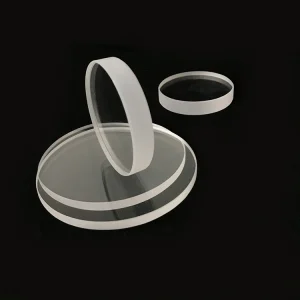
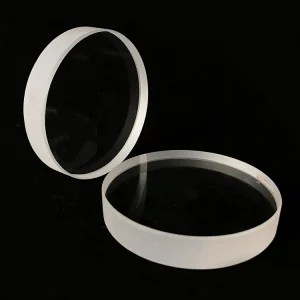
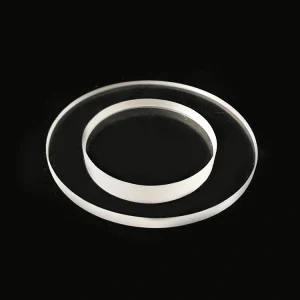
Overview
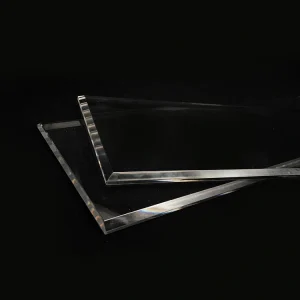
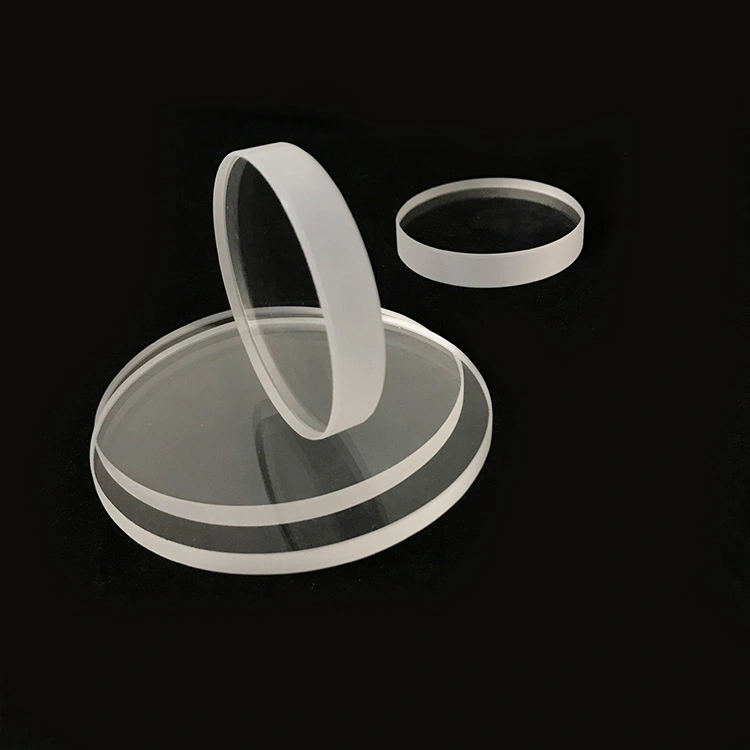
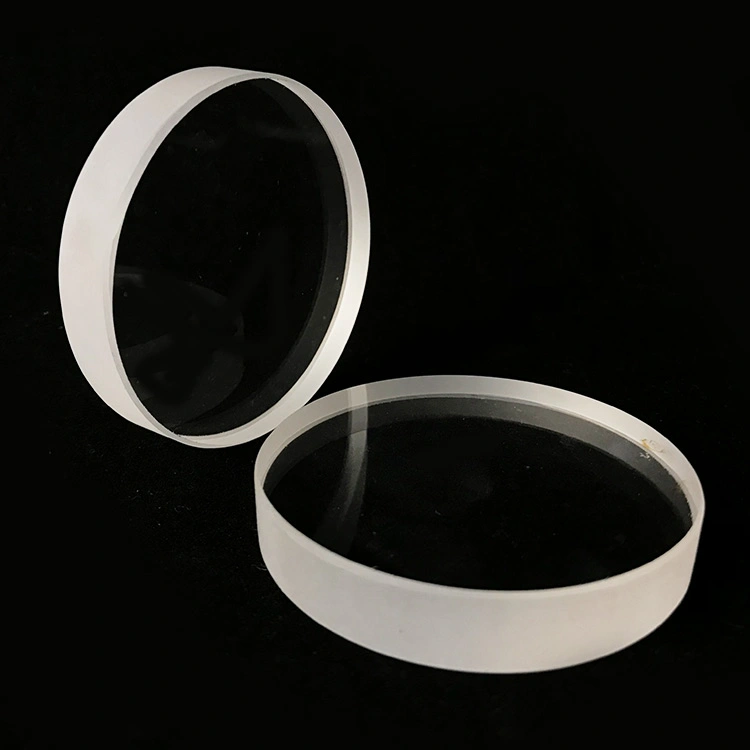
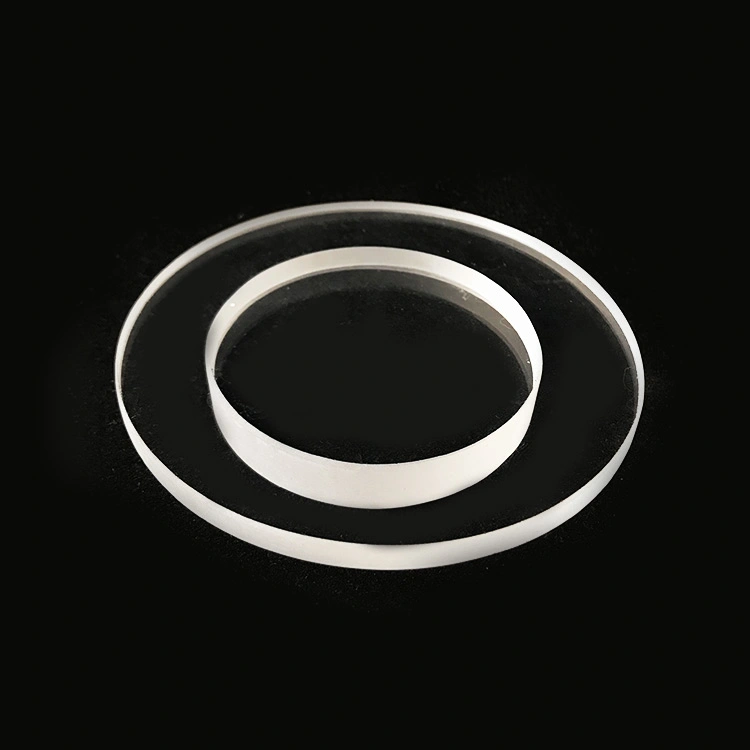
Our Optical Quartz Windows are engineered from premium-grade fused quartz materials (JGS1 UV-grade or JGS2 grade) to deliver exceptional clarity and durability. With a wide transmission range from 190 nm to 3500 nm and the ability to withstand temperatures up to 1050°C (softening point 1683°C), these windows are ideally suited for high-temperature environments and demanding optical systems. Available in multiple standard diameters and thicknesses, all quartz window blanks can be custom-fabricated to your exact specifications with optional anti-reflection (AR) coatings.
Key Features & Benefits
-
Broadband Transmission: High optical clarity from 190 nm (deep UV) through 3500 nm (MWIR), ensuring minimal signal loss across the full spectrum.
-
Exceptional Thermal Stability: Extremely low coefficient of thermal expansion (CTE) – approximately 0.52–0.55 × 10⁻⁶/°C – prevents warping under thermal shock and rapid temperature cycling.
-
Superior Chemical Durability: Excellent resistance to water, acids (excluding hydrofluoric acid), and organic solvents – ideal for harsh laboratory and industrial environments.
-
High Mechanical Hardness: Knoop hardness of 522 kg/mm² (Mohs 5.5–6.5) provides robust scratch resistance and long service life.
-
Excellent Optical Homogeneity: Low bubble class (0 for JGS1) and minimal inclusion content ensure consistent beam quality for laser and imaging applications.
-
Electrical Insulation: Outstanding dielectric properties, even at elevated temperatures, suitable for applications where electrical isolation is required.
Applications
Optical Quartz Windows are critical components across a wide range of high-tech industries:
-
Laser Systems: Protective windows for laser cavities and beam delivery in industrial cutting, marking, and scientific research.
-
Spectroscopy & Analytical Instruments: Used in UV-Vis and IR spectrophotometers, fluorometers, and other analytical equipment for precise optical measurements.
-
Semiconductor Manufacturing: UV lithography mask aligners, wafer inspection systems, and process chamber viewports.
-
Aerospace & Defense: Sensor windows, targeting systems, and harsh-environment optical assemblies.
-
Medical & Life Sciences: Diagnostic imaging equipment, UV sterilization chambers, and fluorescence microscopy.
-
Industrial Process Monitoring: High-temperature furnace sight glasses and pressure vessel viewports.
Material Grades
| Grade | Designation | Spectral Range | Typical Transmittance | Key Characteristics |
|---|---|---|---|---|
| JGS1 | UV-Grade Fused Silica | 185–2500 nm | ≥90% @ 185 nm | Ultra-high purity, deep-UV transmission, high OH content (~2000 ppm), bubble class 0 |
| JGS2 | UV Optical Quartz | 220–2500 nm | ≥85% | Good UV transmission, cost-effective, virtually bubble-free in thin sheets |
| JGS3 | IR-Grade Fused Quartz | 260–3500 nm | ≥85% | Low OH content (≤5 ppm), optimal for infrared applications |
Standard Product Specifications
| Parameter | Standard Value | Optional / Custom Range |
|---|---|---|
| Material | JGS1 / JGS2 / JGS3 Fused Quartz | IR-grade fused quartz, custom substrates |
| Diameter | 12.7 mm, 25 mm, 50 mm (standard) | 5 mm – 500 mm |
| Thickness | 1 mm, 2 mm, 3 mm (standard) | 0.1 mm – 50 mm (subject to dimension) |
| Diameter Tolerance | +0.00 / –0.13 mm | ±0.05 mm (precision grade) |
| Thickness Tolerance | ±0.13 mm | ±0.01 mm (precision grade) |
| Surface Quality | 40–20 Scratch-Dig (MIL-PRF-13830B) | Up to 10–5 Scratch-Dig |
| Surface Flatness (P-V) | 1λ per inch @ 633 nm | λ/4, λ/10, λ/20 (high-precision) |
| Parallelism | <3 arcmin (standard) | ≤1 arcmin, ≤30 arcsec, ≤5 arcsec (precision) |
| Clear Aperture | 85% (standard) | 90%+ available upon request |
| Transmission Range | 190–3500 nm | Extended via specialized coatings |
| Coating Options | Uncoated (standard) | AR coatings, broadband AR, V-coat, silver/gold reflective coatings |
| Edge Finish | Fine ground (standard) | Polished edges, chamfered, beveled |
| Operating Temperature | Up to 1050°C (continuous) | Short-term up to 1300°C |
Dimensional Options
| Standard Diameter | Typical Thicknesses Available | Shape Options |
|---|---|---|
| 12.7 mm (0.5″) | 1.0 mm, 2.0 mm, 3.0 mm | Round |
| 25.0 mm (1.0″) | 1.0 mm, 2.0 mm, 3.0 mm, 5.0 mm | Round / Square |
| 50.0 mm (2.0″) | 1.0 mm, 2.0 mm, 3.0 mm, 5.0 mm, 6.0 mm | Round / Square |
| Custom Sizes | 0.1 mm – 50 mm | Round, Square, Rectangular, Irregular Shapes |
*Custom quartz windows are available in diameters up to 500 mm and square formats up to 1000×1000 mm. For applications requiring non-standard dimensions or specialized shapes, please submit your drawing for a tailored quotation.*
Quality Certifications & Compliance
All Optical Quartz Windows are manufactured and inspected in accordance with internationally recognized standards:
-
MIL-PRF-13830B: U.S. Department of Defense standard for optical component surface quality (scratch-dig grading) – widely adopted as the global benchmark for high-reliability optics.
-
ISO 10110-7 / ISO 14997: International standards for surface imperfection and visibility inspection.
-
ISO 9001:2015: Certified quality management system ensures consistent production and traceability.
-
RoHS 2015 Compliant: All materials meet Restriction of Hazardous Substances requirements.
Full inspection reports and certificates of conformance are available upon request. Custom metrology data can be provided for precision-grade components.
Coating Services
For applications requiring enhanced transmission or specialized optical performance, we offer a comprehensive range of thin-film coatings:
-
Broadband Anti-Reflection (BBAR) Coatings: Optimized for UV-Vis, Vis-NIR, or IR spectral ranges – minimizes reflection losses and maximizes throughput.
-
Narrowband V-Coatings: Tailored for specific laser wavelengths, ideal for monochromatic applications.
-
Dual-Band & Multi-Band Coatings: Custom-designed for systems operating at multiple discrete wavelengths.
-
High-Reflection (HR) Coatings: Silver or gold coatings for mirror applications in the IR spectrum.
*Coating durability meets the severe abrasion requirements of MIL-C-48497C. Contact our technical team to discuss your specific coating requirements.*
Typical Inspection Data
Each production lot undergoes rigorous metrological inspection. Representative test results include:
-
Transmission Testing: Verified using UV-Vis-NIR spectrophotometry; typical transmittance exceeds 90% across the specified wavelength range for JGS1 material.
-
Surface Quality Verification: Inspected under controlled lighting per MIL-PRF-13830B standards – standard grade meets 40–20 Scratch-Dig.
-
Flatness Measurement: Interferometric testing at 633 nm confirms surface flatness to 1λ per inch (standard grade) or better for precision grades.
-
Parallelism Validation: Autocollimator measurements ensure transmitted beam deviation remains within <3 arcmin (standard) or tighter tolerances as specified.