Product Overview
What is a Spiral Wound Gasket Without Inner Ring (Style R)?
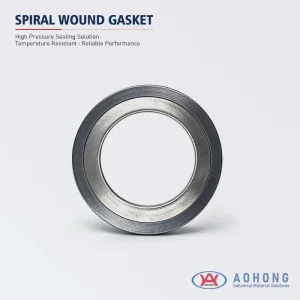
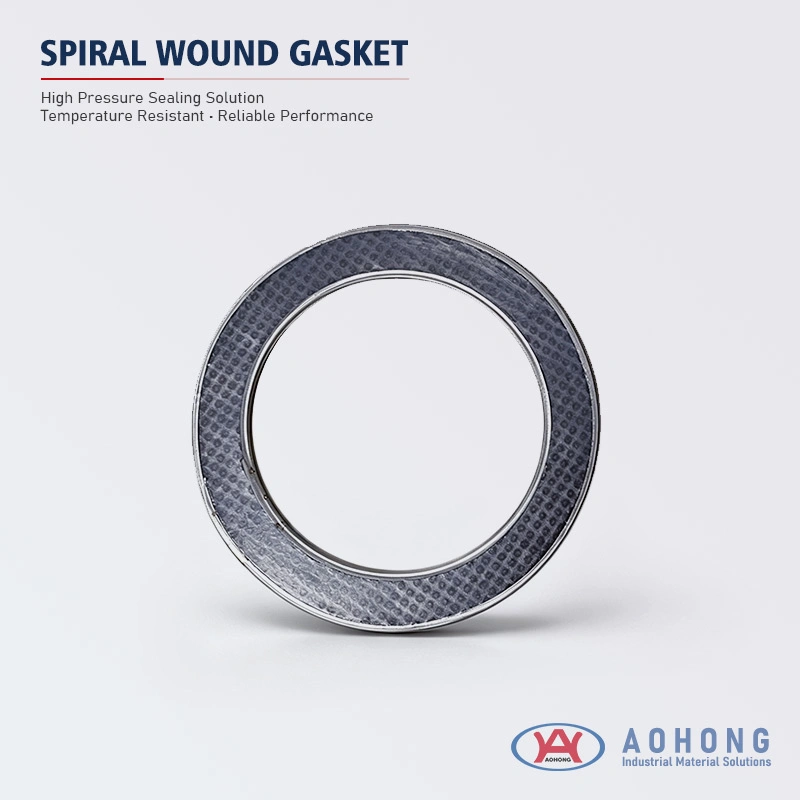
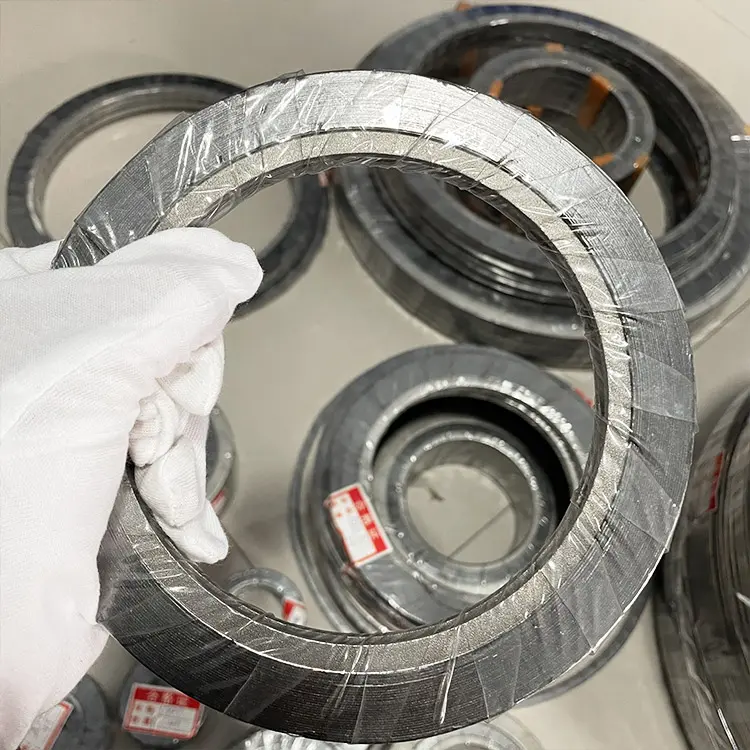
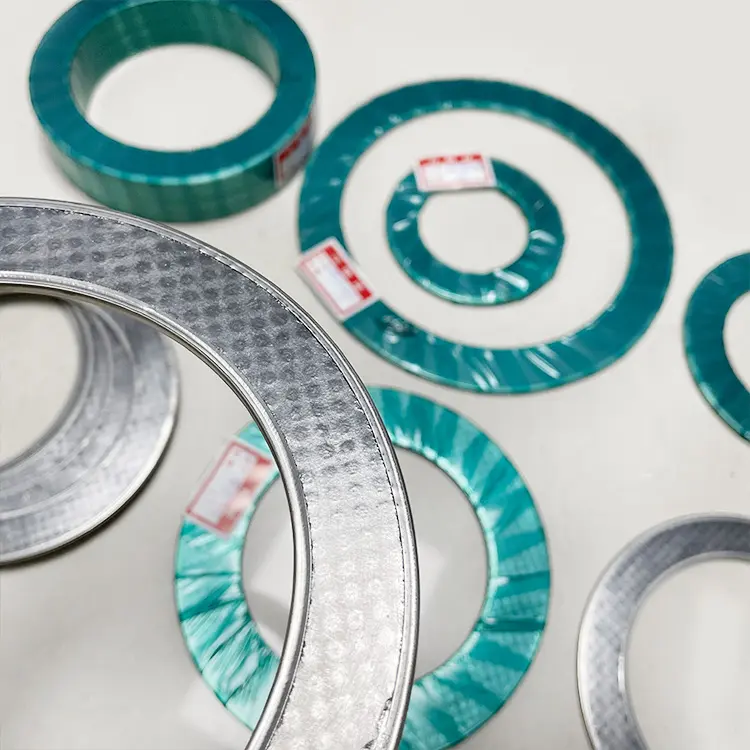
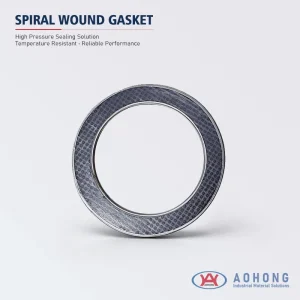
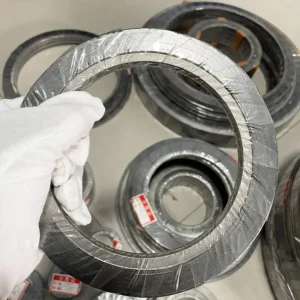
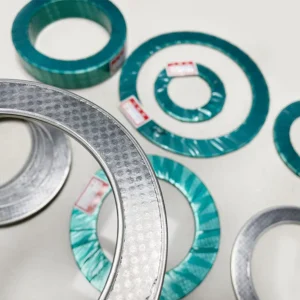
A spiral wound gasket without inner ring is the sealing element only — a v-shaped metal winding strip and filler material wound in a spiral. Unlike gaskets furnished with inner rings, Style R gaskets omit the inner stop ring and are intended for flange types where precise centering is less critical (tongue-and-groove, male/female). This style is widely used in process industries where flange faces and joint designs accommodate a sealing element only.
The spiral wound gasket without inner ring (commonly called Style R, SWG no inner ring, or simply spiral-wound sealing element) is a semi-metallic sealing element made of a spirally wound metal strip and a filler material (graphite, PTFE, etc.). Designed for tongue-and-groove, male-female and raised-face flange joints where a centering/inner ring is not required, it delivers excellent resilience and reliable sealing across fluctuating temperature and pressure conditions.
 Common Aliases
 Common Aliases
-
Spiral Wound Gasket (no inner ring)
-
Spiral-wound gasket without inner ring
-
Style R spiral wound gasket
-
SWG no inner ring / SWG (Style R)
-
Spiral wound sealing element
Construction & Materials
How it’s made (brief):
-
Winding (metal strip): usually 304/316 stainless steel, 321 or Inconel depending on corrosion/temperature needs.
-
Filler: flexible graphite (graphitized carbon), PTFE, or other soft fillers inserted between windings.
-
No inner ring: the sealing element is supplied without the metallic inner stop; this reduces cost and is beneficial where inner ring interference must be avoided.
Why choose different fillers?
-
Flexible graphite: excellent high-temperature performance and conformability (typical use in refinery/petrochemical).
-
PTFE: for aggressive chemicals with lower temperature requirements (PTFE service limit around ~260°C).
(Use the filler that matches chemical compatibility and temperature/pressure requirements.)
Standards & notes:
Most manufacturers follow ASME B16.20 and common practice — note: graphite-filled spiral wound gaskets are often furnished with inner rings unless the purchaser specifies “no inner ring.” Always state “no inner ring” in the PO if you require Style R.
Key Benefits (bullet list / quick scan)
-
Reliable sealing under temperature/pressure fluctuations
-
High recovery and resilience due to metal winding elasticity
-
Compatible with high-temperature graphite fillers or chemically resistant PTFE fillers
-
Lower profile and lighter weight without inner ring — easier handling for some flange types
-
Cost-effective for suitable flange configurations (no centering ring cost)
-
Conformability to flange face irregularities (if filler chosen appropriately)
Typical Applications
-
Oil & gas upstream/downstream piping (where flange geometry allows)
-
Refinery and petrochemical process lines
-
Steam lines and high-temperature process services
-
Chemical plants (with appropriate filler selection)
-
General industrial piping where tongue-and-groove or male/female flanges are used.
Specifications & Standards
Standards: ASME B16.20, API and DIN equivalents on demand.
Materials (typical builds):
-
Winding: 304 SS / 316 SS / 321 / 1.4541 / Inconel (select per corrosion/temperature).
-
Filler: Flexible graphite (98%C), PTFE, mica (special), or combined fillers.
Temperature & Pressure (guideline ranges — validate for each material combo):
-
Graphite filler + 316 SS windings: approx. −200°C to +450°C (service dependent).
-
PTFE filler + SS windings: approx. −60°C to +260°C.
-
Pressure classes: usable over ASME classes 150 → 2500 depending on design & flange.
Note: the exact allowable pressure / temperature depends on filler, winding alloy, and flange class — always confirm with manufacturer datasheet.
Dimensional Table (common sizes — based on ASME B16.20 / typical manufacturer tables)
Typical Spiral Wound Gasket Dimensions (example—ID/OD in mm)
(Below are representative dimensions per NPS and pressure class — use these as a starting point and confirm exact ‘d1/d2/d3/d4’ values per ASME / manufacturer.)
| NPS (in) | d1 (ID mm) | d2 (mm) | d3 (mm) | d4 (OD mm) |
|---|---|---|---|---|
| 1/2″ | 14.2 | 19.1 | 31.8 | 47.8 |
| 3/4″ | 20.6 | 25.4 | 39.6 | 57.2 |
| 1″ | 26.9 | 31.8 | 47.8 | 66.8 |
| 1½” | 44.5 | 54.1 | 69.9 | 85.9 |
| 2″ | 55.6 | 69.9 | 85.9 | 104.9 |
| 3″ | 81.0 | 101.6 | 120.7 | 136.7 |
| 4″ | 106.4 | 127.0 | 149.4 | 174.8 |
| 6″ | 157.2 | 182.6 | 209.6 | 222.3 |
| 8″ | 215.9 | 233.4 | 263.7 | 279.4 |
| 10″ | 268.2 | 287.3 | 317.5 | 339.9 |
| 12″ | 317.5 | 339.9 | 374.7 | 409.7 |
Common thicknesses / cross sections (examples):
-
Standard sealing element thicknesses: 3 mm, 4.5 mm, 6 mm (varies by design and pressure class).
-
Inner/outer rings (if present in other styles) are omitted in Style R.
(For custom sizes or pressure classes, provide ASME B16.20 reference or request a drawing/print.)
Common Sizes
-
Standard stock sizes: ½”, ¾”, 1″, 1½”, 2″, 3″, 4″, 6″, 8″, 10″, 12″ (NPS).
-
Special bore/OD or metric sizes available on request — we manufacture per ASME, DIN or customer drawings.
Installation & Best Practices
-
Flange face compatibility: ideal for tongue-and-groove, male/female or raised-face flanges — not recommended where centering is essential unless a centering ring or outer ring is supplied.
-
Surface finish: ensure flange face finish meets gasket/filler recommendations (roughness affects seal).
-
Bolt load: tighten per flange and gasket manufacturer torque chart; use uniform, crosswise sequence.
-
Avoid overtightening: can crush filler and reduce sealing life; undertightening causes leakage.
-
Ordering tip: when you need no inner ring, explicitly add “Style R — no inner ring” in PO to avoid manufacturer defaulting to inner ring supply.
Performance Comparison (differentiator & buyer aid)
Spiral Wound (No Inner Ring) vs Spiral Wound (With Inner Ring)
| Feature | No Inner Ring (Style R) | With Inner Ring |
|---|---|---|
| Centering / positive stop | No — relies on flange geometry | Yes — positive stop for bore, better for high-vibration |
| Cost | Typically lower (no ring) | Higher (inner ring adds material/assembly) |
| Use case | Tongue/groove, male/female, RF flanges | High vibration, where bore protection/centering required |
| Installation ease | Lighter, simpler | Easier alignment, less risk of inner interference |
(Use Style R where flange design allows — specify inner ring when centering & bore protection are required.)
Frequently Asked Questions
Q1: What is “Style R”?
A: Style R denotes a spiral wound gasket that is supplied as the sealing element only — no inner or outer rings. It’s used for flange types that don’t require a centering ring.
Q2: Are spiral wound gaskets with graphite always supplied with inner rings?
A: Many suppliers will furnish graphite-filled SWGs with inner rings by default unless the purchaser explicitly requests “no inner ring.” Always state “no inner ring” in the purchase order if you want Style R.
Q3: What materials are standard?
A: Typical windings: 304/316 SS or other alloys; fillers: flexible graphite (high T) or PTFE (chemical resistance). Choose based on media, temperature, and pressure.
Q4: What are the lead times and MOQ?
A: Stock sizes (common NPS) are often available with short lead times; custom materials/sizes or high-pressure classes require longer lead times. MOQ varies — we can offer small prototype qtys for testing; contact sales for a quotation with exact lead-time. (Include your actual company-specific MOQ & lead time here.)
Q5: Can Style R be used in high-vibration services?
A: Style R may be used in moderate vibration environments, but where severe vibration exists an inner ring (or alternative sealing strategy) is recommended for better retention and centerline support.
Q6: How to order — what info do you need?
A: Provide flange standard (ASME B16.5/B16.20), NPS, pressure class, material code (winding + filler), required standard (ASME/API/DIN), and explicitly state “no inner ring / Style R” to avoid default inner ring supply.