Product overview
What is a Reinforced Graphite Gasket?
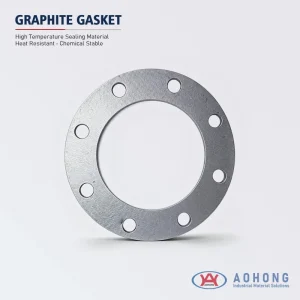
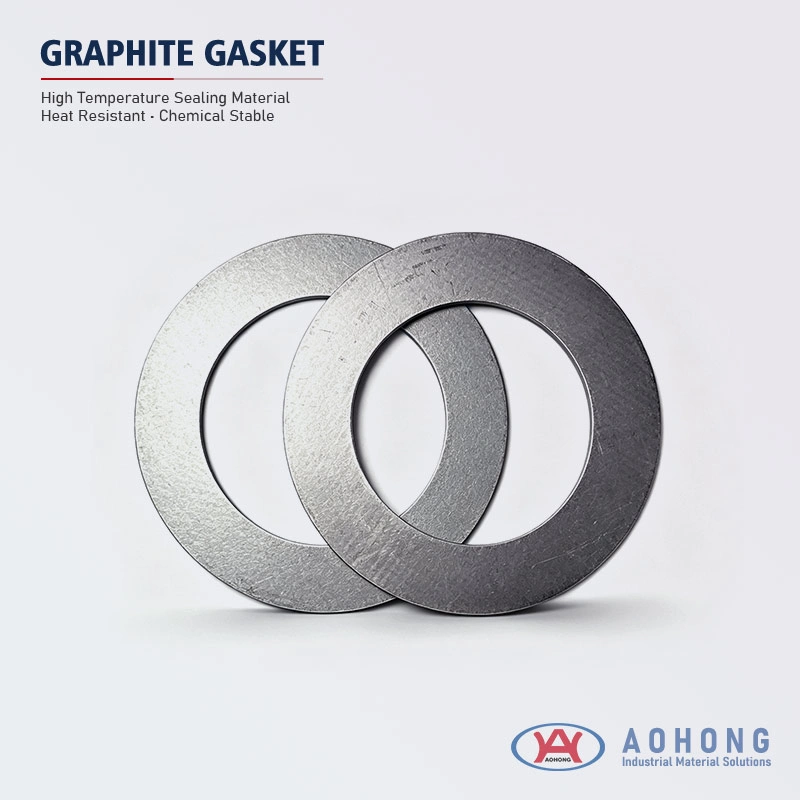
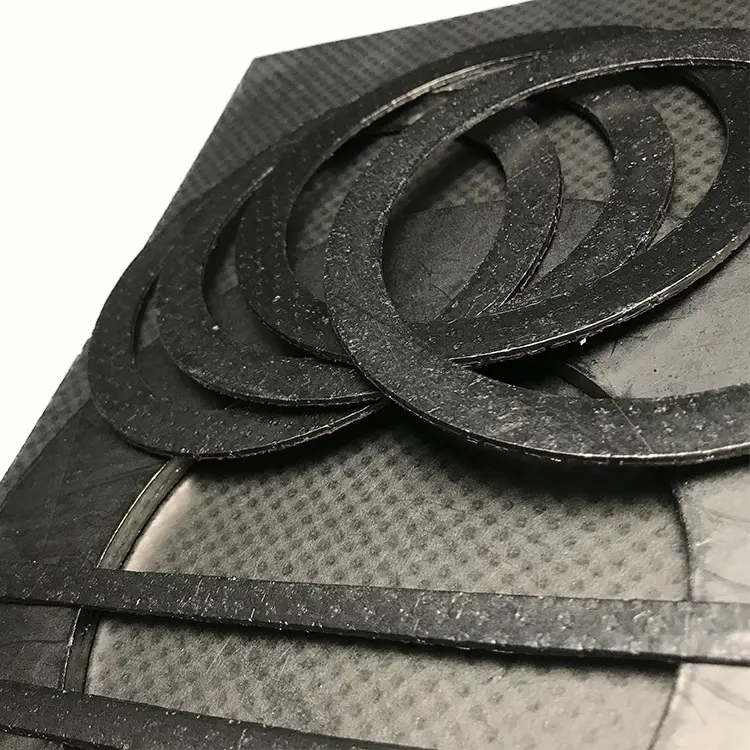
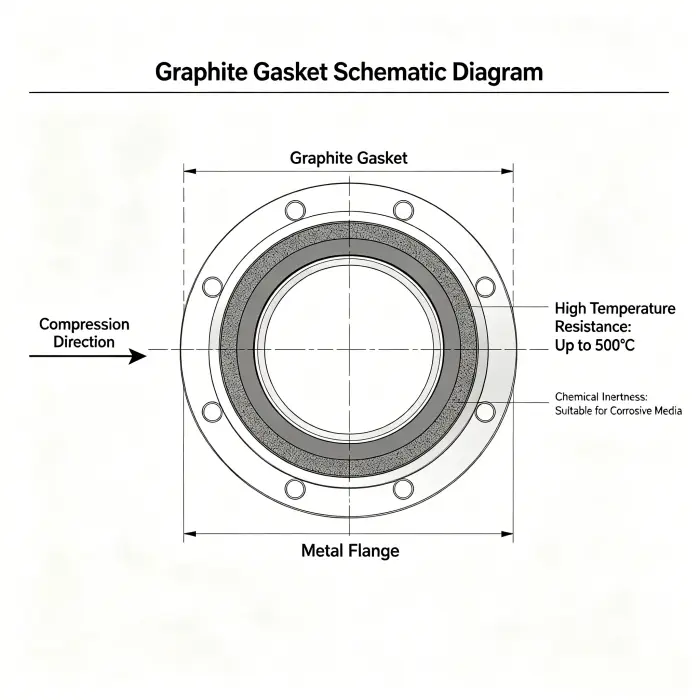
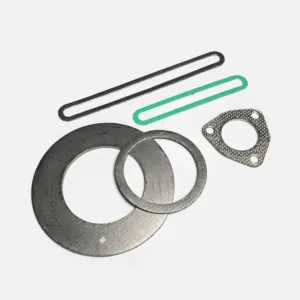
A reinforced graphite gasket is manufactured from high-purity flexible (expanded) graphite sheet that is laminated or combined with a reinforcing metallic element — typically a thin stainless-steel foil layer, perforated steel insert, wire mesh or a tanged (hooked) stainless core. The reinforcement raises crush strength, improves bolt load distribution and reduces creep/relaxation compared with unreinforced graphite sheets, while preserving graphite’s excellent thermal and chemical resistance.
A reinforced graphite gasket is a flexible graphite sheet strengthened with a metal insert (stainless-steel foil, wire-mesh, or tanged core) to improve compressive strength, blow-out resistance and dimensional stability. Ideal for high-temperature and chemically aggressive services where a pure graphite sheet needs extra mechanical support.
Common aliases / alternate names
-
Reinforced graphite gasket
-
Foil-inserted graphite gasket (stainless foil insert)
-
Tanged graphite gasket / tang-insert graphite
-
Wire-mesh reinforced graphite gasket
-
Flexible graphite gasket with metal insert
 Construction & material options
 Construction & material options
Typical constructions
-
Foil-inserted: flexible graphite laminated to a 0.05–0.2 mm stainless-steel foil (commonly 304/316). Good for moderate bolt loads and improved strength.
-
Tanged insert: stainless steel core with stamped tangs that mechanically lock graphite layers — high retention and blow-out resistance.
-
Wire mesh / perforated steel inserts: dispersed reinforcement across the sheet for higher pressure and bolt-load demands.
Materials
-
Graphite: ≥98% carbon, flexible/expanded graphite for chemical and thermal stability.
-
Metal inserts: SS304, SS316, nickel, or other alloys depending on corrosion resistance needs.
Specify alloy and graphite purity when ordering.
Performance & service limits
Temperature
-
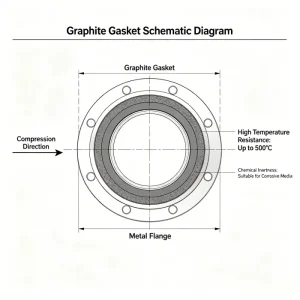
Oxidizing (air): typically up to ~450–550°C depending on product and insert; under inert/non-oxidizing conditions graphite withstands much higher temperatures.
Pressure / bolt load
-
Many reinforced graphite sheet designs are used effectively up to 100–200 bar in engineered applications (application dependent on flange class and gasket form).
Chemical compatibility
-
pH range 0–14 for many graphite/metal combinations; excellent resistance to acids, alkalis and hydrocarbon service. Always confirm compatibility for aggressive oxidizers or halogens.
Standards, forms & specification notes
-
Standards: Commonly supplied to ASME B16.21 (cut-gasket sizing) and manufactured to industry best practice. Request material test certificates and compliance statements.
-
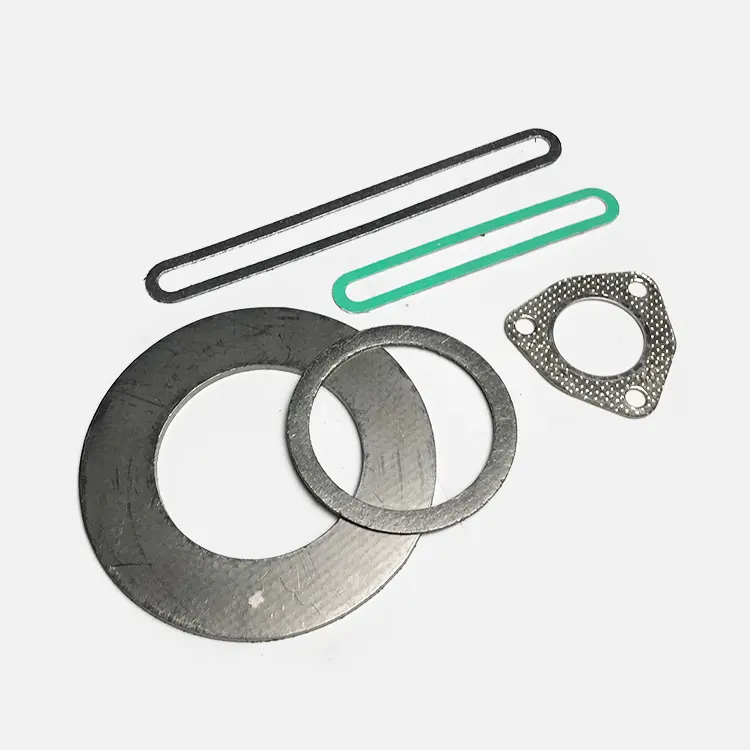
Forms: Full-face (FF) and inner-bolt-circle (IBC) hole patterns per ASME/DIN; cut rings for pipe flanges; custom shapes for heat exchangers, valves and vessels.
-
Typical thicknesses available: 0.5 mm (0.02″) up to 6.4 mm (1/4″) — most common stock thicknesses: 0.5 mm, 1.0 mm, 1.5 mm, 2.0 mm, 3.2 mm (1/8″).
Typical sizes & stock listing
We keep ASME NPS sizes in stock for quick delivery; custom CAD/cut-to-size orders welcome.
Common NPS stock list (examples): ½”, ¾”, 1″, 1½”, 2″, 3″, 4″, 6″, 8″, 10″, 12″ — available as FF or IBC cut gaskets to ASME B16.21 dimensions for Class 150/300/600 flanges. (Exact ID/OD follows ASME B16.21; specify flange standard and class when ordering.)
Why choose reinforced graphite
-
High temperature tolerance with excellent thermal stability.
-
Improved mechanical strength & blow-out resistance compared to unreinforced graphite.
-
Excellent chemical compatibility across a wide pH range.
-
Low creep and reduced bolt relaxation when correctly specified and installed.
-
Customizable reinforcement (foil, tangs, mesh) to match bolt load and vibration conditions.
Comparison table — reinforced graphite vs other common gasket types
| Feature | Reinforced Graphite Gasket | Pure Graphite Sheet | Spiral Wound Gasket (graphite fill) | PTFE Gasket |
|---|---|---|---|---|
| Typical temp range (oxidizing) | ~450–550°C (product dependent) | ~350–500°C | up to 450°C (graphite fill) | ≤260°C |
| Mechanical strength / blow-out | High (with insert) | Low–moderate | High (metal winding) | Low |
| Chemical resistance | Excellent (0–14 pH) | Excellent | Excellent (select fillers) | Excellent (organics, acids) |
| Creep / relaxation | Low–moderate (reinforced) | Higher | Good recovery | Low creep |
| Best for | High T / corrosive + higher bolt loads | High T, low bolt load | Fluctuating T/P with metal support | Aggressive chemicals, low T |
| (Summary — pick material by T, pressure, media, and mechanical constraints.) |
Installation & best practices
-
Surface finish: flange faces should meet recommended roughness for graphite gaskets (too smooth can reduce friction; too rough can cause embedment).
-
Bolt tightening: use manufacturer torque charts adjusted for gasket thickness and flange class; tighten in star/cross pattern. Re-torque only when specified.
-
Orientation & handling: avoid folding; do not overtighten (risk of metal insert damage); check for foreign particles on flanges that can puncture graphite.
-
Storage: store flat, dry and away from oxidizing process chemicals to preserve graphite integrity.
Design decision check (mini-flow): If you need high temperature + high mechanical retention → consider tanged or wire-mesh reinforced graphite. If moderate loads and corrosion resistance priority → foil-insert may be sufficient.
Typical failure modes & mitigation
-
Creep/relaxation leakage: mitigate by using proper bolt preload and reinforced core when high bolt-load is expected.
-
Oxidation / burn in air at high temp: use protective coatings or limit maximum oxidizing-air exposure; inerting may be needed for extreme temperatures.
-
Corrosion of steel insert: specify SS316 or nickel if chloride/acid service threatens SS304.
FAQ
Q1 — What is the difference between foil-inserted and tanged reinforced graphite?
A: Foil-inserted gaskets use a thin metal foil laminated to the graphite to add strength; tanged inserts have mechanical tangs that lock graphite layers to a steel core for higher retention and blow-out resistance. Choose tanged for high vibration/bolt loads.
Q2 — What temperature and pressure can reinforced graphite handle?
A: Typical oxidizing-atmosphere limits are ~450–550°C (product dependent); pressure capability varies with flange class and insertion type — engineered designs commonly cover up to 100–200 bar in select constructions. Always verify with the product datasheet.
Q3 — What info do you need for a quote?
A: Provide flange standard (ASME/DIN), NPS/DN, class (150/300/600/etc.), gasket form (FF or IBC), thickness, and required insert type (foil/tang/mesh) and alloy. Attach drawings for custom parts.
Q4 — Can reinforced graphite be used for steam?
A: Yes — reinforced graphite is widely used in steam services (ensure the chosen grade is appropriate for the steam temperature and any oxidation risk).
Q5 — Are there emission or fugitive-emission considerations?
A: Flexible graphite with proper metallic reinforcement can provide low fugitive emissions when installed correctly — request certified low-emission grades if required by regulation.