
Product overview
What is a graphite gasket with eyelets?
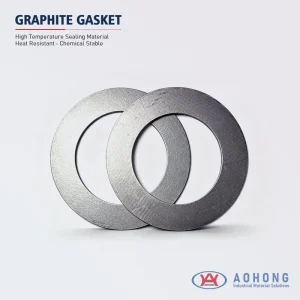
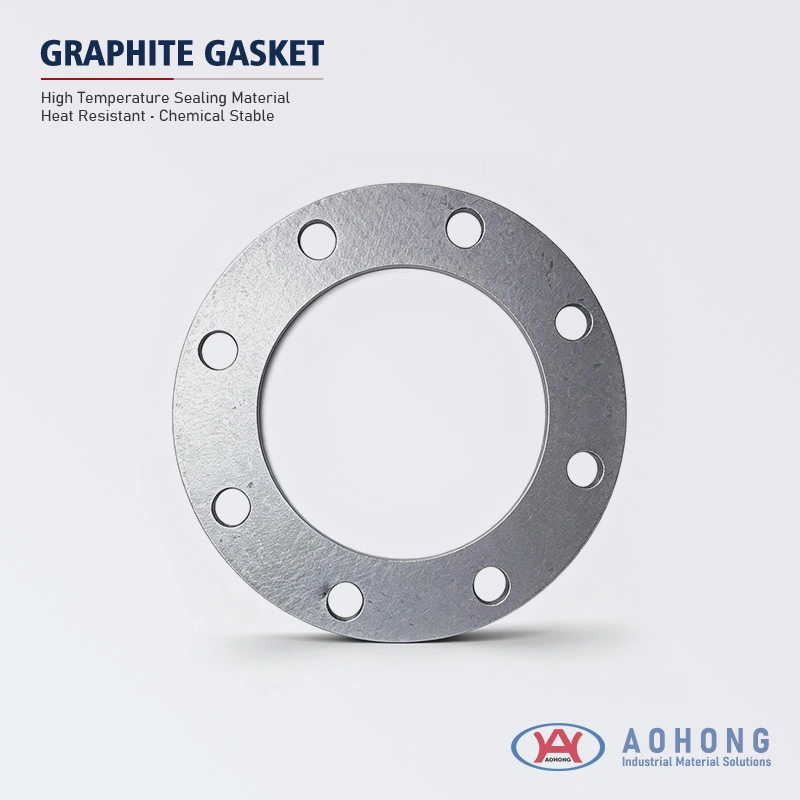
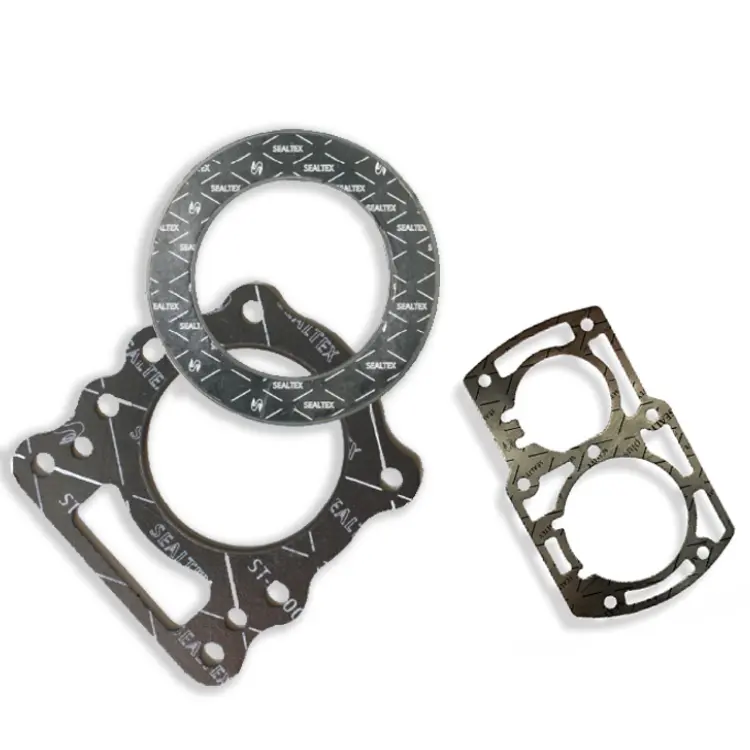
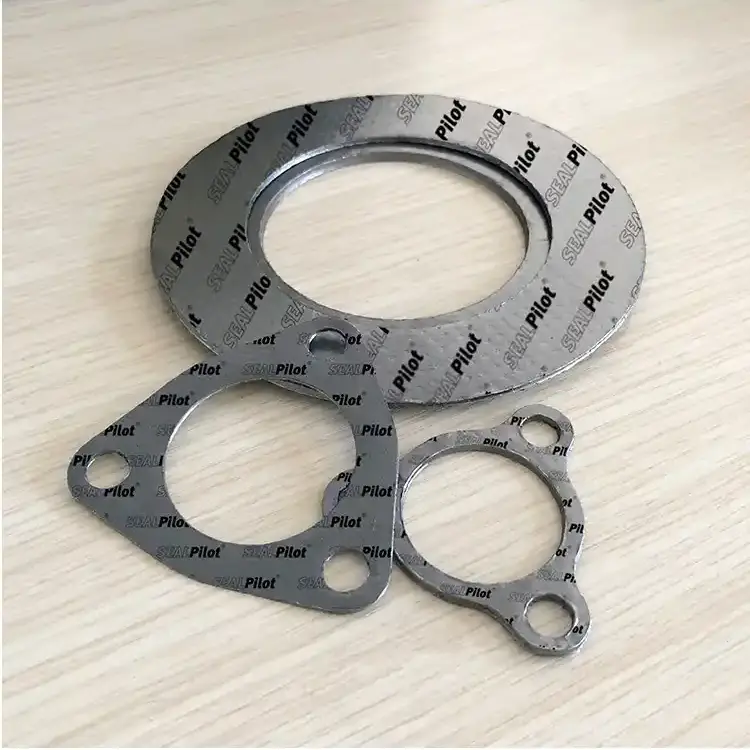
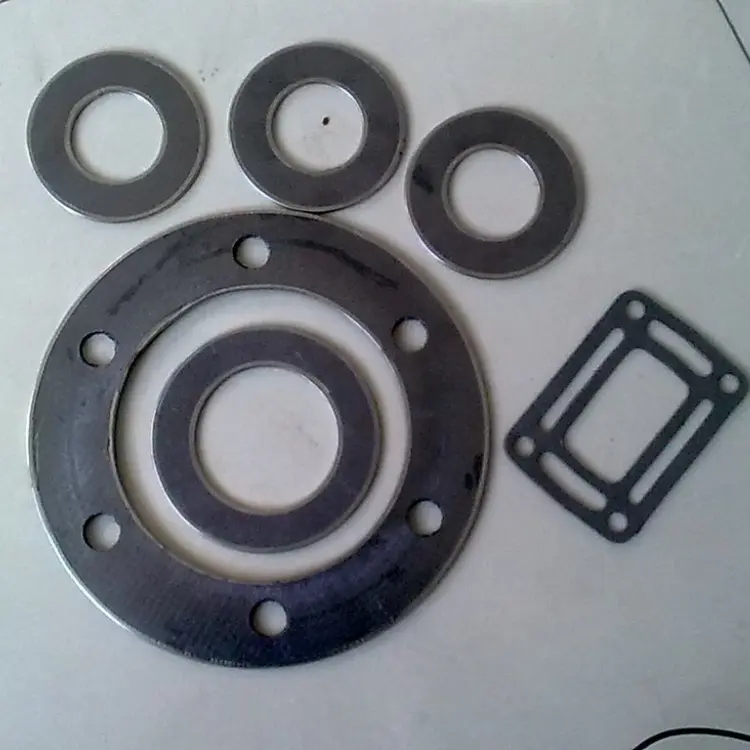
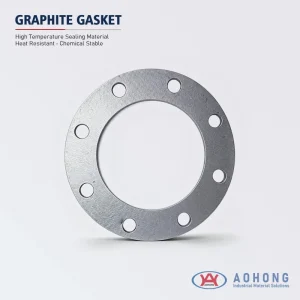
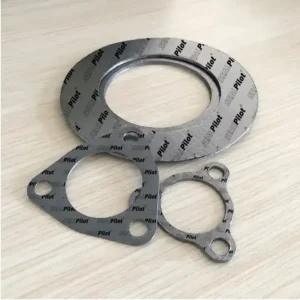
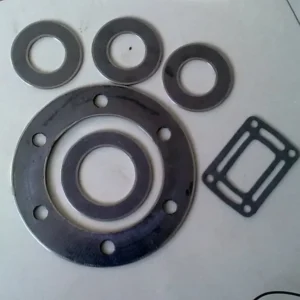
A graphite gasket with eyelets is made from flexible (expanded) graphite sheet laminated or reinforced (foil/tanged/perforated core) and supplied with a metal eyelet fitted around the bore. Eyelets can be inner (bore) eyelets, outer (OD) eyelets, or both; they may be welded, mechanically crimped, or integral to a tanged insert. Eyelets protect the soft graphite from bolt/flow erosion, provide a corrosion-resistant barrier at the bore, and help center the gasket during installation. Common alternate names: graphite eyelet gasket, PSM graphite gasket with eyelet, tanged graphite gasket with eyelet.
A graphite gasket with eyelets is a reinforced flexible-graphite ring or full-face gasket fitted with a metal eyelet (inner/outer) — often tanged or welded — to protect the gasket bore and improve bolt-load distribution and retention in poor-condition flanges. Also called graphite eyelet gasket, PSM graphite gasket with inner eyelet, or tanged eyelet graphite gasket.
 Construction & eyelet types
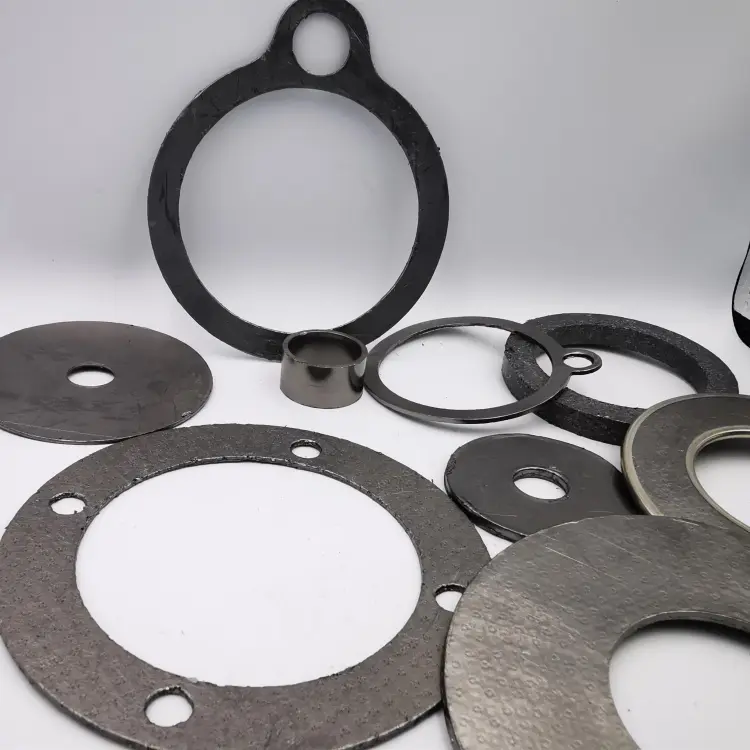 Construction & eyelet types
Graphite core / reinforcement: flexible graphite sheet (typical purity ≥98% C) is used as the sealing element; reinforcement options include stainless foil, wire-mesh or tanged steel cores for mechanical strength.
Eyelet types:
-
Inner eyelet (bore protector): a stainless ring (SS316 / SS316L / 316Ti) fitted inside the gasket bore; prevents graphite erosion and protects against media contact at the bore.
-
Outer eyelet: an OD ring used for centering or flange face protection (less common than inner eyelet).
-
Tanged eyelet (integral): tangs from a stamped core lock the graphite to the metal eyelet for superior retention and blow-out resistance.
How they’re bonded: eyelets can be mechanically crimped, welded, or held by tanged cores; graphite covering layers may be impregnated for improved sealing and to reduce particulate.
Materials & grades
-
Graphite sheet: flexible/expanded graphite, typical sheet thickness ranges 0.5 mm up to 6.4 mm (0.02″–0.25″) in stock; common stock thicknesses: 0.5 mm, 1.0 mm, 1.5 mm, 2.0 mm, 3.2 mm.
-
Eyelet alloys: SS304, SS316 / SS316L / SS316Ti, nickel alloys on request (select alloy based on process corrosion).
Impregnation & coatings: some gaskets use anti-oxidant or graphite-impregnation treatments to reduce particle generation and improve high-temperature oxidizing performance.
Temperature, pressure & chemical guidance
-
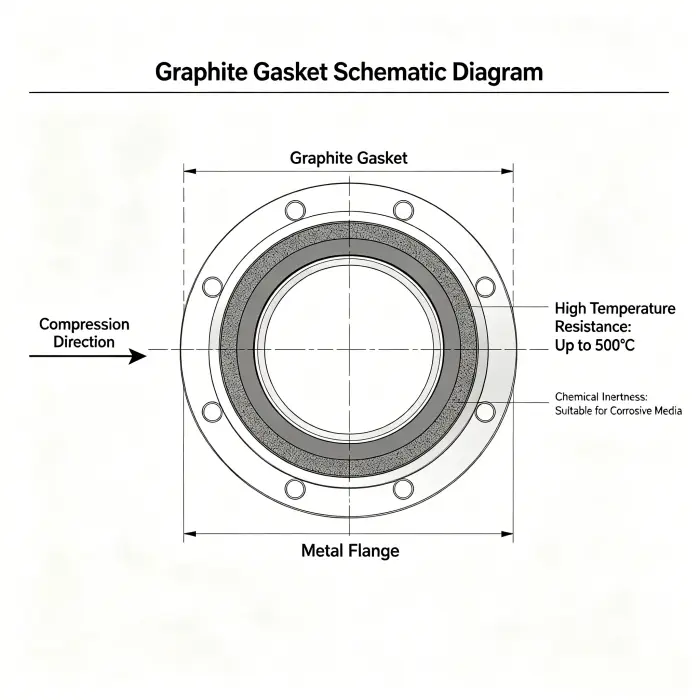
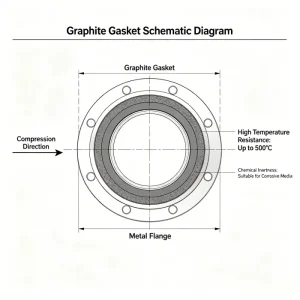
Temperature (guideline): flexible graphite gaskets commonly perform from −200 to ~500°C in most process services; in oxidizing atmospheres practical upper limits are typically ~450–550°C depending on impregnation and eyelet protection. Under inert or reducing conditions graphite withstands much higher temperatures.
-
Pressure: reinforced graphite constructions with eyelets are used across PN / Class ranges typical for ASME flange classes 150–600 and can be engineered for higher pressure duties depending on core design and flange class. Typical working pressures for reinforced grades are in the tens to low hundreds of bar / up to ~200 bar in engineered applications (confirm per datasheet).
-
Chemical compatibility: graphite is broadly chemically resistant (wide pH range), but eyelet alloy selection must match media to avoid corrosion or galvanic issues. Confirm for oxidizing halogens, fluorine or chlorinated oxidizers where special alloys or PTFE liners may be required.
Standards, forms & ordering info
-
Sizing standard: ASME B16.21 (flat gaskets) / ASME B16.5 dimension tables for ring and full-face gaskets are the reference for flange cut gaskets. Provide flange standard (ASME/DIN/JIS), NPS/DN, class (150/300/600…), and gasket form (IBC / Full Face).
-
Typical thicknesses available: 0.5 mm → 6.4 mm; custom laminates & tanged cores available.
-
Ordering checklist: NPS/DN, flange standard & class, gasket form (FF/IBC), thickness, eyelet type (inner/outer/both), eyelet alloy, reinforcement type (foil/tanged/mesh).
Common sizes
We stock and cut ASME B16.21 ring & full-face gaskets for common NPS. Representative ASME Class-150 full-face / ring gasket dimensions (examples):
| NPS | Typical gasket I.D. (mm) | Typical gasket O.D. (mm) | Notes |
|---|---|---|---|
| 1/2″ | 21.4 mm | 47.6 mm | ASME Class 150 sample values. |
| 3/4″ | 27.0 mm | 57.2 mm | |
| 1″ | 33.3 mm | 66.7 mm | |
| 2″ | 60.3 mm | 104.1 mm | |
| 4″ | 114.3 mm | 174.0 mm | |
| 6″ | 168.3 mm | 222.3 mm | |
| 8″ | 219.1 mm | 279.4 mm | |
| 10″ | 273.0 mm | 339.9 mm | |
| 12″ | 323.9 mm | 409.6 mm |
Use this table as a quick reference — exact ID/OD depend on flange series and class. For manufacturing, we cut per ASME B16.21 tables — supply flange print or standard/class when requesting a quote.
Key benefits & buyer advantages
-
Protected bore: eyelets guard graphite ears from media/erosion and provide a corrosion-resistant bore surface.
-
Better centering and installation ease in poor-condition flanges.
-
Improved blow-out resistance and retention when combined with tanged or perforated core designs.
-
High temperature and broad chemical compatibility of flexible graphite with the mechanical protection of metal eyelets.
Comparison table
| Feature | Graphite gasket with eyelets | Pure graphite gasket (no eyelets) | Spiral wound (graphite filled) | PTFE gasket |
|---|---|---|---|---|
| Bore protection | Yes (eyelet) | No | Optional (inner ring) | Optional |
| Ease of installation | High (centering) | Moderate | Moderate | High |
| Temperature (oxidizing) | ~450–550°C (typical) | ~350–500°C | up to ~450°C depending on filler | ≤260°C |
| Chemical resistance | Excellent | Excellent | Excellent | Excellent to organics |
| Mechanical retention / blow-out | High (with tanged eyelet) | Lower | High | Lower |
| Best when | Flanges poor condition / need bore protection | Good flange faces & low mechanical demands | Fluctuating T/P & metal support | Strong chemical resistance at lower T |
(Choose graphite+eyelet when you need graphite sealing plus bore protection/installation/retention benefits.)
Installation tips & best practices
-
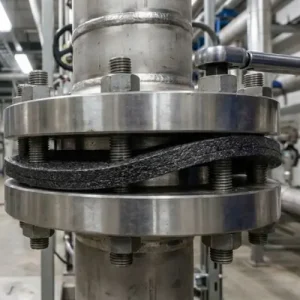
Flange prep: clean faces; remove old gasket residue; inspect bolt condition. Eyelet gaskets help with centering but do not replace correct flange alignment.
-
Bolt torque: use manufacturer torque charts for chosen thickness & flange class; tighten in a star pattern. Eyelet presence can allow slightly faster alignment but do not overtighten (risking eyelet deformation).
-
Handling: avoid bending or folding the graphite; store flat and dry. If the gasket is impregnated, avoid solvents that may remove impregnation.
-
Selection tip: for steam services where oxidation is a risk, prefer impregnated graphite and specify eyelet alloy resistant to steam-stage corrosion (SS316Ti or Nickel where needed).
Typical failure modes & mitigation
-
Bore erosion: prevented by inner eyelet selection and correct alloy.
-
Leakage from creep/relaxation: mitigated by proper bolt preload, reinforced core (tanged/foil) and correct thickness selection.
-
Eyelet corrosion: choose eyelet alloy to suit media and avoid dissimilar-metal corrosion.
FAQ
Q1 — What do you mean by “eyelets”?
A: Eyelets are metal rings fitted to the gasket bore (inner) or outer edge to protect the graphite and help centering. They are commonly SS316/316L; tanged cores can also form integral eyelets.
Q2 — Can I get eyelets in different alloys?
A: Yes — SS304, SS316, SS316L, 316Ti and higher-alloy eyelets (nickel alloys) are available on request to match process corrosion needs.
Q3 — What thickness should I pick?
A: Thinner sheets (0.5–1.5 mm) are used for low-gap, low-load flanges; thicker sheets (2.0–3.2 mm and up) for uneven faces or when higher compressibility is required. Specify flange class and face condition for an optimized recommendation.
Q4 — Do eyelets change the sealing performance?
A: Properly specified and installed eyelets improve retention and protect the bore without compromising the sealing face — they often enhance, not reduce, sealing reliability.
Q5 — Do you supply ASME-cut graphite eyelet gaskets?
A: Yes — we cut to ASME B16.21 / B16.5 dimensions for full face and ring gaskets across common NPS and classes. Provide flange standard & class when requesting a quote.