


Product Overview
What is an Exhaust Manifold Gasket?
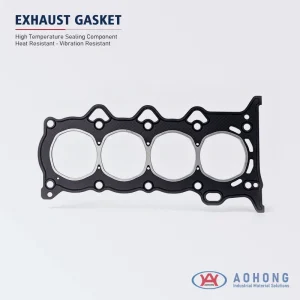
An exhaust manifold gasket is a purpose-designed ring or multi-port seal installed between mating exhaust components (cylinder head to manifold, manifold to turbo/downpipe). It must withstand rapid temperature cycling, corrosive combustion gases, vibration and mechanical movement while maintaining a gas-tight seal.
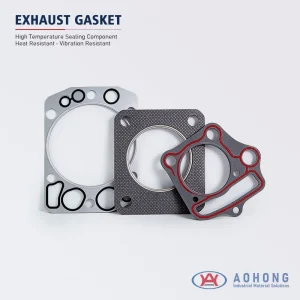
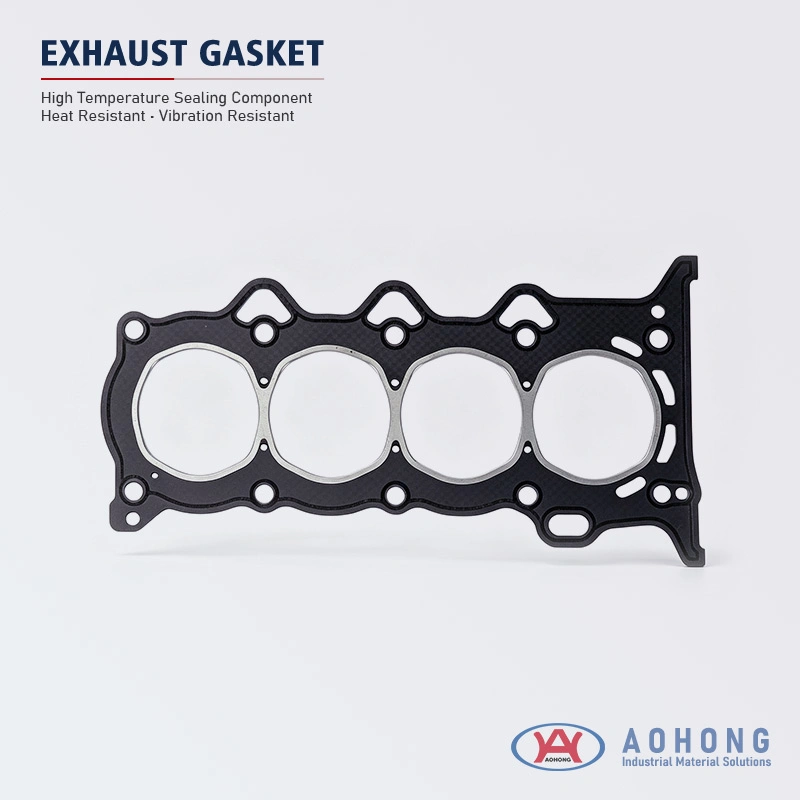
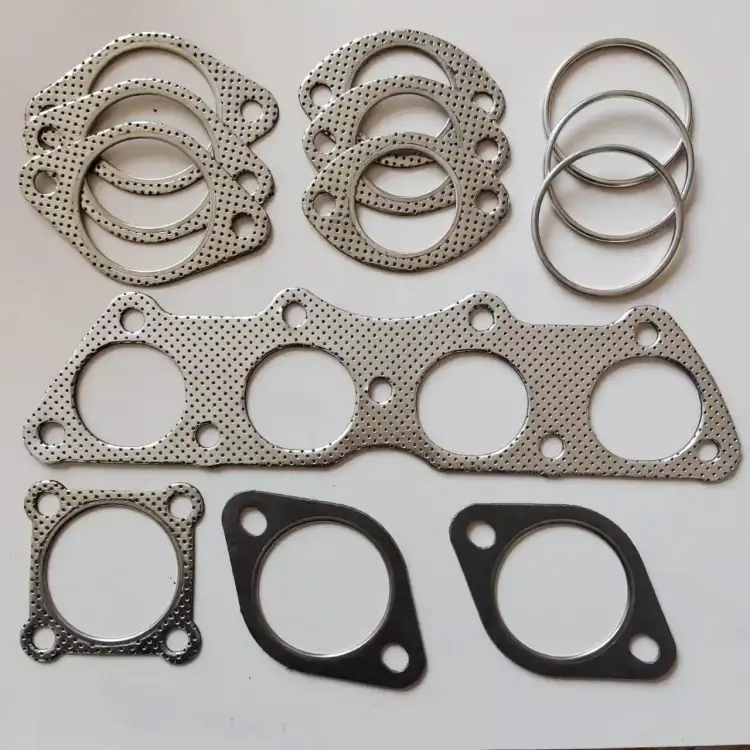
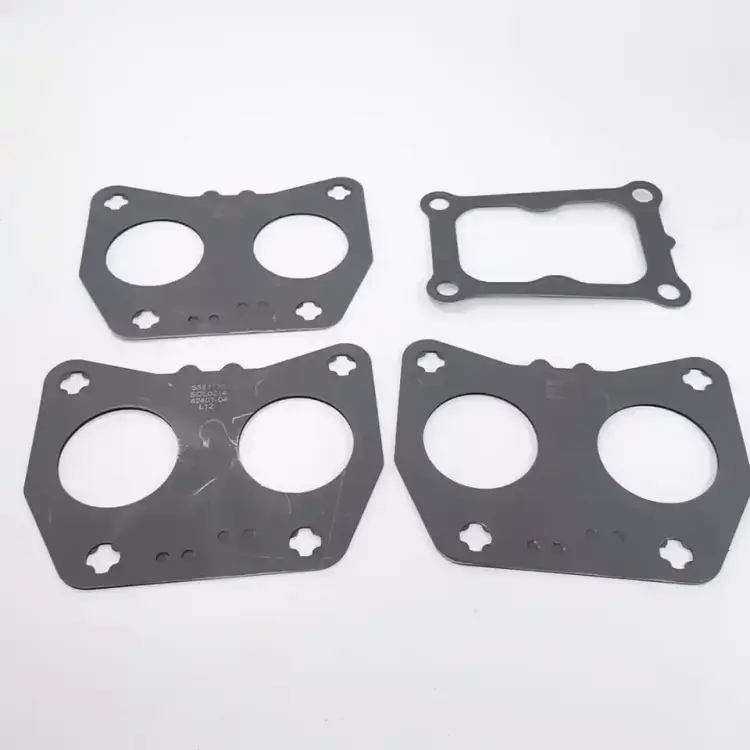
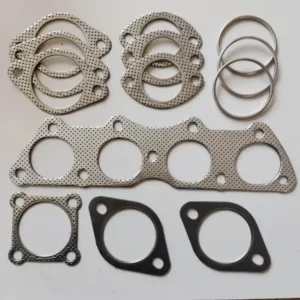
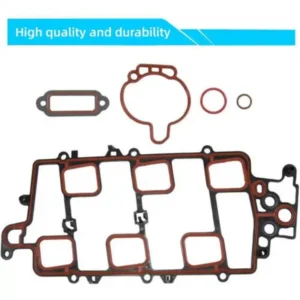
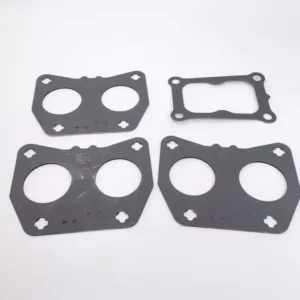
An exhaust manifold gasket (also called header gasket, exhaust flange gasket, or manifold-to-head gasket) seals the joint between the engine head and exhaust manifold (or between manifold sections and downpipe), preventing exhaust leaks, protecting against heat damage, and preserving back-pressure characteristics. Available in MLS (multi-layer steel), graphite/composite and copper styles for passenger vehicles, commercial engines and industrial exhaust systems.
Common aliases / alternate names: header gasket, exhaust flange gasket, manifold-to-head gasket, exhaust port gasket, header flange gasket.
Primary SEO phrase: exhaust manifold gasket — use in H1/H2 and naturally across the page. Secondary phrases: header gasket, exhaust flange gasket, manifold gasket.
Construction & Materials
Typical constructions
-
Multi-Layer Steel (MLS): Multiple thin stainless steel layers with corrugations and a heat-resistant coating — widely used in modern OE and aftermarket gaskets for durability and repeatable sealing.
-
Graphite / Composite: Graphite or composite face material bonded to a metal core or steel shim — excellent conformity and thermal shock resistance.
-
Copper: Solid copper (sometimes with a soft interlayer) for high-temperature race or custom turbo applications — excellent thermal conductivity and re-formability.
-
Stamped Metal / Embossed: Single/dual-layer stamped steel with embossed sealing beads for light-duty and replacement gaskets.
Typical material choices & finishes
-
Steel: SS304 / SS316 with high-temperature coatings (ceramic, anti-seize).
-
Graphite: expanded/flexible graphite, often impregnated to reduce particle shedding.
-
Copper: pure copper or copper alloy with softening/anneal treatment for conformability.
Performance & Service Guidance
Temperature & pressure
-
Exhaust gas temperature (EGT): normally 200°C–800°C depending on engine load and turbocharging. Intermittent peaks may exceed 900°C in severe racing/turbo conditions.
-
Pressure: exhaust manifold pressures are relatively low (near atmospheric to a few bar boost on the intake side) but the gasket must resist blow-by under high-pulse conditions and turbo back pressure.
Note: exact temperature/pressure capability depends on gasket material and construction — always confirm with manufacturer datasheet for your engine/service case.
Specifications & Common Sizes
Exhaust gaskets are typically specified by port geometry (oval/round), bolt hole pattern, and thickness. For B2B ordering include bolt centers, port ID, and flange thickness.
Typical stock thicknesses
-
MLS: 0.5 mm, 0.8 mm, 1.0 mm, 1.2 mm
-
Graphite/composite: 1.0 mm, 1.5 mm, 2.0 mm, 3.0 mm
-
Copper: 0.8 mm – 1.5 mm (annealed)
Representative port/bore sizes
(Use these as reference; for manufacturing, supply exact port ID/OD and bolt layout.)
| Application | Typical port ID (mm) | Typical gasket outer span (mm) |
|---|---|---|
| Small 4-cyl passenger | 25–35 mm | 60–90 mm |
| 6-cyl / V6 passenger | 30–45 mm | 80–120 mm |
| Light truck / diesel | 40–60 mm | 100–160 mm |
| Industrial engine / heavy duty | 50–120 mm | 150–300 mm |
How to order: provide engine model / flange drawing, port centerline layout, bolt hole diameter & PCD, material preference, and desired coating or impregnation.
 Common Applications
-
Automotive exhaust manifolds and headers (OE replacement & performance headers)
-
Turbocharger to manifold and manifold to downpipe connections
-
Heavy-duty diesel engines (trucks, generators, marine)
-
Industrial burners, boilers and exhaust gas systems
-
Aftermarket performance and motorsport headers
Key Benefits & Buyer Advantages
-
Gas-tight sealing under high thermal cycling — prevents leaks that reduce power and increase emissions.
-
Thermal durability — materials selected for oxidation and creep resistance at typical exhaust temperatures.
-
Vibration & movement tolerance — corrugated MLS and compressible graphite absorb differential expansion.
-
OEM fit & interchangeability — available to original equipment dimensions and custom CNC cut for retrofit.
-
Custom options — integrated heat-shield coatings, anti-corrosion finishes, and tailored thickness for back-pressure tuning.
Comparison Table — Exhaust Gasket Materials
| Feature | MLS (Multi-Layer Steel) | Graphite / Composite | Copper | Head Gasket (contrast) |
|---|---|---|---|---|
| Temp tolerance | ~−40°C to 700°C+ (coating dependent) | ~−200°C to ~550°C | Very high (peaks >900°C) | Varies; head gasket handles combustion pressure |
| Thermal cycling | Excellent | Good | Good (work-hardened) | Designed for combustion sealing (different stress) |
| Conformability | Moderate | High | High (can be reformed) | Head gasket must seal combustion; not interchangeable |
| Reusability | Limited | Often limited | Sometimes reusable after annealing | Usually replaced |
| Best for | OE, turbo applications | Irregular flanges & retrofit | High-temp race/turbo | Cylinder sealing & combustion pressures |
Installation & Best Practices
-
Flange prep: remove old gasket material, clean surfaces, inspect warpage/flatness. Minimal gasket sealant is recommended unless specified.
-
Bolt tightening: always follow specified torque sequence and values; use calibrated torque wrench and new fasteners if recommended.
-
Thermal ramp: for coated/graphite gaskets, follow recommended heat-up procedure to seat material (avoid thermal shock).
-
Inspection: after initial thermal cycles, re-check torque where applicable (some OEMs require retorque after cool-down).
Common mistakes: using wrong thickness (alters back pressure), reusing heavily damaged gaskets, overtightening (can deform flange), using incompatible coatings that trap heat.
Typical Failure Modes & Mitigation
-
Blow-out / leaks: insufficient bolt preload or incorrect gasket material — mitigate with MLS or thicker composite and correct torque.
-
Creep / cold flow: graphite can creep under sustained load — choose reinforced constructions or MLS in high-load hotspots.
-
Corrosion / oxidative breakdown: select proper coating or copper for extreme temperatures and corrosive exhaust chemistries.
FAQ
Q1: What is the difference between an exhaust manifold gasket and a head gasket?
A: Exhaust manifold gaskets seal the exhaust flow path between head and manifold. Head gaskets seal the combustion chamber (cylinder head to block) and are designed for much higher combustion pressures and different materials.
Q2: Can I reuse an exhaust manifold gasket?
A: Generally no — most gaskets deform on first use. Copper gaskets may be reformed in some applications after annealing, but OEM practice is to replace the gasket at reassembly.
Q3: Which material is best for turbocharged engines?
A: MLS or copper (race/high-temp) and specially coated graphite reinforcements are common for turbo applications — choose based on expected EGTs and flange condition.
Q4: What information is needed for a quote?
A: Provide engine model / flange drawing, port dimensions, bolt hole pattern & PCD, desired material, and any coating or application notes (turbocharged / emissions critical / race).
Q5: Lead time & MOQ?
A: Stock items (common OE sizes) typically ship quickly; custom CNC cut or high-temp specialty gaskets have longer lead times. MOQ depends on material and finish — contact sales for exact lead times and MOQ.