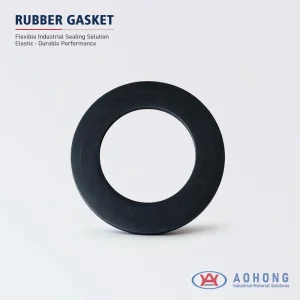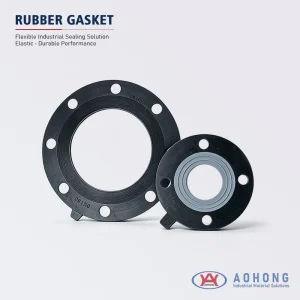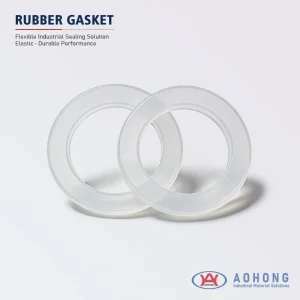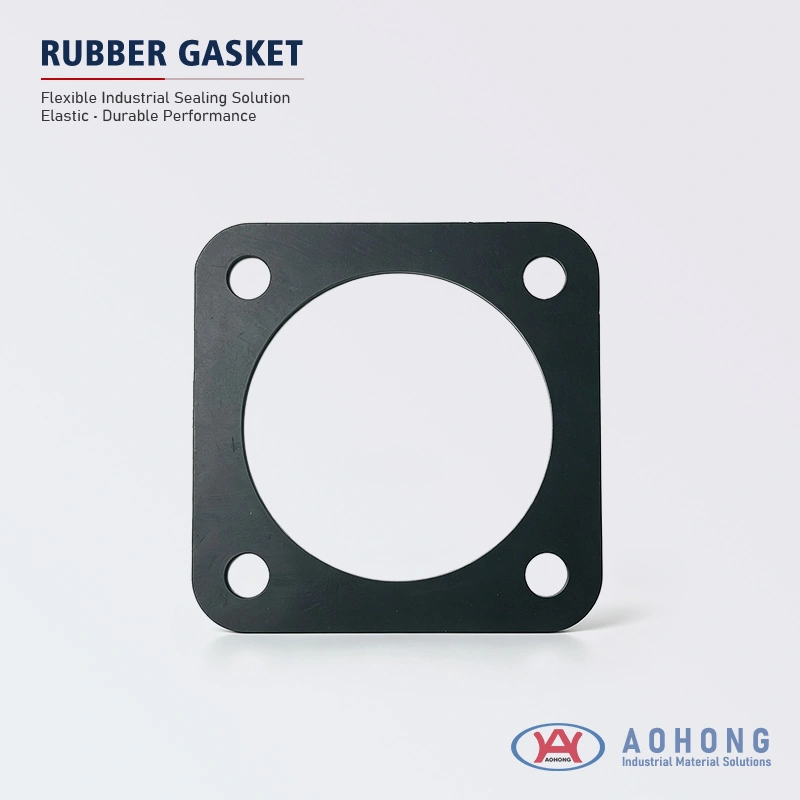

Product Overview — What are Nitrile Rubber Gaskets?
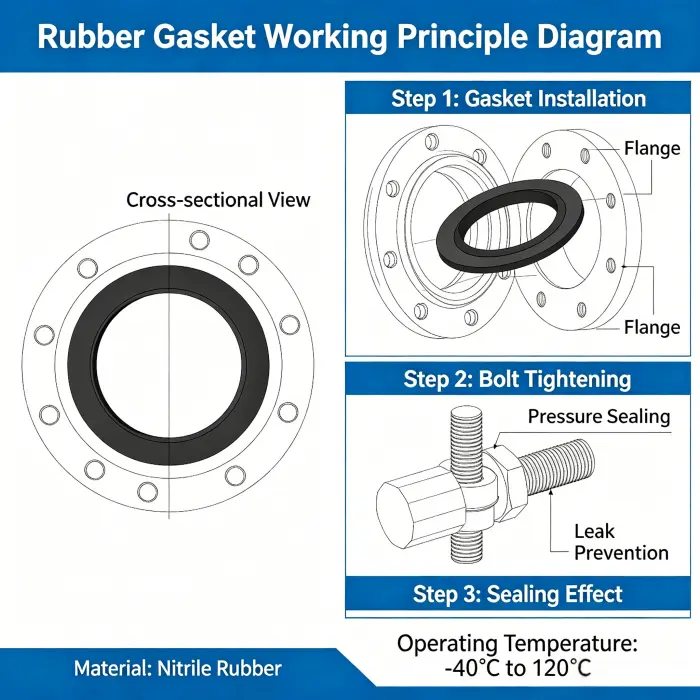
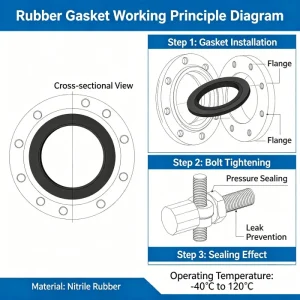
Nitrile rubber gaskets (NBR / Buna-N) are synthetic elastomer seals formulated from acrylonitrile and butadiene. They are the industry standard where resistance to oils, fuels and petroleum-based fluids is required. Common trade names and aliases include Nitrile, NBR, Buna-N, Buna N, Buna-Nitrile — list these early on to capture search variations.
Nitrile rubber gaskets (also called NBR, Buna-N or Buna-Nitrile gaskets) are oil-resistant sealing solutions designed for fuel, hydraulic and petroleum applications. Available in common Shore A durometers (40–70), sheet and custom-cut gaskets, nitrile offers excellent resistance to mineral oils, gasoline and many hydraulic fluids while remaining cost-effective for large B2B orders.
Key selling points (short)
-
Outstanding resistance to petroleum oils, greases and fuels.
-
Good mechanical properties: resilience, tensile strength, elongation.
-
Wide availability in sheet, roll, cut-gasket and molded formats for fast B2B fulfillment.
Technical Specifications
Note: always confirm final compound data with us for critical applications — below are industry-typical values widely used for NBR gasket compounds.
| Property | Typical Value (NBR / Buna-N) |
|---|---|
| Material | Nitrile Butadiene Rubber (NBR) |
| Trade names / Aliases | Nitrile, NBR, Buna-N, Buna N |
| ASTM / Classification | Often supplied to ASTM D2000 classifications (e.g., BF/BG/BK depending on compound) |
| Hardness (Shore A) | 40, 50, 60, 70 (typical commercial options). |
| Temperature range (typical service) | −40°F to +200°F (approx −40°C to +93°C); some compounds tolerate short excursions higher (~250°F) — verify with datasheet. |
| Tensile strength | ~10 N/mm² (≈1450 psi) typical order of magnitude; supplier datasheets vary. |
| Elongation at break | ~300–450% (compound dependent). |
| Chemical resistance | Excellent to mineral oils, vegetable oils, gasoline, many hydraulic fluids; poor to strong ketones, some chlorinated hydrocarbons and ozone/UV. |
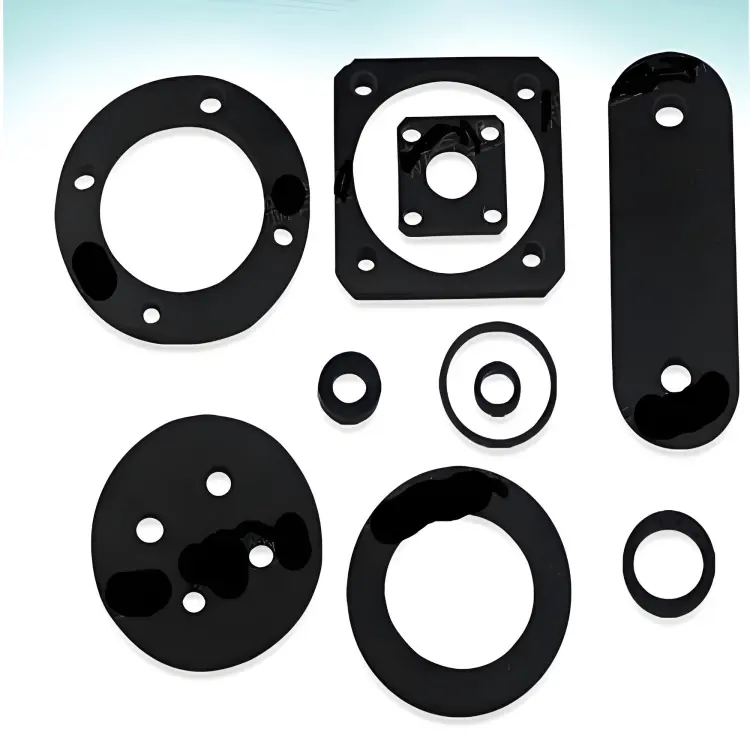
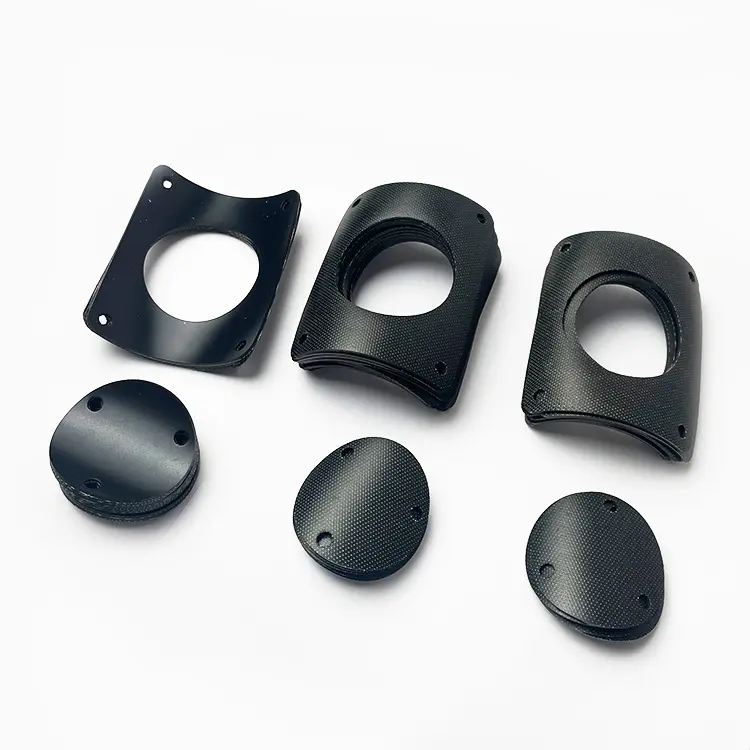
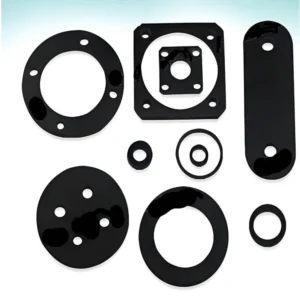
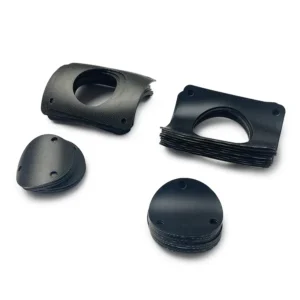
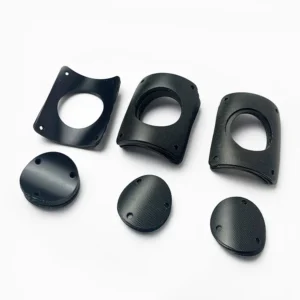
| Available forms | Sheets, rolls, strips, die-cut gaskets, molded parts. |
Available Sizes & Common Thicknesses (real values suppliers stock)
Standard sheet/roll widths and thicknesses
-
Roll widths: commonly 36″, 48″, 72″ (custom widths on request).
-
Thicknesses (typical stock): 1/32″ (0.8 mm), 1/16″ (1.6 mm), 3/32″ (2.4 mm), 1/8″ (3.2 mm), 3/16″ (4.8 mm), 1/4″ (6.4 mm), up to 1/2″ (12.7 mm) or thicker by special order.
-
Cut-gasket & OD/ID ranges: we cut from small ODs (10–20 mm) up to large flange gaskets (meters) — tolerances depend on cutting method (waterjet/knife/die).
 Typical Applications
-
Fuel systems, carburetors, fuel pumps, fuel filters.
-
Hydraulic seals, pumps, compressors, valves.
-
Automotive under-hood seals (non-exposed exterior).
-
Oil pans, gearbox covers, machinery where oil/fuel contact exists.
-
Food-grade white NBR available for food/oil contact where FDA compliance required (use FDA grade compound).
Advantages — Why choose nitrile rubber gaskets?
-
Superior oil & fuel resistance compared with general-purpose rubbers.
-
Cost-effective: widely produced, competitive pricing for large B2B volumes.
-
Versatile durometers: pick the Shore A that balances compressibility and extrusion resistance.
-
Good mechanical strength and durability in oil environments.
Nitrile vs Other Gasket Materials
Short guidance
-
Use Nitrile (NBR) when contact with oils, fuels or hydraulic fluids is expected.
-
Use Neoprene (CR) for better weather/ozone and flame resistance.
-
Use EPDM for outdoor/steam/water applications (poor oil resistance).
-
Use Silicone for extreme high/low temperature (but lower tear strength vs NBR, and not oil-resistant).
Quick comparison table
| Feature / Material | Nitrile (NBR) | Neoprene (CR) | EPDM | Silicone |
|---|---|---|---|---|
| Oil & fuel resistance | Excellent | Moderate | Poor | Poor |
| Weather / ozone resistance | Fair | Good | Excellent | Excellent |
| Temp range (typical) | −40 to +200°F | −40 to +200°F | −60 to +250°F | −75 to +400°F |
| Cost (general) | Low–Medium | Medium | Low–Medium | Higher |
| Best for | Fuel/hydraulic seals | Outdoor, ozone, flame | Water/steam/outdoor | High/low temp seals |
Quality & Compliance Options
-
Industrial grade — standard commercial compounds for machinery.
-
FDA / food-grade white NBR — for incidental food/oil contact.
-
High-temp additive compounds — for elevated intermittent temp excursions.
-
Cutting & finishing: waterjet, die cut, CNC, molded — specify tolerances and surface finish.
FAQ
Q1: What are common aliases for nitrile rubber gaskets?
A: Nitrile rubber gaskets are commonly called NBR gaskets, Buna-N gaskets, Buna N, Buna-Nitrile — include these terms in RFQs to ensure suppliers understand requirements.
Q2: What Shore A hardness should I choose?
A: Choose based on compression and extrusion: 40–50A for soft compressible seals; 60–70A for higher load / extrusion resistance. Confirm with operating pressure and flange finish.
Q3: Can nitrile be used outdoors?
A: Nitrile has limited resistance to UV/ozone and prolonged weather exposure; for outdoor-exposed seals consider neoprene or EPDM.
Q4: Is nitrile suitable for food contact?
A: Yes—FDA-grade white NBR compounds exist. Always request FDA compliance certificate for the precise compound.
Q5: MOQ and lead time?
A: Stock sheets/cut gaskets: small MOQs and short lead times (days). Custom compounds/molded parts: higher MOQ and longer lead times (weeks). Always request formal quote.
Q6: How to ship large gaskets or long orders?
A: Sheets and rolls ship palletized. For very large custom gaskets we recommend flat packing with protective interlayers and moisture barriers.