
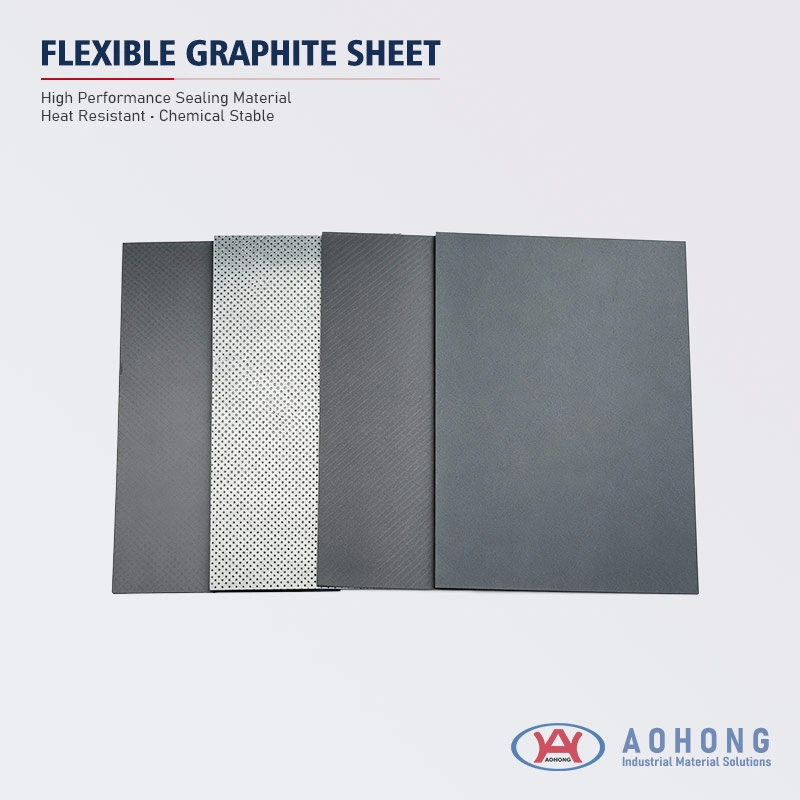
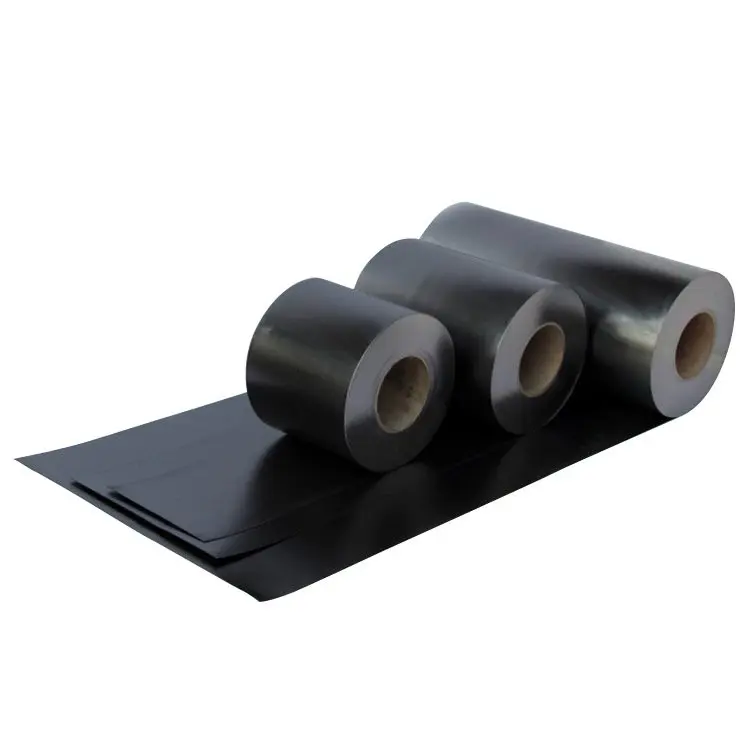
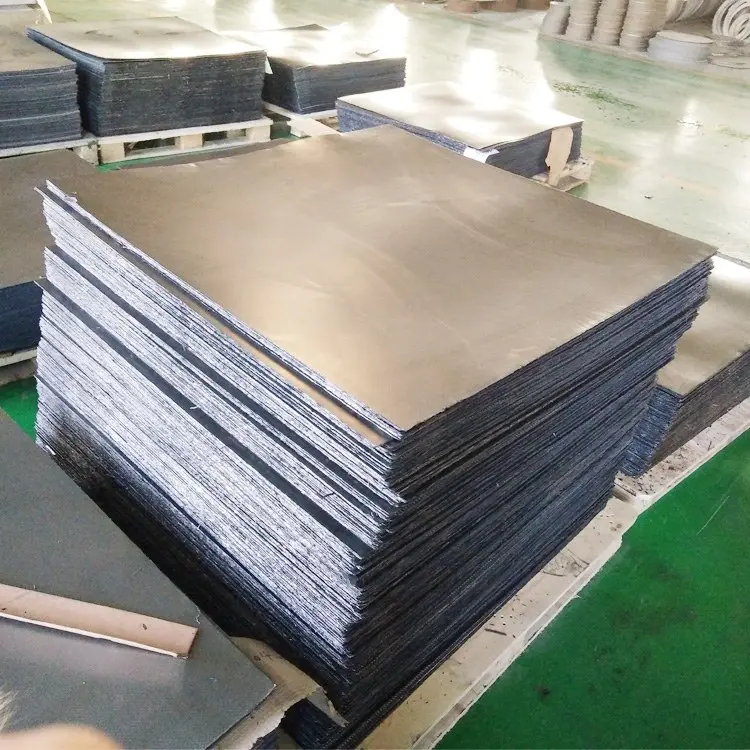
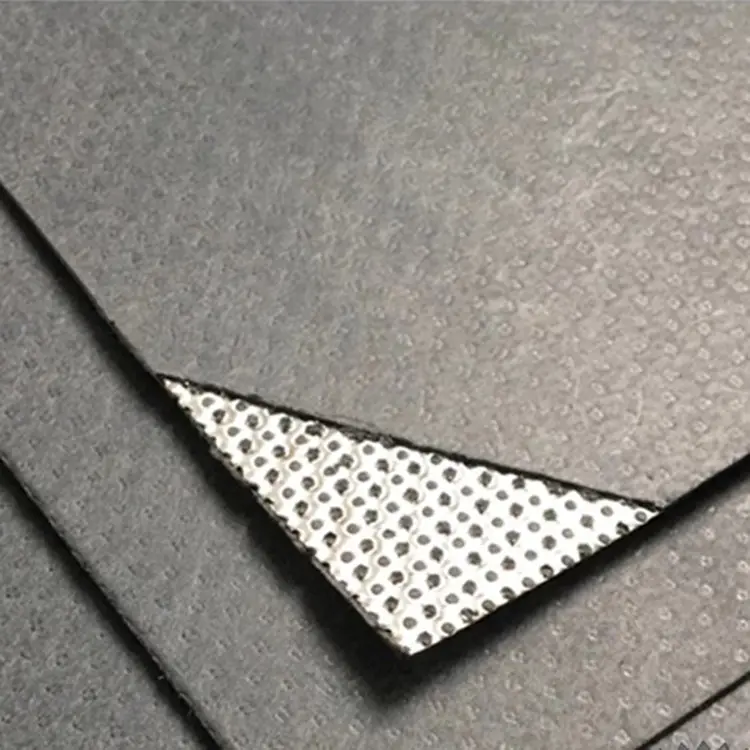
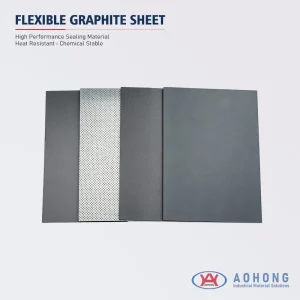
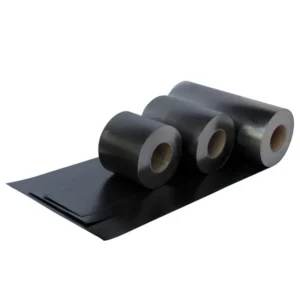
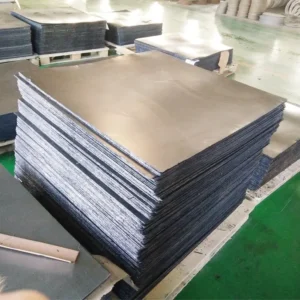
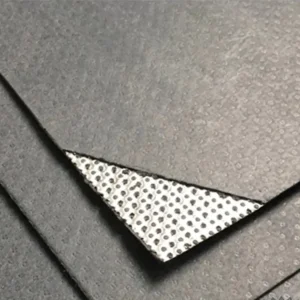
What is a graphite sheet with wire mesh?
Construction & how it works
A graphite sheet with wire mesh is made by laminating expanded (flexible) graphite foil onto (or encasing) a metal wire mesh (commonly stainless-steel 304/316). The graphite provides chemical and thermal sealing performance; the wire mesh adds mechanical support, reduces cold flow and helps maintain dimensional stability under flange bolt load.
Graphite sheet with wire mesh (also called mesh-reinforced graphite sheet or metal-backed flexible graphite) is a flexible/exfoliated graphite foil laminated to a stainless-steel (or metal) wire mesh. The mesh reinforcement increases tensile strength, reduces cold flow and improves flange stability while preserving graphite’s excellent chemical, thermal and sealing properties — ideal for high-temperature steam, heat exchangers, valve and flange gaskets in petrochemical, power and process industries.
Common export aliases
graphite sheet with wire mesh, mesh-reinforced graphite sheet, graphite foil with wire mesh, metal-reinforced graphite sheet, stainless steel mesh graphite sheet, graphite mesh laminate, wire mesh graphite gasket sheet.
Key technical highlights
-
Reinforced flexible graphite — graphite’s sealing + stainless mesh strength.
-
Temperature range: −200 to 450 °C — suitable for steam and high-temp environments (check TDS for oxidation limits).
-
Low gas permeability when compressed; excellent medium & chemical compatibility.
-
Mesh options: stainless steel 304 / 316; wire gauge and open area customizable to application.
-
Common coatings/finishes: NBR/graphite paint, PTFE lamination, or Anti-oxidation coatings for air exposure.
Applications
-
Heat exchangers, tube sheet gasket joints and channel covers.
-
High-temperature steam and boiler flanges.
-
Valves, pumps and high-pressure flange seals in petrochemical & refining.
-
Exhaust systems, pressure vessels, and high-temp instrumentation.
-
Vacuum & gas systems where low permeation and mechanical integrity are required.
Technical specifications
| Attribute | Typical / example range |
|---|---|
| Core material | Expanded (flexible) graphite foil (grade-dependent) |
| Reinforcement | Stainless-steel wire mesh (SS304 / SS316) — plain weave or welded mesh |
| Wire gauge / mesh | 0.1 – 0.5 mm wire diameters; mesh counts depend on design |
| Total thickness | 0.3 mm – 6.0 mm (graphite + mesh + coatings) |
| Standard sheet sizes | 1000×1000 mm, 1524×1524 mm (60″×60″), or cut-to-order |
| Surface treatment | NBR coating, PTFE laminate, anti-oxidation varnish, metal insert options |
| Temperature range | Consult TDS: graphite core enables high-temp service; oxidation limits must be observed |
| Electrical properties | Conductive (graphite core); specify if electrical isolation is required |
| Certifications | ISO on request; |
Typical sizes & customization options
-
Sheets: 1000×1000 mm, 1524×1524 mm, custom panels.
-
Thicknesses: 0.5, 1.0, 1.5, 2.0, 3.0 mm (common) — custom lamination thickness available.
-
Mesh: SS304 / SS316, different weave patterns and wire diameters for strength vs flexibility tradeoffs.
-
Finishes: adhesive or NBR coating, PTFE lamination (chemical isolation), stainless foil sandwiching, metal inserts for low bolt loads.
-
Services: CNC cutting, die-cutting, waterjet, bonded assemblies and pre-compressed gaskets.
 Advantages
-
Stronger mechanics: wire mesh prevents tearing and reduces cold flow under load.
-
Better flange stability: mesh reduces creep and maintains sealing at high temp/pressure.
-
Retains graphite benefits: chemical resistance, compressibility and low permeability.
-
Customizable: mesh type, graphite grade, coating and thickness tailored to application.
-
Easier installation: backing and coatings reduce dusting and improve handling.
Comparison — graphite + mesh vs alternative materials
| Feature | Graphite + Wire Mesh | Unbacked Flexible Graphite | PTFE Sheet | Metal Gasket |
|---|---|---|---|---|
| High-temp capability | Very high (grade dep.) | Very high but fragile | High | Very high |
| Mechanical strength | High (mesh reinforced) | Low (fragile) | Low-mid | Very high |
| Cold flow / creep | Low (mesh reduces) | Higher | High | Low |
| Chemical compatibility | Excellent | Excellent | Excellent (wide pH) | Varies |
| Gas permeability | Low when compressed | Low (thin) | Medium-high | Very low |
| Handling & installation | Easier (backed/coated) | Difficult (dusting) | Easy | Complex |
| Cost | Mid-high | Mid | Mid-high | High |
How to select the right grade / mesh
-
Identify operating media, max temperature and pressure.
-
Decide mesh metal: SS316 for corrosion resistance; SS304 for general use.
-
Choose graphite density/grade for compressibility & temperature.
-
Select finish: NBR or PTFE lamination if flange friendliness or chemical isolation are required.
-
Request TDS and samples; test in-service conditions when possible.
FAQ
Q: What is your MOQ (minimum order quantity)?
A: Stock grades typically start at 1 sheet or 1 pallet. Custom mesh lamination or special coatings may have MOQ (commonly 300–500 kilogram minimum). Confirm at quote.
Q: What are typical lead times?
A: Samples (stock): 1–5 business days. Standard stock sheets: 3–10 business days. Custom mesh lamination, coatings or metal-insert panels: 2–6 weeks depending on volume and complexity. Expedited options may be available.
Q: How are samples and bulk orders shipped?
A: Samples: courier (DHL/UPS/FedEx) with tracking. Bulk: palletized shipping by road, LCL/FCL or air freight. Export documentation (COO, packing list, commercial invoice) provided.
Q: Can you die-cut or CNC cut gaskets from mesh-reinforced graphite?
A: Yes — die-cutting, waterjet and CNC are standard. For metal-reinforced laminates we recommend waterjet/CNC; provide DXF/CAD for accurate quoting.
Q: Which mesh should I choose: SS304 or SS316?
A: SS316 offers better corrosion resistance in chloride or aggressive chemical environments; SS304 is suitable for general applications and is typically lower cost. Consider media and operating environment when choosing.
Q: Can you supply PTFE-laminated or NBR-coated graphite with mesh?
A: Yes — both coatings are commonly offered to improve chemical isolation or flange sealing. Specify coating tolerance and test requirements at RFQ.
Q: Will the graphite oxidize at high temperature?
A: Graphite can oxidize in air at elevated temperatures. Select oxidation-protected grades, coatings or operate in inert/steam environments per TDS. Always consult the grade’s maximum service temperature in air.