
Product Overview
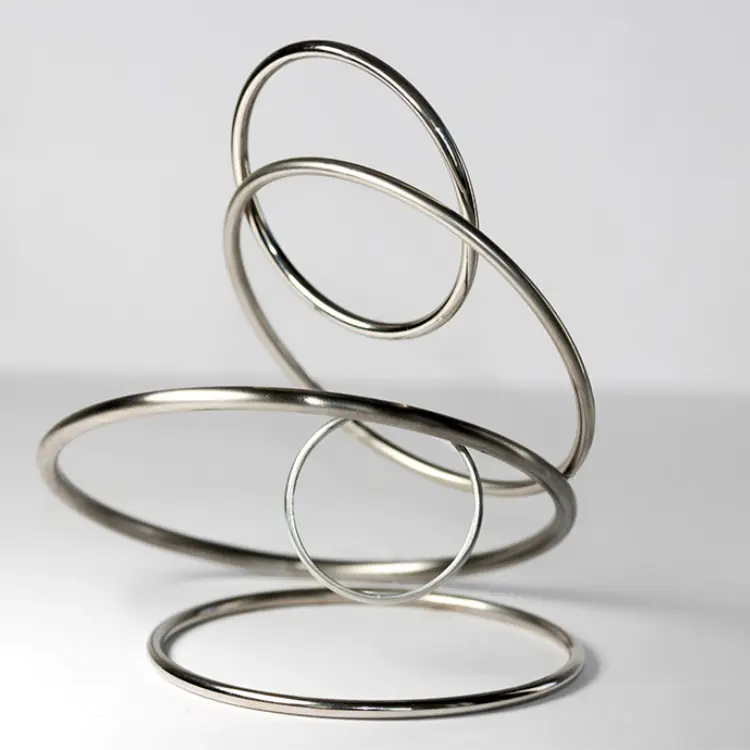
Metal O rings are wire-type metallic seals designed to provide reliable static sealing in extreme service conditions — high temperature, vacuum, cryogenic, aggressive chemicals and where long-term dimensional stability is required. Compared with elastomeric O-rings, metal O-rings maintain sealing performance under thermal cycling, radiation, and harsh chemical exposure when properly selected and installed.
(Common aliases: O rings metal, metal O-rings, metal O rings, wire O-rings, metal sealing rings, metallic O-rings.)
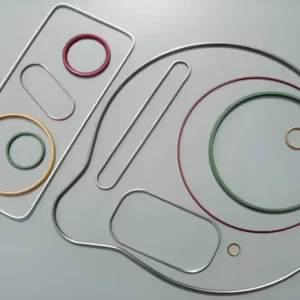
Typical shapes & configurations
-
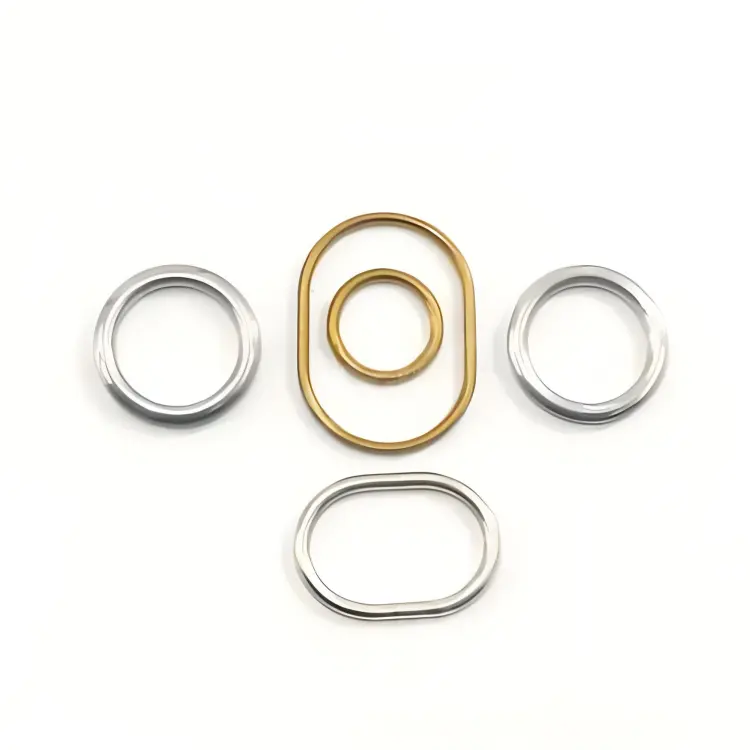
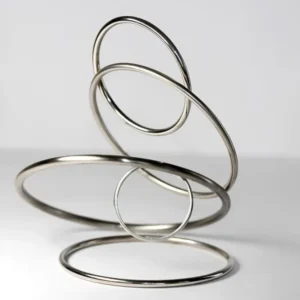
Solid wire O-ring (circular cross-section, standard)
-
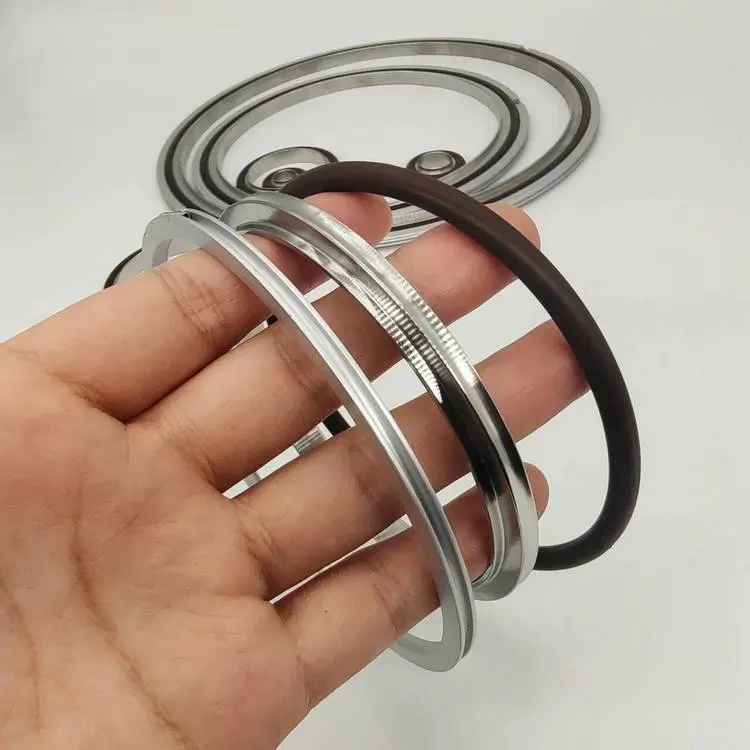
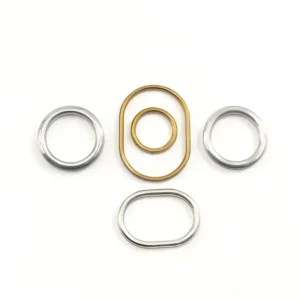
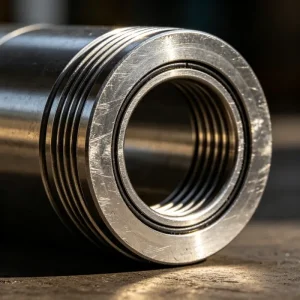
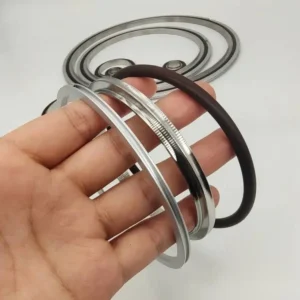
C-ring / E-ring (metal C/E cross-section) for higher springback and surface conformity
-
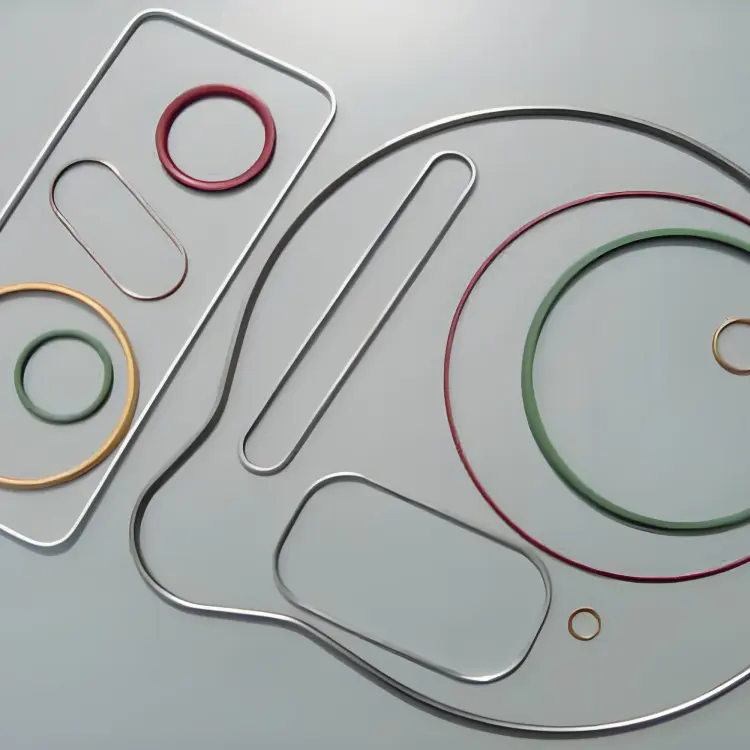
Coated metal O-rings (thin silver, copper, PTFE or soft-metal overlay) to provide low-mating-surface stress and improved sealing on rough finishes
Materials & Typical Performance (buyer-focused)
Below are industry-typical materials used for metal O rings with conservative service guidance for procurement and engineering decisions.
| Material | Service temp (°C / °F) | Key properties | Uses |
|---|---|---|---|
| Stainless Steel 304 (SS304) | -196°C to +400°C (-321°F to +752°F) | Good corrosion resistance, economical | General industrial, vacuum, hygienic |
| Stainless Steel 316L (SS316L) | -196°C to +400°C (-321°F to +752°F) | Improved chloride resistance vs 304 | Food, pharma, marine, chemical |
| Inconel 625 | -200°C to +650°C (-328°F to +1202°F) | Excellent high-temp strength & oxidation resistance | Aerospace, high-temp chemical, burners |
| Monel 400 | -100°C to +300°C (-148°F to +572°F) | Very good resistance to seawater and alkalis | Marine, saltwater, chemical |
| Hastelloy C276 | -200°C to +600°C (-328°F to +1112°F) | Outstanding corrosion resistance in aggressive media | Highly corrosive chemical applications |
| Copper (oxygen-free) | -200°C to +250°C (-328°F to +482°F) | Excellent conductivity, soft overlay option | Electrical contact, soft sealing overlays |
Note (engineering guidance): final material selection requires confirmation of actual operating temperature, pressure, media, and cleaning/sterilization cycles. For food or pharmaceutical secondary-contact applications, prefer SS316L and request surface finish certification.
Advantages / Buyer Benefits
-
High temperature & cryogenic capability — metals maintain mechanical integrity beyond elastomers.
-
Chemical & radiation resistance — suitable for aggressive media and sterilization.
-
Low outgassing & vacuum compatibility — metal O rings are standard for vacuum systems and space applications.
-
Longevity & dimensional stability — minimal creep and preserved sealing force under long-term exposure.
-
Electrical conductivity & EMI grounding — can serve as electrical contact/gasket.
-
Customizability — coatings (silver/copper/PTFE), annealing, and custom cross-sections for application-specific sealing.
Applications
-
Vacuum systems, cryogenics, and semiconductor equipment
-
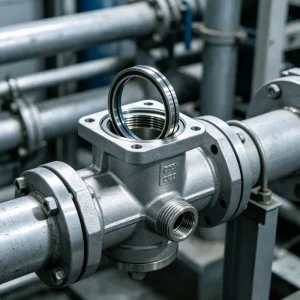
High temperature flanges and furnace seals
-
Chemical processing, heat exchangers and reactors
-
Aerospace, gas turbines and aerospace plumbing
-
Food & pharmaceutical processing where metal seals are required for process compatibility or sterilization
-
Electrical/EMI gaskets and hermetic feedthroughs
Specifications & Technical Data
Common wire cross-sections & representative inside diameters
| Wire cross-section (mm) | Common inside diameter examples (mm) | Tolerance & note |
|---|---|---|
| 0.5 | 3, 6, 10 | small-diameter precision rings for instrumentation |
| 0.8 | 6, 10, 18 | common for small ports and fittings |
| 1.0 | 10, 18, 25 | widely used general-purpose sizes |
| 1.5 | 18, 25, 50 | mid-size flanges & housings |
| 2.0 | 25, 50, 100 | larger flange seals and closures |
| 3.0 | 50, 100, 200 | large diameter seals for vessels and reactors |
Typical production tolerances: inner diameter ±0.1–0.5 mm depending on cross-section and size; confirm part drawing and acceptance criteria for precision classes. For vacuum or helium-leak-critical applications, specify final leak test and surface finish requirements.
Surface finish & coatings
-
Uncoated (bare metal) — for smooth counterpart surfaces and low micro-deformation sealing.
-
Silver or copper overlay (thin plating or cladding) — improves sealability on rougher surfaces and lowers required compression stress.
-
PTFE or polymer film — used where chemical isolation is required.
-
Annealed finish — reduces springback (where needed) and improves conformability.
Comparison: Metal O Rings vs Elastomer O-Rings
| Feature | Metal O-Rings | Elastomer O-Rings (NBR, EPDM, FKM, Silicone) |
|---|---|---|
| Max temperature | Very high (depends on metal) | Limited by compound (typically ≤200–300°C for high-temp elastomers) |
| Cryogenic performance | Good (metals retain strength at low T) | Variable; some elastomers embrittle |
| Chemical resistance | Excellent (select alloys) | Good to poor depending on compound and solvent |
| Elastic sealing action | Springback / conforming (metal-to-metal contact; may need coating) | Elastic compression seals; easier to achieve low-pressure sealing |
| Vacuum/outgassing | Excellent | Variable; elastomers outgas more |
| Reusability | Limited—depends; seals may be re-used if undamaged | Often reusable if not overstressed |
| Cost | Typically higher per part | Typically lower for standard sizes |
Installation & Design Notes
-
Gland design: metal O-rings require specific groove depth and lead-in features. Provide engineering drawings for custom rings.
-
Surface finish: mating surface Ra, hardness and flatness affect sealing. For uncoated metal rings, mirror-like finish often required; plated rings allow rougher surfaces.
-
Compression & springback: choose cross-section and anneal level to achieve required sealing load without overstressing flange.
-
Testing: specify helium leak test or vacuum integrity test for critical applications. Request sample test reports for similar installed applications.
FAQs
Q1 — What are “metal O rings” and when should I choose them?
A1 — Metal O rings are wire-type or formed metal sealing rings used where elastomer sealing is unsuitable (very high/low temperature, vacuum, aggressive chemicals, radiation). Choose them where temperature or chemical limits of elastomers are exceeded.
Q2 — Are metal O-rings reusable?
A2 — Reusability depends on application and damage during assembly. Coated metal rings and those used in low-stress static joints may be reused if undamaged; for critical vacuum or pressure joints re-installation is not recommended without verification.
Q3 — What materials and coatings are available?
A3 — Typical materials: SS304, SS316L, Inconel 625, Monel 400, Hastelloy C276, copper. Coatings/overlays: silver, copper, PTFE, or soft-metal cladding where surface conformity is required.
Q4 — What tolerances and sizes can you supply?
A4 — We supply wire cross-sections from 0.5 mm to 3.0 mm and inside diameters from a few millimetres to several hundred millimetres. Tight tolerances (±0.1 mm) and precision classes are available to drawing.
Q6 — Minimum order quantity and lead time?
A6 — Stocked standard sizes: low MOQ with rapid dispatch. Custom rings: MOQ depends on size and coating; typical lead times are 1–4 weeks after order confirmation depending on specifics.