Product Overview
What is a non-asbestos aramid fiber gasket?
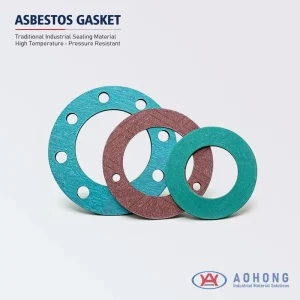
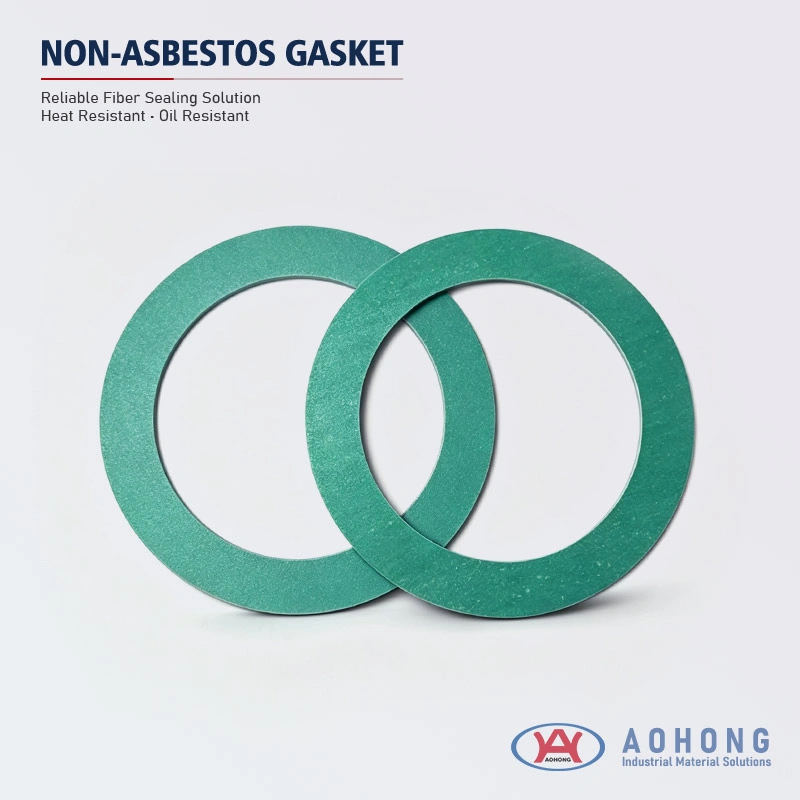
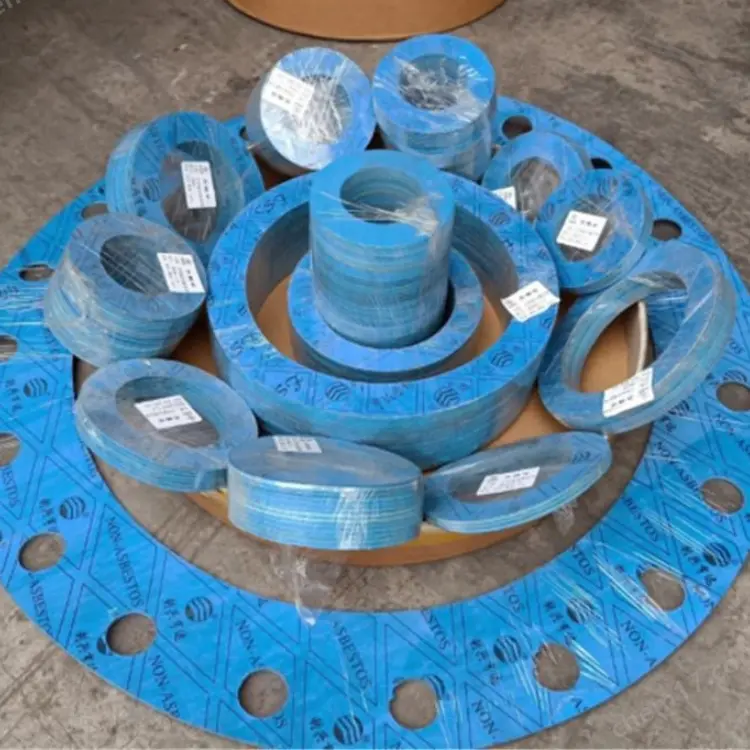
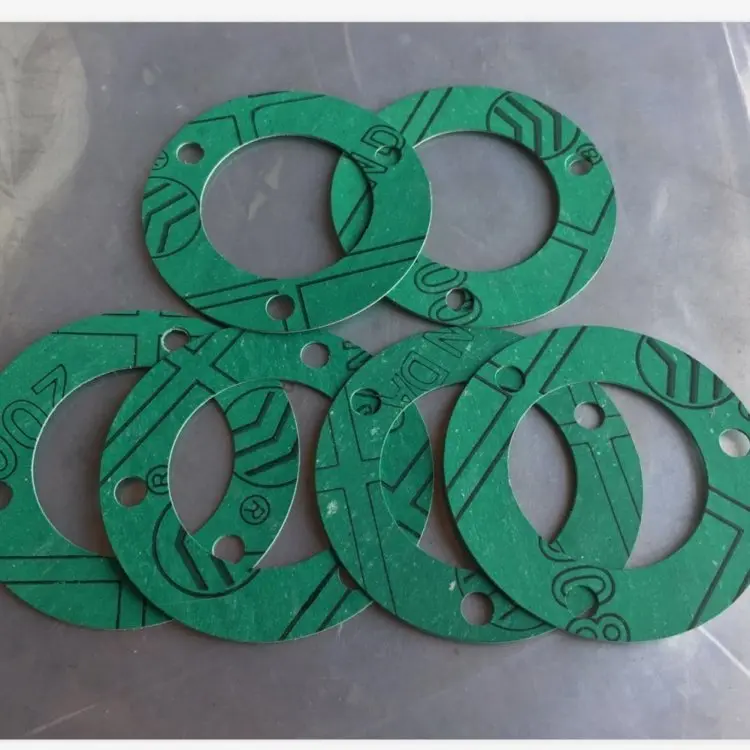
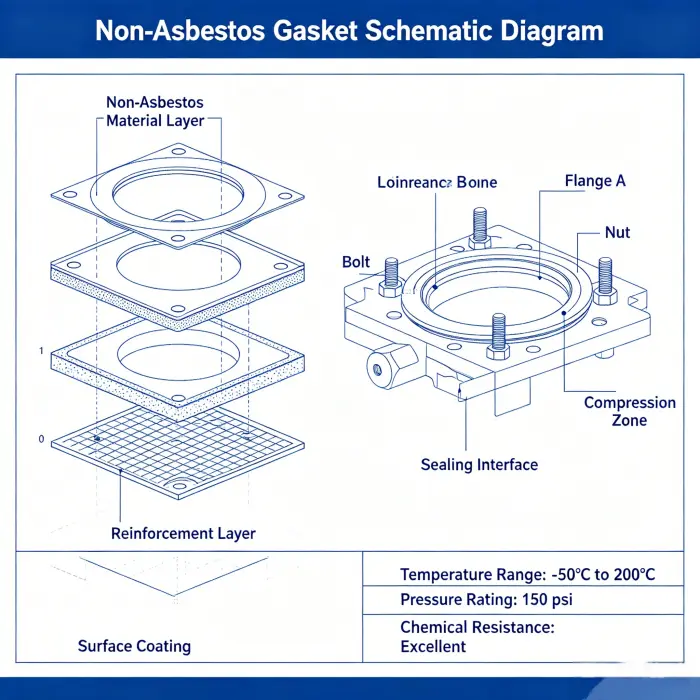
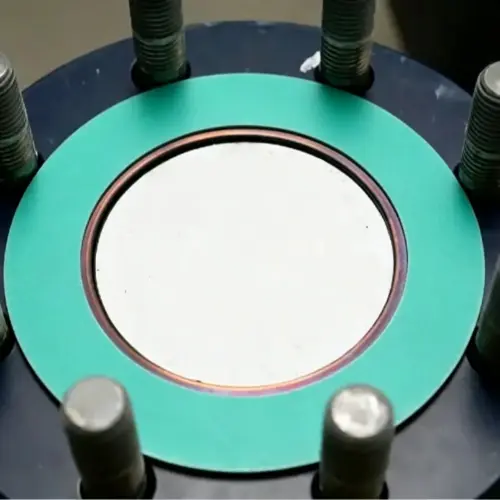
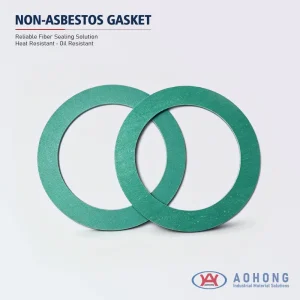
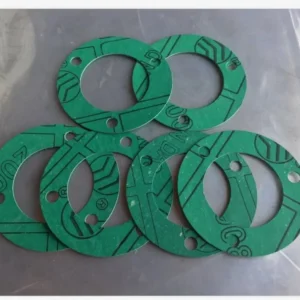
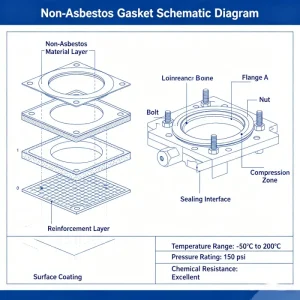
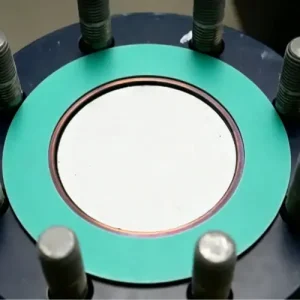
A non-asbestos aramid fiber gasket (often called a compressed aramid gasket) is produced by hot-calendering aramid fibers together with inorganic fillers and an elastomeric binder (NBR, SBR or similar) into sheet stock, then die-cut to ring or full-face gaskets. These materials were developed as direct, safer replacements for legacy asbestos jointing sheets and are widely used for piping, heat exchangers, pumps, valves, and general industrial flanged joints.
Non asbestos aramid fiber gaskets are compressed sheet gaskets made from aramid (aramid/aramid blend) fibers bound with elastomeric binders such as NBR or SBR. They provide a safe asbestos-free alternative for general industrial sealing with excellent chemical resistance, low creep and good compressibility across a wide range of temperatures and pressures.
Common aliases / alternate names
-
Non-asbestos aramid fiber gasket
-
Aramid fibre gasket (UK spelling)
-
Compressed aramid gasket / compressed non-asbestos gasket (CNA)
-
Aramid + NBR gasket sheet (e.g., “Style 2900”, “C-4400”)
Include aliases on-page to capture buyer/technical searches.
Construction & Materials
Typical construction:
-
Material: aramid (e.g., Kevlar®-type or mixed aramid fibers) ± inorganic fillers.
-
Binder: Nitrile Rubber (NBR), Styrene-Butadiene Rubber (SBR) or similar.
-
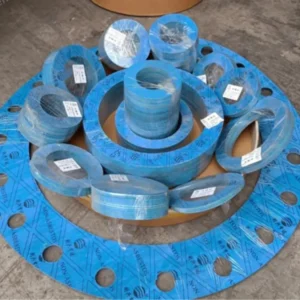
Form: manufactured as flat sheet (standard sheet sizes often 1.5×2.0 m up to 3.048×3.048 m for some suppliers) and cut to ring/full-face gaskets to ASME or DIN dimensions.
Why aramid? Aramid fibers give excellent tensile strength, thermal stability and resistance to oils/abrasives while the binder provides resilience, sealing and chemical compatibility.
Performance & Typical Ranges
Important: exact limits depend on the specific sheet formulation, binder and thickness — always request the manufacturer’s datasheet for the precise construction you plan to use.
Representative service guidance (supplier datasheets):
-
Temperature: typical continuous ranges from about −73°C up to +371°C for some aramid/NBR products; other grades list continuous ratings up to ~399°C (750°F) or more for specific blends.
-
Pressure: some aramid sheet products are rated for high pressures (examples: Garlock lists pressure capability up to ≈70 bar for certain grades; other technical sheets quote very high psi figures for specific thicknesses). Use flange class (ASME B16.5) and supplier pressure tables to finalize selection.
-
Chemical resistance: excellent for oils, fuels, steam, many acids and alkalies (binder & filler dependent). Check compatibility for aggressive oxidizers and strong halogens.
(We cite representative manufacturer data above — verify the exact temperature/pressure for the grade you order.)
 Standards, Forms & How to Order
 Standards, Forms & How to Order
-
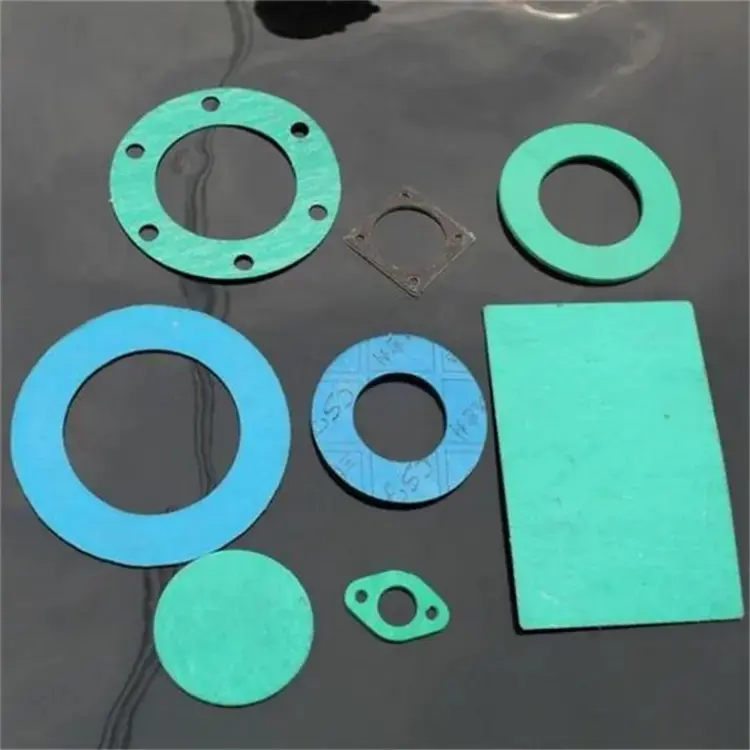
Cutting standard: aramid gaskets are typically cut to ASME B16.21 / ASME B16.5 dimensions for ring and full-face non-metallic gaskets; use ASME tables for exact ID/OD/bolt circle values.
-
Common sheet thicknesses & stock sizes: available thicknesses commonly include 0.4 mm, 0.5 mm, 0.8 mm, 1.0 mm, 1.5 mm, 2.0 mm, 3.0 mm (1/64″ → 1/8″), and sheet sizes up to ~3.048×3.048 m in some product lines.
-
Ordering information required: supply flange standard (ASME/DIN/JIS), NPS/DN, pressure class, gasket form (ring/FF), thickness, and any required certificates (MTR, NSF/ANSI, FDA if potable water). Some aramid grades carry NSF/FDA/WRAS approvals — request vendor certs if needed.
Typical Sizes & Example Dimension Guidance
For flange gaskets, always cut per ASME B16.21 / B16.5. Common nominal pipe sizes kept in stock for rapid delivery include: ½”, ¾”, 1″, 1½”, 2″, 3″, 4″, 6″, 8″, 10″, 12″ (NPS). Exact ID/OD and bolt-circle must follow ASME tables for the flange class — see ASME B16.21 reference tables for precise dimensions.
Representative stock thicknesses for ring & full-face gaskets
-
Thin steam/gas seals: 0.5 mm – 1.0 mm
-
General industrial: 1.0 mm – 2.0 mm
-
High-compressibility / rough faces: 2.0 mm – 3.0 mm.
Key Advantages (why buyers choose aramid gaskets)
-
Asbestos-free, safer handling while keeping much of the thermal and chemical performance of legacy asbestos sheets.
-
Excellent chemical resistance to oils, fuels, steam and many corrosive media (binder-dependent).
-
Low creep and good recovery compared with some soft sheets — helps maintain seal under long service.
-
Good compressibility & conformability to uneven flange faces — reduces point leakage on older equipment.
-
Wide availability of thicknesses and ASME cut sizes for fast replacement and custom parts.
Material Comparison — Buyer Decision Table
| Feature | Aramid (NBR/SBR binder) | Compressed Graphite | PTFE | Spiral-Wound (graphite fill) |
|---|---|---|---|---|
| Max temp (typical) | Up to ~371–399°C (grade dependent). | Very high (graphite excels at high T) | Lower (≈260°C for PTFE) | High (depends on metal winding & filler) |
| Chemical resistance | Excellent (oils, fuels, steam) | Excellent | Excellent (organics & acids) | Excellent |
| Creep / relaxation | Low–moderate | Low–moderate | Low | Good recovery |
| Best for | General industrial replacement for asbestos | High-T, steam, expanding joints | Aggressive chemicals, low T | High T with metal support |
| Regulatory / safety | Asbestos-free (safer handling) | Asbestos-free | Asbestos-free | Asbestos-free |
(Choose based on max operating temp, media, flange condition, and vibration.)
Installation & Best Practices
-
Flange prep: clean mating faces completely; remove old gasket residue; verify flatness and run-out. Aramid sheets conform well to minor imperfections but won’t fix severely warped flanges.
-
Bolt preload: follow flange/gasket manufacturer torque charts. Avoid over-tightening (can crush binder) and under-tightening (leak risk).
-
Surface finish: for best repeatable seals, use recommended surface finishes from the gasket seller; rougher faces benefit from thicker/compressible grades.
-
Storage & handling: store flat in original packaging, dry and away from direct sunlight or solvents. Cut gaskets carefully to avoid fraying edges; some suppliers offer impregnated or wrapped edges to reduce particle release.
Typical Failure Modes & Mitigation
-
Leakage from insufficient bolt load: correct by using manufacturer torque table and cross-pattern tightening.
-
Chemical attack on binder: avoid incompatible aggressive oxidizers; choose a grade or binder known for the media (NBR vs SBR).
-
Creep relaxation over long service: select thicker or reinforced grades if long-term bolt relaxation is expected.
FAQ
Q1 — What are common alternate names for this product?
A: Compressed aramid gasket, aramid fibre gasket, non-asbestos gasket, compressed non-asbestos gasket (CNA).
Q2 — What temperature and pressure can aramid gaskets handle?
A: Representative product datasheets list continuous ranges from −73°C to +371°C (some grades up to ≈399°C/750°F) and pressure capabilities that vary with thickness and flange class — always check the manufacturer’s datasheet for the selected grade.
Q3 — Are aramid gaskets suitable for steam and hydrocarbons?
A: Yes — many aramid/NBR grades are formulated for steam, oils and hydrocarbons; confirm compatibility with the supplier’s chemical resistance chart.
Q4 — Do you supply ASME-cut ring & full-face gaskets?
A: Yes — we cut to ASME B16.21 / B16.5 templates for common NPS sizes and custom patterns; always provide flange standard and class for quoting.
Q5 — Can aramid gaskets be used in potable water systems?
A: Certain aramid composite grades are manufactured and certified to NSF/FDA/WRAS in specific formulations — request certified grades if potable water service is required.