Product overview
What are compressed fiber gaskets?
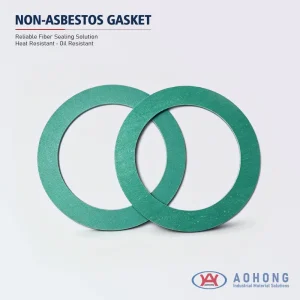
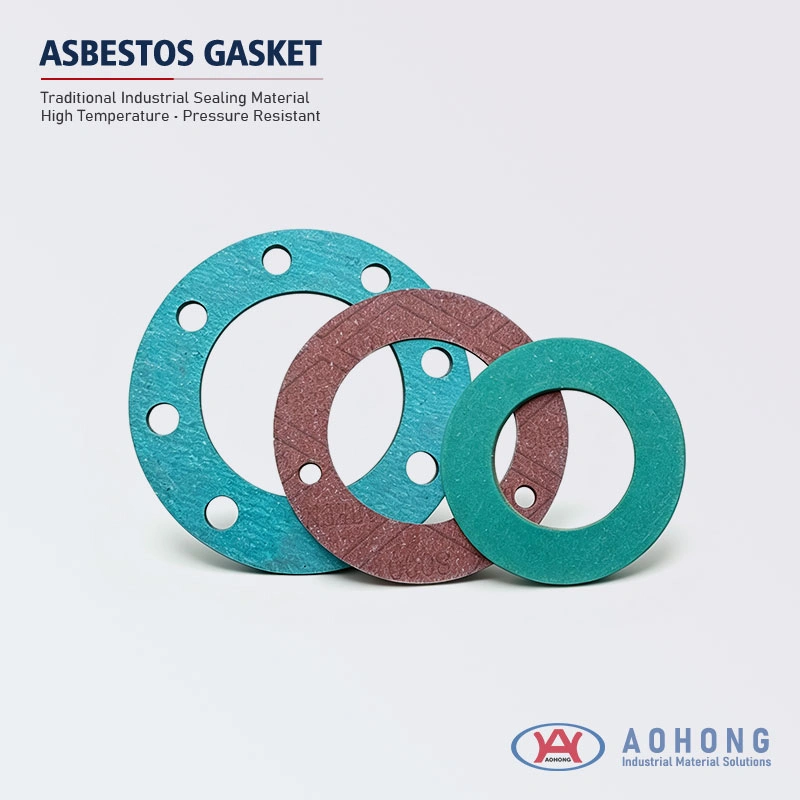
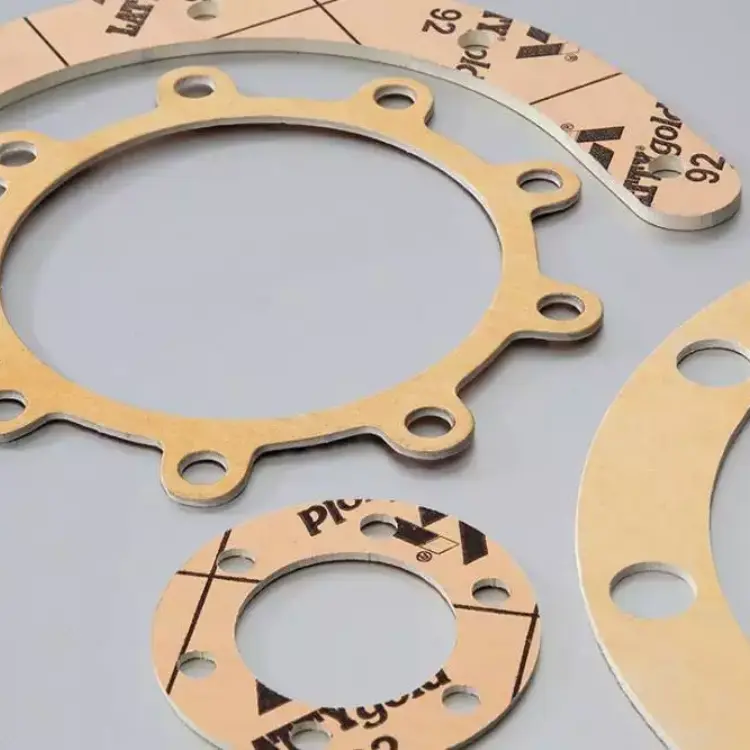
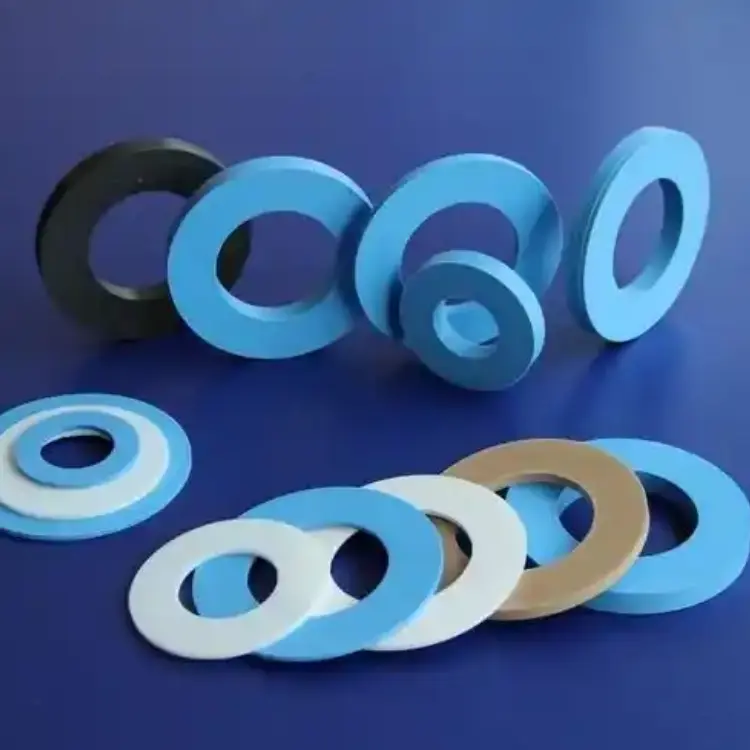
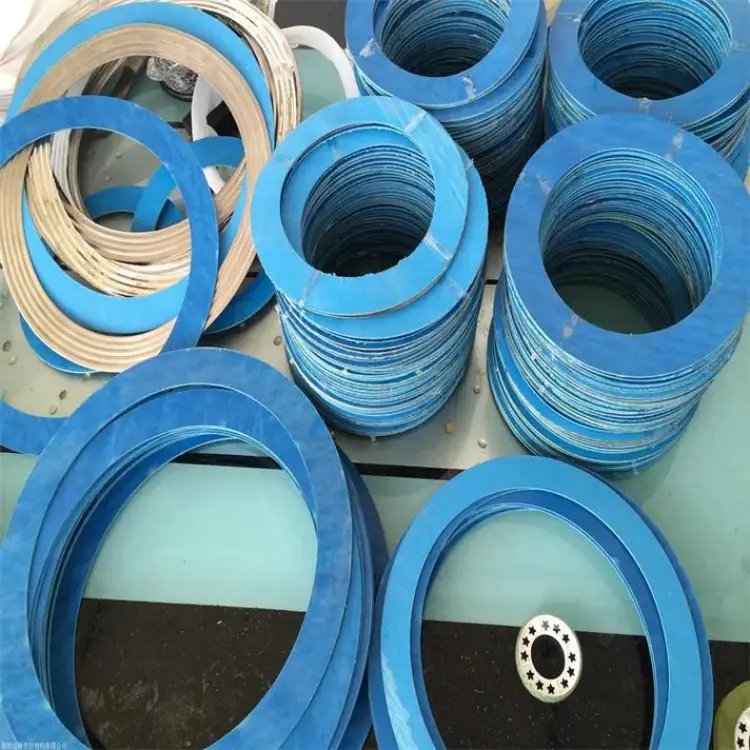
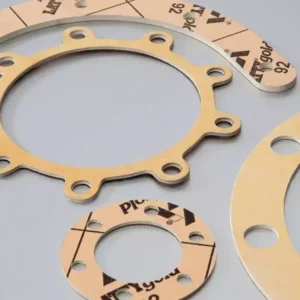
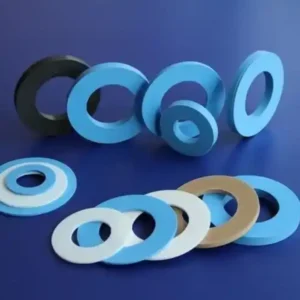
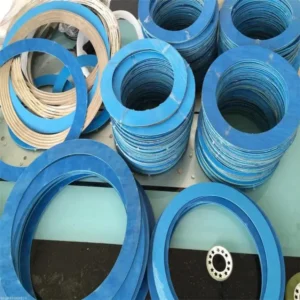
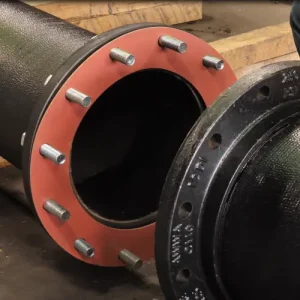
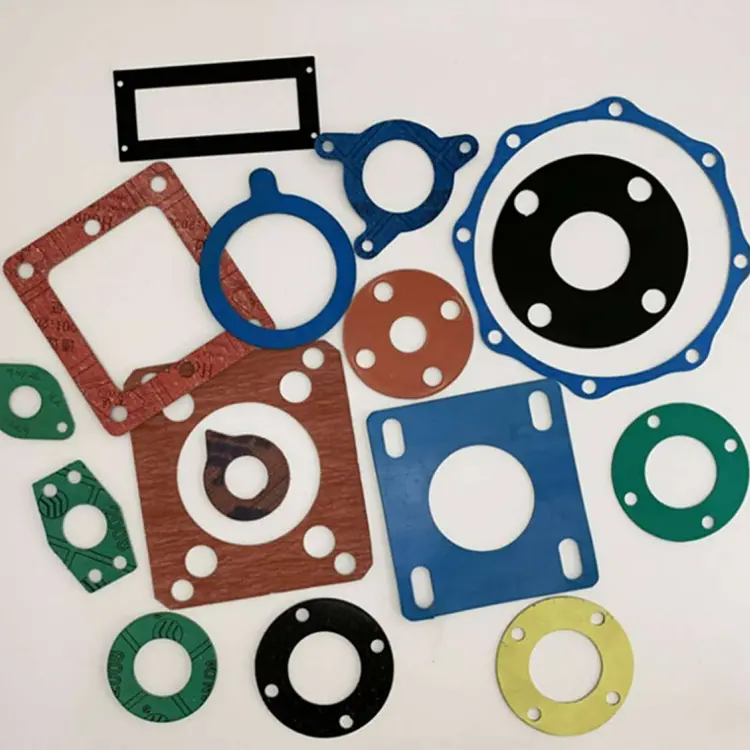
Compressed fiber gaskets are produced by pressing fiber reinforcement (aramid, glass, carbon or synthetic blends) together with elastomeric binders into sheet stock which is then die-cut to ring or full-face shapes. They are widely used for static flange joints where moderate temperatures, pressures and chemical exposure occur. Common trade names include CNA gaskets, compressed non-asbestos gaskets, fiber jointing sheets and compressed fiber sheet gaskets.
Compressed fiber gaskets (aka compressed non-asbestos gaskets) are die-cut sealing rings and full-face gaskets made from compressed fiber sheet (aramid, cellulose, carbon or synthetic fibers bound with NBR/SBR or other rubbers). They offer a safe, cost-effective replacement for legacy asbestos jointing with good compressibility, chemical resistance and torque retention for general industrial services.
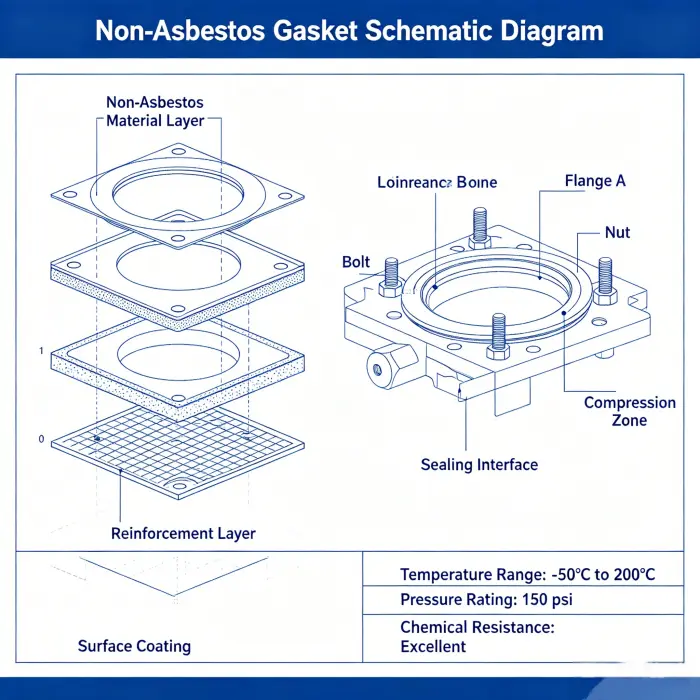
Construction & materials
-
Material: aramid (high-strength), cellulose, mineral or blended synthetic fibers.
-
Binders: NBR (nitrile), SBR or specialty rubbers that determine oil/chemical compatibility.
-
Additives: fillers for improved compressibility, anti-extrusion inserts, or surface coatings/impregnations for low particle shedding.
Choose the grade by media, temperature and required approvals (e.g., NSF/WRAS for potable water). Representative product families and grade guidance are available from major suppliers.
 Key performance ranges
 Key performance ranges
-
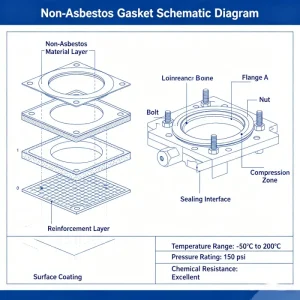
Temperature: typical compressed fiber grades handle from −70°C up to ≈+350°C depending on fiber/binder; popular aramid/NBR grades state continuous ranges of −73°C to +371°C (−100°F to 700°F) for many service conditions.
-
Pressure: depending on thickness and flange class, some compressed fiber sheets are rated up to ~70 bar (≈1000 psi) in laboratory pressure/psi listings for specific thicknesses — field allowable working pressure should be determined via flange class and supplier pressure charts.
-
Thickness (stock sheets / cut gaskets): commonly available sheet thicknesses and cut gasket thicknesses include 0.5 mm, 0.8 mm, 1.0 mm, 1.5 mm, 2.0 mm, 3.0 mm; sheets are commonly supplied in large formats (e.g., up to 120″ × 120″ / 3048 × 3048 mm).
Typical applications
-
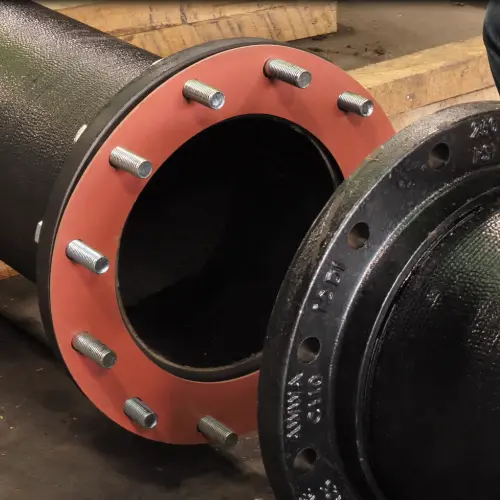
Flanged piping (water, steam, oil, fuels) — Class 150–600 depending on gasket and flange.
-
Pumps, valves and heat exchanger covers.
-
General industrial process lines where asbestos replacement is required.
-
OEM spares and maintenance operations where fast delivery of ASME-cut gaskets is needed.
Common sizes & ordering info
We cut to ASME B16.21 / B16.5 ring and full-face templates. Common NPS stock (fast ship) includes: ½”, ¾”, 1″, 1½”, 2″, 3″, 4″, 6″, 8″, 10″, 12″. For accurate manufacturing please provide: flange standard (ASME/DIN/JIS), NPS/DN, class (150/300/600), bolt circle (PCD), bolt hole diameter, and desired gasket thickness. Reference ASME flat gasket tables when supplying part prints.
Main advantages (why buyers choose compressed fiber)
-
Asbestos-free safety: eliminates asbestos handling risks while delivering similar sealing performance in many services.
-
Good conformability: fills minor flange imperfections to reduce point leakage.
-
Cost-effective & widely stocked: fast turnaround for common ASME sizes and thicknesses.
-
Chemical versatility: available grades optimized for oils, steam, fuels and many chemicals (select binder appropriately).
Material comparison
| Feature | Compressed Fiber Gasket | Flexible Graphite | PTFE Sheet Gasket | Spiral Wound (graphite) |
|---|---|---|---|---|
| Typical temp (oxidizing) | up to ~350°C (grade dep.) | up to 450–550°C | ≤260°C | up to ~450°C (depends on filler) |
| Chemical resistance | Good (binder dep.) | Excellent | Excellent | Excellent |
| Conformability | High | High | High | Moderate |
| Recovery / resilience | Moderate | High | Low–moderate | High |
| Best for | General industrial, retrofit, cost-effective | High-T steam, dynamic temp | Aggressive chemicals, low-T | High T & pressure with metal support |
Installation & best practices
-
Clean flange faces, remove old gasket residue, and check flange flatness/runout.
-
Select gasket thickness appropriate to flange finish (thicker grades for rough faces).
-
Torque in star pattern per flange class and gasket maker torque chart — avoid both under- and over-tightening.
-
For steam or high-temperature oxidizing services consider impregnated or specialty high-temp fiber grades.
-
Include a short “ordering checklist” on the RFQ form: flange standard, NPS/DN, class, thickness, material grade, required certificates.
FAQ
Q1 — What are common alternate names?
A: Compressed fiber gasket, compressed non-asbestos gasket (CNA), compressed fibre sheet gasket, non-asbestos gasket sheet.
Q2 — Can compressed fiber replace asbestos gaskets?
A: Yes — compressed fiber grades (especially aramid/NBR) were developed as direct asbestos replacements for many services; always confirm regulatory acceptability and grade compatibility.
Q3 — What information do you need to quote?
A: Flange standard & class, NPS/DN, gasket thickness, FF or IBC form, bolt circle / PCD & bolt hole size, material grade (if known).
Q4 — Are there potable-water or food-grade compressed fiber options?
A: Some grades carry NSF/FDA/WRAS approvals — request certified grades and material certificates before specifying for potable or food service.
Q5 — Lead time & MOQ?
A: Stock ASME sizes ship quickly; custom cut or specialty grades have longer lead times — MOQ varies by supplier and material. Contact sales for current stock & lead times.