


Product Overview
What it is
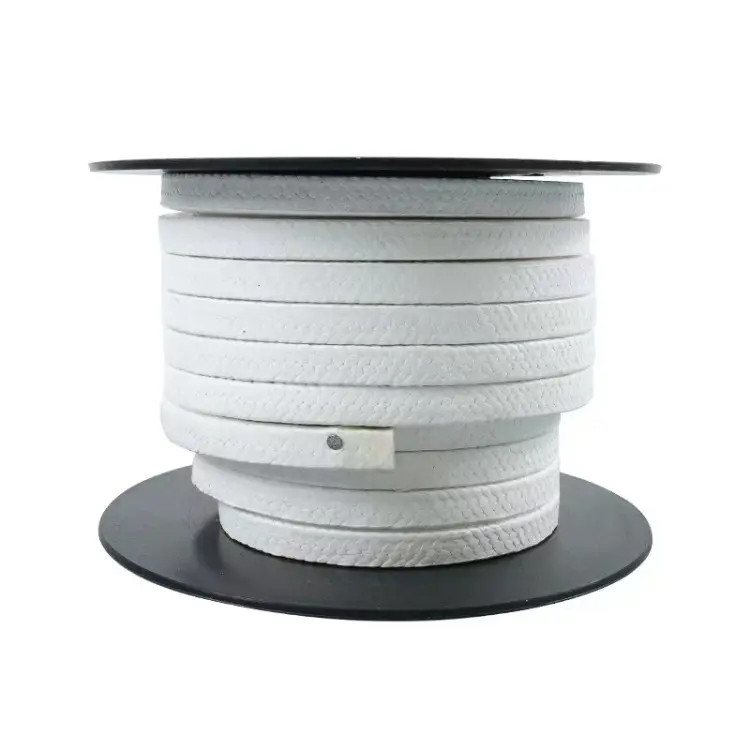
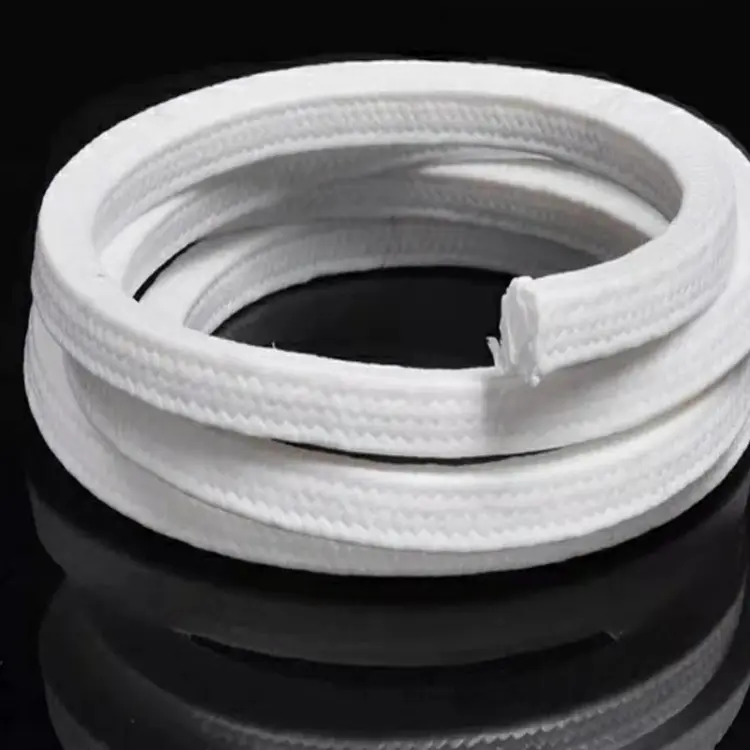
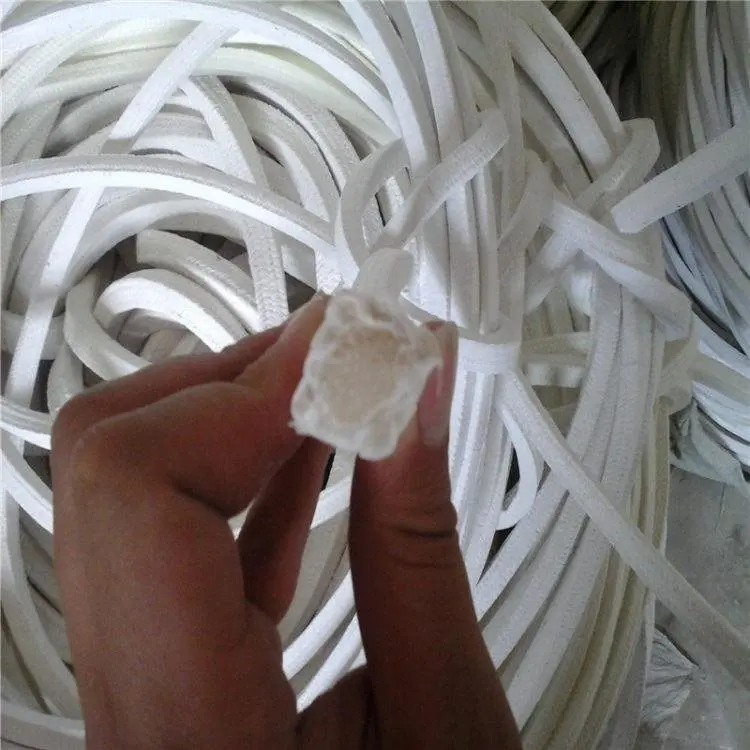
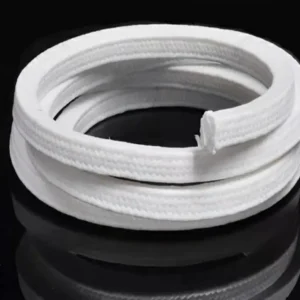
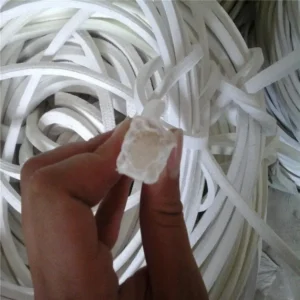
Acrylic gland packing impregnated PTFE is a square/interlock-braided compression packing made from acrylic synthetic yarns that are impregnated (often twice) with PTFE dispersion and a proprietary lubricant. The PTFE provides chemical resistance and low coefficient of friction while the acrylic core provides mechanical strength and wear resistance — a balance engineered for multi-service sealing applications.
PTFE-impregnated acrylic gland packing is a braided compression packing made from high-strength acrylic fibers pre-impregnated with PTFE dispersion and lubricants. It delivers low friction, broad chemical compatibility and reliable sealing for centrifugal pumps, valves, mixers and general industrial rotating or reciprocating equipment — available in standard cross-sections and custom spool lengths for MRO and OEM purchasing.
Who buys it
Procurement managers, MRO buyers and OEMs for chemical processing, water & wastewater, oil & gas ancillary equipment, pulp & paper, food-grade (where specified), power generation and general industrial plants that require a durable, low-friction packing at a competitive price.
 Key features & benefit bullets
-
PTFE impregnation for low friction and wide chemical compatibility (reduces shaft wear).
-
Effective service temperature typically up to ~260°C (≈500°F) depending on formulation.
-
Pressure capability suitable for medium/high pressure stuffing boxes (typical catalog ratings range from ~20–40 bar; certain engineered blends list higher ratings up to ~100 bar depending on braid and installation).
-
Good shaft speed capability for rotating equipment (typical shaft speed ratings commonly published in the 11–18 m/s range depending on braid and lubrication).
-
Broad pH compatibility (many grades claim effective service across roughly pH 1–13 or pH 2–12; verify grade for extreme chemistries).
-
Available in standard imperial/metric cross-sections and spool lengths for fast replacement; options for pre-cut rings and custom spools for OEMs.
Technical specifications
Note: For guaranteed performance specify the exact grade and request a datasheet/test certificate with your purchase.
| Property | Typical value (representative) |
|---|---|
| Material | Acrylic synthetic yarn (PTFE-impregnated) |
| Temperature range | -50°C to +260°C (≈ -58°F to +500°F) (depends on braid & lubricant). |
| Pressure rating (rotating/reciprocating/static) | Typical catalog ratings 20–40 bar for many styles; some engineered styles list up to 100 bar for specific valve/power applications. |
| Shaft speed (max) | Typical 11–18 m/s (check grade for high-speed service). |
| pH compatibility | Commonly pH 1–13 or pH 2–12 depending on impregnation formulation. |
| Density | ~1.2–1.4 g/cm³ (depends on fiber & PTFE content). |
| Typical braid | Square/interlock braided; 4-ply or more depending on size and supplier. |
| Standard spool lengths | 8 m boxes common; some sizes stocked in 30 m boxes; custom spool lengths available. |
Typical sizes & packing options
Common cross-sections (square or near-square):
Metric: 3×3 mm, 4×4, 5×5, 6×6, 8×8, 10×10, 12×12 mm.
Imperial: 1/8” (3.2mm), 3/16” (4.8mm), 1/4” (6.4mm), 5/16”, 3/8” (9.5mm), 1/2” etc. — stocked ranges depend on supplier.
Spool & packaging options:
-
8 m spool (common bulk box); 30 m spool for small cross-sections; pre-cut rings for common shaft diameters; cut-to-length for OEMs.
Ordering tip (MRO-friendly): specify shaft diameter and stuffing box depth; indicate whether you want continuous braided length (for re-packing) or pre-cut rings (for quick swap).
Typical applications
Common uses: centrifugal pumps, rotary pumps, reciprocating pumps, valve stems, agitators, mixers, expansion joints and general machine shafts. Widely used across chemical, petrochemical, water & wastewater, pulp & paper and general manufacturing.
Not recommended for: concentrated oxidizers (pure oxygen service), concentrated strong acids/alkalis at extreme temperatures (consult datasheet), or where PTFE migration into product is prohibited unless food-grade variant is specified.
Advantages
-
Cost-effective multi-service material — less expensive than pure PTFE ropes while delivering low friction and good chemical resistance.
-
Lower shaft wear due to PTFE impregnation (reduced friction).
-
Good temperature & pressure range for many plant applications (see technical table).
-
Available in standard MRO sizes and custom options (spools, pre-cut rings), simplifying inventory management.
-
Easy break-in & stable sealing with controlled leakage for gland lubrication during initial running-in.
Comparison — Acrylic PTFE packing vs common alternatives
| Feature | Acrylic (PTFE-impregnated) | Pure PTFE rope | Graphite packing | Aramid/Aramid-corner packing |
|---|---|---|---|---|
| Chemical resistance | High (broad) | Very high | Good (inert) | Moderate |
| Friction / shaft wear | Low (PTFE) | Very low | Higher (unless lubricated) | Moderate |
| Temperature capability | ≈260°C typical | up to ~260–300°C | up to ~450°C (graphite) | lower than graphite |
| Cost | Mid (good value) | Higher | Mid | Mid-low |
| Use cases | Multi-service pumps/valves | Aggressive chemistries, food-sensitive | High-temp steam and high-temp valves | High abrasion, where mechanical strength needed |
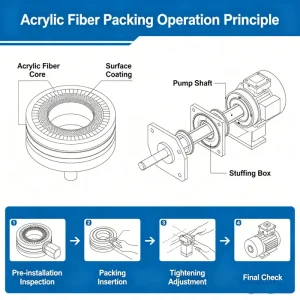
Installation & maintenance advice
-
Clean stuffing box and shafts; inspect for wear and replace if grooved.
-
Install rings as 90° staggered joints; lightly compress gland follower; follow manufacturer re-compression schedule.
-
Start machine slowly and allow controlled leakage during run-in; finalize gland adjustment after stable running temperature.
-
Replace packing at signs of hard leakage, high friction heating, or audible grinding.
Ordering & procurement notes
-
SKUs: list examples (e.g., AP-PTFE-6×6-8m, AP-PTFE-10×10-8m, pre-cut ring sets).
-
MOQ & packaging: typical stock boxes 8 m / 30 m; MOQ varies — request quote for pallet quantities or OEM spools.
-
Custom options: food-grade PTFE lubrication, aramid corner reinforcement, pre-formed rings, custom spool flanges — talk to our sales engineer for OEM kits and MRO bundles.
FAQ
Q1: What operating temperature can I expect?
A: Typical PTFE-impregnated acrylic packings are rated up to ≈260°C (≈500°F) — check the exact grade datasheet before service in the high-temperature band.
Q2: Is this packing chemical resistant?
A: Yes — PTFE impregnation gives wide chemical compatibility (many grades list service across pH ~1–13). For concentrated oxidizers or very strong acids/alkalis at high temp, please consult the datasheet.
Q3: What sizes do you stock?
A: Standard cross-sections from 1/8” up to 1/0” in imperial and 3 mm up to 30 mm in metric are commonly produced; stock lengths commonly 8 m (some small sizes 30 m). We also supply pre-cut rings.
Q4: How does PTFE-acrylic compare to pure PTFE packing?
A: PTFE-acrylic offers a cost/performance balance: lower friction than many non-PTFE packings and typically lower cost than pure PTFE ropes — but pure PTFE may be preferred for the most aggressive chemical services or where absolute inertness is required.
Q5: Do you offer samples or pre-cut ring kits for trial?
A: Yes — we can supply small evaluation spools and pre-cut ring kits sized to your shaft—contact sales with shaft diameter and stuffing box depth.